
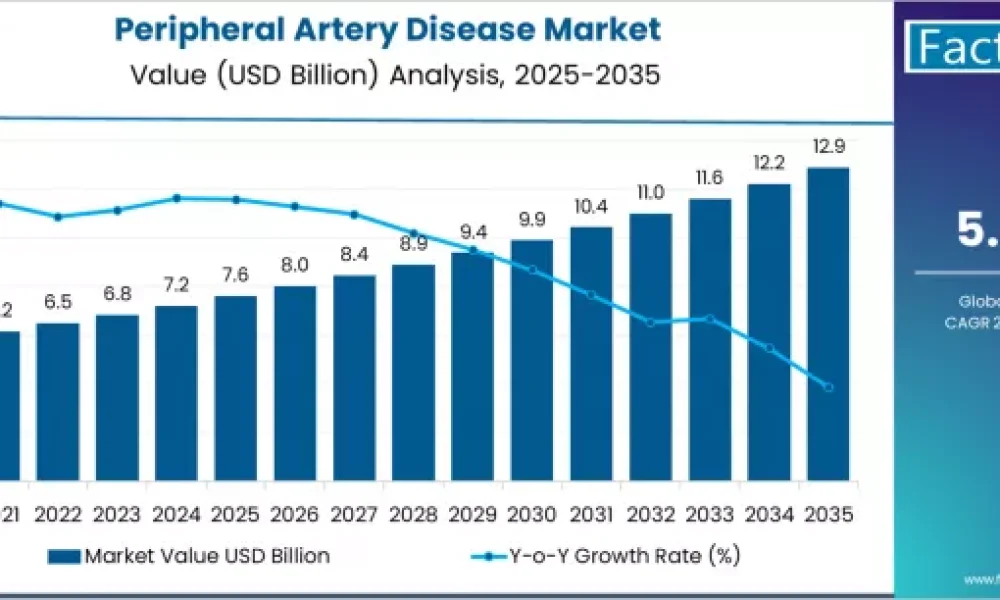
The U.S. peripheral artery disease (PAD) market is entering a new decade of steady expansion, fueled by rising disease prevalence, demographic shifts, advances in minimally invasive intervention, and the emergence of novel pharmacologic approaches. As health systems place a stronger emphasis on early detection and limb preservation, the commercial landscape across devices, diagnostics, and therapeutics is poised for continued growth.
Market Size and Growth Outlook: A Decade of Predictable Momentum
The U.S. PAD market is estimated at approximately $2.4 billion in 2024, with projections indicating a compound annual growth rate (CAGR) of roughly 5% from 2025 to 2035. This trajectory positions the market for meaningful expansion over the next decade as patient volumes grow and procedure mix shifts toward high-value, technology-enhanced endovascular solutions.
Globally, the peripheral vascular devices and PAD treatment markets are also expected to grow at mid–single-digit CAGRs through 2035, which aligns with U.S.-specific projections. Converging trends—particularly aging demographics, increasing diabetes and obesity rates, wider adoption of endovascular interventions, and heightened clinical focus on cardiovascular risk reduction—support this consistent global and domestic outlook.
To access the complete data tables and in-depth insights, request a Discount On The Report here: https://www.factmr.com/connectus/sample?flag=S&rep_id=12122
Demand Drivers: Epidemiology, Demographics, and Underdiagnosis
PAD remains a major but frequently underdiagnosed cardiovascular condition in the United States. Millions of adults over the age of 40 are affected, and prevalence rises sharply with age, diabetes, smoking history, and chronic kidney disease. With the U.S. population aging rapidly and cardiometabolic disease affecting a growing proportion of adults, the at-risk pool continues to expand.
Despite this, PAD often remains undetected until patients present with advanced symptoms, including functional impairment or limb-threatening ischemia. As awareness increases among both clinicians and consumers—and as screening tools become more accessible—diagnosis rates are expected to climb steadily throughout the forecast period. Increased identification of early-stage disease will create more opportunities for intervention, lifestyle modification programs, and guideline-directed medical therapy, all of which contribute to an expanding addressable market.
Technology and Product Landscape: Endovascular Devices Lead the Way
Endovascular therapies account for the majority of PAD procedure volume in the United States and will maintain their leadership position through 2035. Key growth areas include:
Drug-coated balloons (DCBs) with improving safety profiles and broader indications
Drug-eluting stents (DES) optimized for peripheral arteries
Atherectomy systems, particularly for calcified and complex lesions
Intravascular imaging and physiology tools, supporting more precise intervention
Next-generation guidewires, catheters, and support devices tailored for tortuous anatomy
Advancements in drug-coated technologies, delivery systems, and vessel-specific design continue to raise the overall value of each procedure, increasing per-case revenue potential for device manufacturers.
Growth in ambulatory surgical centers (ASCs) is also reshaping the competitive landscape. As more PAD procedures shift from hospitals to outpatient environments, demand is rising for devices that prioritize efficiency, safety, and rapid recovery.
Pharmaceutical Innovations: A Potential Catalyst for Market Expansion
While the PAD market has historically been dominated by devices, the therapeutic side is undergoing renewed momentum. Several cardiovascular and metabolic drug classes, including antithrombotics, lipid-lowering agents, anti-inflammatories, and metabolic modulators, are under investigation for their potential benefits in PAD outcomes such as improved walking distance, reduced ischemic events, and lower amputation risk.
Emerging cardiometabolic drugs—particularly those demonstrating cardiovascular protection—are attracting attention within the PAD community. If evidence continues to show functional or limb-related benefits, these agents could meaningfully expand the pharmaceutical segment of the PAD market over the next decade.
Diagnostics and Screening: A Growing but Underdeveloped Segment
Diagnostics represent one of the most underutilized components of the PAD care continuum. Growth opportunities include:
Improved ankle–brachial index (ABI) testing platforms suitable for primary care
Point-of-care vascular screening systems for retail clinics and community health settings
Wearable and sensor-based technologies capable of monitoring circulation
Predictive algorithms integrated into electronic health records
As value-based care models continue to spread, large health systems increasingly recognize the importance of early identification to reduce costly late-stage complications. The coming decade is expected to bring a noticeable rise in screening adoption among high-risk patient populations.
Challenges: Reimbursement, Evidence Requirements, and Access Gaps
While growth prospects are strong, several challenges could moderate the market trajectory:
Reimbursement pressure
Payers continue to scrutinize novel device categories, requiring stronger evidence of superiority, durability, and cost-effectiveness. Reductions in reimbursement—particularly in outpatient settings—could slow procedural growth.Clinical evidence expectations
Stakeholders increasingly emphasize hard clinical outcomes, including limb salvage and quality-of-life improvements. Products that fail to meet these expectations may face slower adoption.Persistent underdiagnosis
Even with improved screening, millions of Americans with PAD remain undiagnosed, limiting the market’s full potential.Health inequities and access barriers
PAD disproportionately affects underserved communities, where access to vascular care is often limited. Expanding outreach, screening, and reimbursement for underserved populations will be essential to unlocking maximum market potential.
Opportunities for Innovators and Investors
Several areas offer meaningful growth potential from 2025–2035:
Ambulatory and office-based labs seeking efficient, high-value device platforms
Combined device–drug solutions, including targeted drug-delivery systems
Home-based and community-based diagnostics that expand early detection
Digital health solutions that monitor symptoms, walking performance, and vascular status
Population-health partnerships between manufacturers and health systems
Companies that align innovations with value-based care, demonstrate strong clinical evidence, and address unmet needs in screening and limb preservation will be best positioned for long-term leadership.
Conclusion
The U.S. peripheral artery disease market is set for a decade of steady, data-driven growth. Rising prevalence, increased detection, continued advances in endovascular technologies, and the potential of new pharmacologic options all contribute to a dynamic and expanding landscape. From a $2.4 billion market today to significantly higher valuations by 2035, PAD remains one of the most strategically important areas in vascular and cardiovascular care. Stakeholders that invest in innovation, evidence generation, and equitable access will shape the future of PAD treatment and unlock substantial market opportunity.
Have a specific Requirements and Need Assistant on Report Pricing or Limited Budget please contact us – [email protected]
To View Related Report :
Peripheral Spondyloarthritis Market https://www.factmr.com/report/peripheral-spondyloarthritis-market
Peripheral Nerve Stimulator Market https://www.factmr.com/report/peripheral-nerve-stimulator-market
“



