
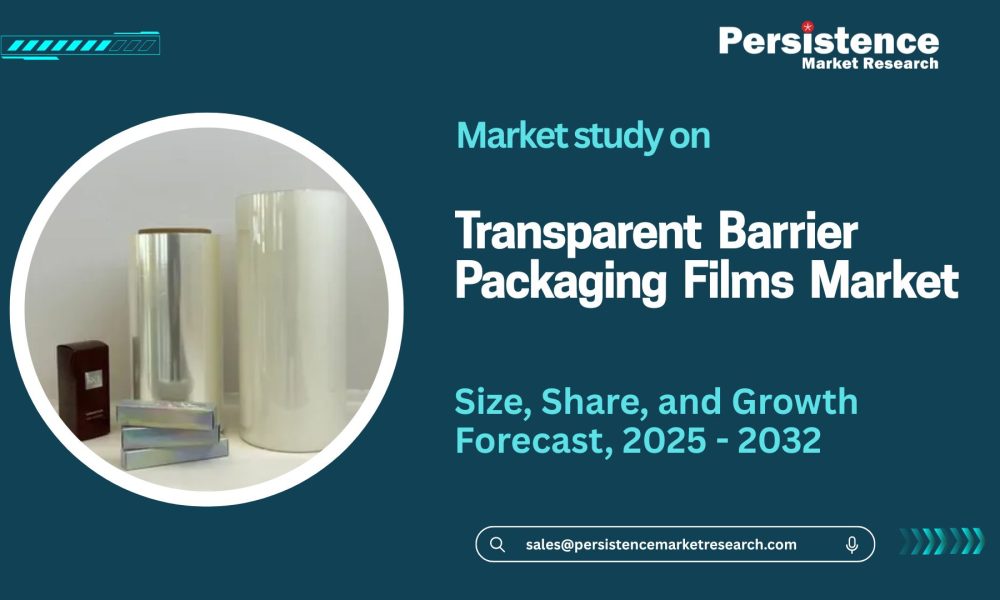
The transparent barrier packaging films market has emerged as a pivotal segment within the global packaging industry driven by the twin demands of product protection and visual appeal. Transparent barrier films combine clarity with barrier properties to protect contents from moisture oxygen and contaminants while allowing consumers to see the product. This combination has made them indispensable in food pharmaceutical and consumer goods packaging where shelf life labeling and brand visibility matter. The market dynamics are shaped by changing consumer behavior regulatory shifts toward sustainability and rapid innovation in multilayer and coating technologies.
According to persistence market research The transparent barrier packaging films market is estimated to increase from US$21.9 Bn in 2024 to US$34.8 Bn by 2031. The market is projected to secure a CAGR of 6.9% during the forecast period from 2024 to 2031.
Market growth is propelled by several converging forces. Rising demand for convenient ready to eat and minimally processed foods increases the need for packaging that preserves freshness and extends shelf life. At the same time e commerce growth and modern retail display formats favor visually transparent packaging that reinforces trust and helps consumers make purchase decisions quickly. Advances in barrier technology allow suppliers to offer films that meet specific requirements for oxygen transmission water vapor transmission and aroma retention without sacrificing transparency. These technical improvements expand applications from rigid and semi rigid containers into flexible packaging pouches and films for wraps and overwraps.
Get a Sample Copy of Research Report (Use Corporate Mail id for Quick Response): https://www.persistencemarketresearch.com/samples/34821
Key Market Drivers
Several structural drivers underpin the market expansion. Urbanization and changing dietary patterns increase consumption of packaged and processed foods leading to greater volumes of packaging per capita. Globalization of supply chains requires packaging solutions capable of preserving quality across long transit times and variable climates. Manufacturers are also responding to retailer and consumer demands for clearer product visibility coupled with reliable protection and tamper evidence. Regulatory requirements around food safety labeling and pharmaceutical packaging further create a baseline demand for high performance barrier films that comply with hygiene and barrier standards. Technological innovation in materials science enables lower gauge films with high barrier performance contributing to reduced material usage and cost efficiencies.
Environmental concerns and circularity objectives are reshaping demand patterns. Many brands and retailers now require packaging to be recyclable or derived from recycled content and are pressuring suppliers to deliver transparent barrier films compatible with existing recycling streams. At the same time innovations in mono material barrier films and water based or solvent free coatings allow manufacturers to reconcile transparency barrier performance and recyclability. The transition toward more sustainable formats is uneven across regions and product categories but it represents both a challenge and a strategic opportunity for film makers.
Product Innovation and Technology Trends
Innovation in multilayer co extrusion coating and metallization techniques significantly improves the performance envelope of transparent barrier films. Manufacturers increasingly deploy combinations of polymer layers to tailor oxygen and moisture barriers while preserving optical clarity. Coatings such as silicon oxide and aluminum oxide applied via vacuum deposition can deliver high barrier properties with minimal effect on transparency. Similarly plasma treatments and nanocomposite additives are being optimized to achieve gas barrier performance at reduced thickness.
Another important trend is the development of chemically recyclable and mechanically recyclable mono material structures. These designs simplify the sorting and recycling process while maintaining functional properties. Striking a balance between barrier performance and circularity often requires trade offs and careful life cycle assessments but producers that master mono material clear barrier systems are positioned to meet demanding sustainability specifications from large brand owners.
Application Landscape
The largest application remains food packaging where transparent barrier films protect snacks confectionery fresh produce and meats while allowing visibility to the consumer. Within food packaging growth is fastest in ready to eat fresh like prepared salads and meal kits where freshness retention is a critical selling point. Pharmaceutical and medical packaging also contribute significant demand due to stringent barrier and sterilization requirements. Consumer goods such as personal care and household products present an expanding use case for transparent films where branding and product display matter.
E commerce is another critical driver where product presentation and tamper evidence create premium for transparent formats. In retail environments films that combine aesthetics with barrier performance help brands differentiate on shelf and online imagery. As omnichannel retail expands brands are standardizing packaging formats that serve both digital and physical storefronts further amplifying the need for transparent barrier films that perform across diverse logistics conditions.
Regional Dynamics
North America and Western Europe are mature markets characterized by strong regulatory frameworks and high demand for both performance and sustainability. These regions are leading the shift toward recyclable mono material solutions and are home to several key players that invest heavily in research and development. Asia Pacific is the fastest growing region due to rising consumption levels expanding retail modern trade and growing pharmaceutical manufacturing. Investment in flexible packaging capacity in countries across Asia is driving demand for transparent barrier films particularly in food and personal care segments.
Emerging markets in Latin America and Africa are at different stages of adoption where basic barrier solutions are often prioritized ahead of advanced or recycled options. However as cold chain infrastructure and retail sophistication improve these regions will demand higher performing transparent barrier films to support longer distribution distances and evolving consumer preferences.
Competitive Landscape and Key Players
The competitive landscape combines large integrated polymer and film manufacturers with regional specialists and innovative startups. Tier one producers leverage scale proprietary coating technologies and global distribution networks to serve multinational brands. Smaller niche providers compete by specializing in tailored formulations rapid customization and regional service. Partnerships between chemical suppliers and film converters are common to accelerate development cycles and bring new barrier technologies to market quicker.
Competitive strategies include investment in research and development to create lower thickness higher performance films and collaborations to develop recycled content solutions. Some players focus on premium high barrier films for pharmaceutical and high value food packaging while others emphasize cost effective scalable options for mass market applications. Intellectual property related to coating processes multilayer structures and recycling compatible designs is a differentiator in contract negotiations with brand owners.
Regulatory and Sustainability Considerations
Regulatory compliance is a constant factor particularly for food contact applications where migration limits hygiene standards and material approvals govern material selection. Manufacturers must validate barrier films through migration testing and ensure that coatings and additives meet regional regulations. Traceability and documentation for recycled content and chain of custody are increasingly required by large buyers and regulators.
Sustainability is reshaping supplier roadmaps. Brands are setting timelines to achieve recyclability targets and to reduce virgin plastics use. Transparent barrier films present a unique challenge because barrier layers historically rely on multi material designs that hinder recycling. The industry response includes developing functional coatings that can be applied to a single polymer substrate and optimizing barrier performance through surface engineering instead of adding separate incompatible layers. Life cycle analysis and end of life scenarios are now core to product development and marketing claims.
Market Opportunities and Strategic Imperatives
The market offers multiple opportunities for growth and differentiation. Companies that can develop films that combine transparency barrier performance and compatibility with recycling streams are likely to win large contracts from sustainability focused brand owners. Innovations that reduce film thickness while maintaining functionality can lower material costs and carbon footprint. Investments in product personalization and printing technologies that maintain transparency open doors for premium packaging experiences that support brand storytelling.
Supply chain resilience and flexible manufacturing capacity are strategic imperatives. Capacity to supply consistently across geographies and to scale production quickly for new formulations is a competitive advantage. Value chain collaborations between resin suppliers film converters and brand owners speed technology adoption and foster co invested sustainability initiatives. Companies that provide end to end support including barrier testing regulatory documentation and take back or recycling partnerships increase stickiness with customers.
Future Outlook and Forecast Implications
The outlook for transparent barrier packaging films is positive underpinned by continued growth in packaged foods pharmaceuticals and e commerce. Advances in materials science and coating technologies will gradually reduce the historical trade off between barrier performance and recyclability. Investments in recycling infrastructure and standardized labeling will reinforce the commercial case for recyclable transparent films.
Market participants should focus on targeted innovation partnerships capital expenditure in adaptable production lines and robust life cycle analyses for new products. Those who successfully align high performance transparency and circularity will capture market share as brand owners accelerate sustainability commitments. Strategic geographic expansion into fast growing Asia Pacific markets and selective investments in capacity near large food clusters will further strengthen competitive positions.
Conclusion
Transparent barrier packaging films will remain central to the packaging value chain offering a unique combination of product protection and consumer facing visibility. The industry landscape will continue to evolve as technological breakthroughs and sustainability imperatives reshape product design and manufacturing practices. Manufacturers converters and brand owners who collaborate to deliver transparent barrier solutions that meet regulatory performance and recyclability demands will lead the market through the coming decade and capture significant value from the shift toward more sustainable consumer packaging.




