
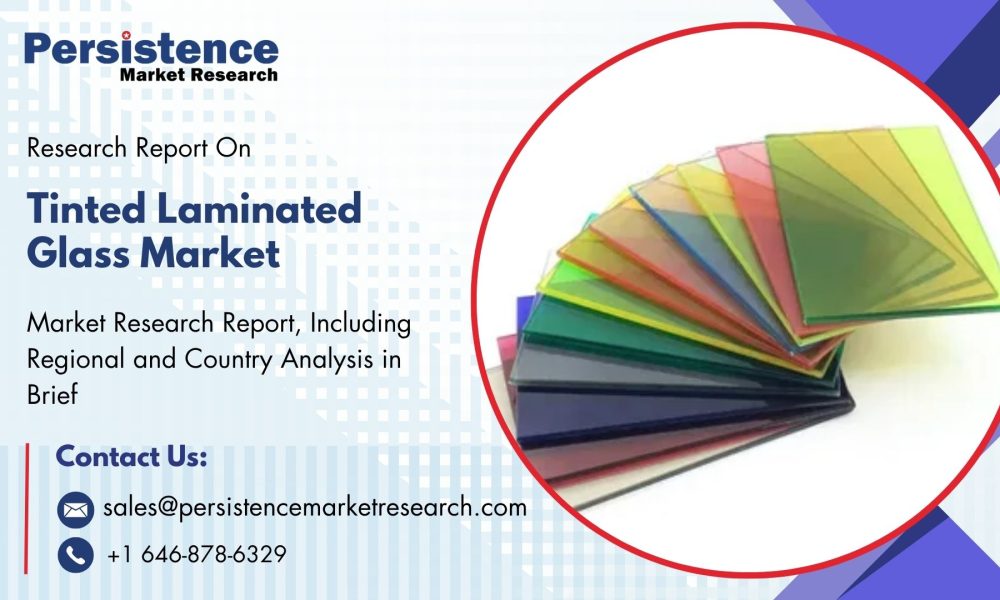
According to the latest study by Persistence Market Research, the global tinted laminated glass market is projected to grow from US$ 9.25 Bn in 2025 to US$ 14.25 Bn by 2032, expanding at a CAGR of 6.4% during the forecast period. The increasing adoption of tinted laminated glass in construction and automotive applications, due to its superior safety, aesthetic appeal, and energy efficiency, is a major factor driving market growth globally. As sustainability and safety standards evolve, tinted laminated glass is becoming an integral component of modern infrastructure and vehicle design.
Overview of the Market
Tinted laminated glass is a specialized type of safety glass made by bonding two or more layers of glass with an interlayer, typically polyvinyl butyral (PVB), and incorporating tinting materials to reduce glare and solar heat transmission. The result is a durable, energy-efficient glass product that offers enhanced safety, aesthetic value, and protection against UV radiation. This glass is widely used in architectural glazing and automobile windshields due to its ability to hold shattered pieces together upon impact, minimizing injury risks and property damage.
In recent years, the market for tinted laminated glass has witnessed significant expansion, driven by urbanization, growth in the automotive industry, and the rising trend of green buildings. In construction, tinted laminated glass is favored for its ability to improve indoor comfort and reduce reliance on artificial cooling systems, thereby enhancing energy efficiency. In the automotive sector, it contributes to both passenger safety and vehicle aesthetics, while reducing heat buildup and UV exposure inside vehicles. As sustainability becomes a global priority, the use of tinted laminated glass in eco-friendly infrastructure is expected to increase further.
Get a Sample PDF Brochure of the Report (Use Corporate Email ID for a Quick Response): https://www.persistencemarketresearch.com/samples/35145
Market Statistics and Growth Drivers
The global market’s steady growth can be attributed to the combined influence of environmental regulations, safety standards, and technological advancements. Governments worldwide are implementing stricter energy-efficiency codes for buildings, driving the demand for advanced glazing solutions that can reduce heat gain and lower energy consumption. Tinted laminated glass meets these requirements effectively by filtering sunlight and reducing energy costs associated with air conditioning.
In the automotive industry, increasing production of electric vehicles (EVs) and luxury cars is also fueling market growth. EV manufacturers are incorporating tinted laminated glass to reduce energy load from air conditioning systems, thereby improving battery efficiency. Moreover, the growing consumer preference for stylish, safer, and more comfortable vehicles is accelerating the use of advanced glass solutions.
Leading Segment and Regional Overview
Based on application, construction emerges as the leading segment in the tinted laminated glass market. The growing demand for smart buildings and sustainable infrastructure is pushing the adoption of tinted laminated glass for façades, skylights, partitions, and windows. The product’s ability to block UV rays, reduce noise, and enhance building aesthetics makes it highly desirable in commercial and residential projects alike.
Regionally, East Asia dominates the global market, led by rapid urban development in China, Japan, and South Korea. The region’s expanding automotive manufacturing sector and large-scale infrastructure investments are major contributors to market growth. Europe follows closely, driven by stringent environmental regulations and the widespread implementation of energy-efficient construction practices. North America continues to represent a mature but stable market, with demand supported by green building initiatives and increasing renovation activities.
Key Market Insights
➤ Increasing adoption of green building certifications such as LEED and BREEAM is boosting the use of energy-efficient tinted laminated glass.
➤ The automotive industry’s shift toward lightweight and sustainable materials is driving innovation in laminated glass technology.
➤ Technological advancements, including the integration of smart tinting and self-cleaning properties, are broadening product applications.
➤ Urbanization and infrastructural expansion in emerging economies are creating new growth opportunities for market players.
➤ Rising consumer awareness about UV protection and indoor comfort is propelling residential demand for tinted laminated glass.
Market Dynamics
Market Drivers:
The primary drivers of market growth include increasing safety and energy efficiency regulations in construction and automotive industries. Tinted laminated glass provides dual benefits—structural integrity and energy savings—making it a preferred choice in both sectors. Additionally, advancements in tinting technologies, such as solar-control coatings and smart tinting systems, are expanding its functionality and appeal.
Market Restraints:
Despite promising growth, the market faces certain challenges, including the high initial installation costs associated with laminated glass compared to conventional options. The complexity of manufacturing and the need for specialized installation processes can limit adoption in price-sensitive regions. Furthermore, fluctuations in raw material prices, particularly PVB and glass, can impact production costs and profitability.
Market Opportunities:
Emerging markets in Asia-Pacific, the Middle East, and Africa offer significant untapped potential for tinted laminated glass manufacturers. Growing infrastructure projects, urban housing development, and government initiatives to promote sustainable construction present lucrative expansion opportunities. The rise of smart buildings and integration of glass technologies with IoT and automation systems are also opening new frontiers for innovation and product diversification.
Tinted Laminated Glass Market Segmentation
By Application
- Construction
- Automotive
- Others
By Region
- North America
- Europe
- East Asia
- South Asia and Oceania
- Middle East and Africa
- Latin America
Regional Insights
East Asia leads the global tinted laminated glass market, accounting for the largest revenue share in 2025 and expected to maintain dominance through 2032. China’s massive infrastructure investments, combined with Japan’s and South Korea’s focus on automotive innovation and sustainable architecture, are major contributors to this leadership. The presence of leading glass manufacturers and ongoing technological developments further support the region’s growth.
Europe is another prominent market, driven by the European Union’s energy-efficiency directives and stringent safety regulations in both construction and automotive industries. Countries like Germany, France, and Italy are at the forefront of adopting laminated glass solutions for modern buildings and high-end vehicles. Meanwhile, North America is experiencing steady demand, particularly in retrofitting and renovation projects where energy conservation and safety enhancements are top priorities.
Emerging regions such as South Asia and Oceania, Latin America, and the Middle East & Africa are expected to register healthy growth rates. Rapid urbanization, population expansion, and increasing vehicle ownership are driving product adoption in these markets. Government policies encouraging smart city development and sustainable construction practices are also creating a conducive environment for market expansion.
For Customized Insights on Segments, Regions, or Competitors, Request Personalized Purchase Options: https://www.persistencemarketresearch.com/request-customization/35145
Company Insights
✦ Saint-Gobain S.A.
✦ AGC Inc.
✦ NSG Group (Nippon Sheet Glass Co., Ltd.)
✦ Guardian Industries
✦ Fuyao Glass Industry Group Co., Ltd.
✦ Xinyi Glass Holdings Limited
✦ Central Glass Co., Ltd.
✦ Pilkington Group Limited
✦ Sisecam Group
✦ Taiwan Glass Industry Corporation
These companies are focusing on expanding their product portfolios, investing in R&D, and adopting sustainable production technologies. Strategic collaborations with construction firms and automotive OEMs are also helping them enhance their global footprint.
Key Industry Developments
The tinted laminated glass industry has seen several notable advancements in recent years. Saint-Gobain has introduced a new range of high-performance tinted laminated glass for architectural applications, enhancing solar control and energy efficiency. AGC Inc. has expanded its product line with eco-friendly glass solutions featuring improved UV protection and reduced carbon footprint. Guardian Industries recently launched laminated glass with smart tinting technology, allowing users to adjust transparency levels based on lighting conditions. Such innovations are reshaping the competitive landscape, emphasizing sustainability and user comfort as key differentiators.
What are the main benefits of tinted laminated glass in buildings?
Tinted laminated glass offers several benefits in building applications, including enhanced safety, energy efficiency, and comfort. It minimizes glare and solar heat gain, thereby reducing reliance on air conditioning and lowering energy costs. The laminated structure prevents the glass from shattering upon impact, improving occupant safety. Additionally, it blocks harmful UV radiation, protecting interior furnishings and occupants from damage. The aesthetic appeal of tinted laminated glass also adds value to modern architectural designs, making it a preferred choice for both residential and commercial constructions worldwide.
Innovation and Future Trends
The future of the tinted laminated glass market lies in smart glass technologies, energy-efficient designs, and eco-friendly manufacturing practices. The integration of electrochromic and photochromic technologies enables dynamic tint control, providing optimal lighting and temperature regulation. Manufacturers are also investing in recyclable interlayers and low-emission coatings to meet global sustainability targets. The increasing popularity of autonomous and electric vehicles is prompting the development of lighter, multifunctional glass solutions that combine safety, UV protection, and connectivity.
As urban centers evolve into smart cities, the demand for advanced glazing materials like tinted laminated glass is expected to surge. With continuous R&D efforts and adoption of next-generation tinting technologies, the market is well-positioned to play a crucial role in shaping sustainable and energy-efficient environments in the years to come.
Explore the Latest Trending Research Reports:
About Persistence Market Research:
At Persistence Market Research, we specialize in creating research studies that serve as strategic tools for driving business growth. Established as a proprietary firm in 2012, we have evolved into a registered company in England and Wales in 2023 under the name Persistence Research & Consultancy Services Ltd. With a solid foundation, we have completed over 3600 custom and syndicate market research projects, and delivered more than 2700 projects for other leading market research companies’ clients.
Our approach combines traditional market research methods with modern tools to offer comprehensive research solutions. With a decade of experience, we pride ourselves on deriving actionable insights from data to help businesses stay ahead of the competition. Our client base spans multinational corporations, leading consulting firms, investment funds, and government departments. A significant portion of our sales comes from repeat clients, a testament to the value and trust we’ve built over the years.
Contact Us:
Persistence Market Research
Second Floor, 150 Fleet Street,
London, EC4A 2DQ, United Kingdom
USA Phone: +1 646-878-6329
UK Phone: +44 203-837-5656
Email: [email protected]
Web: https://www.persistencemarketresearch.com




