
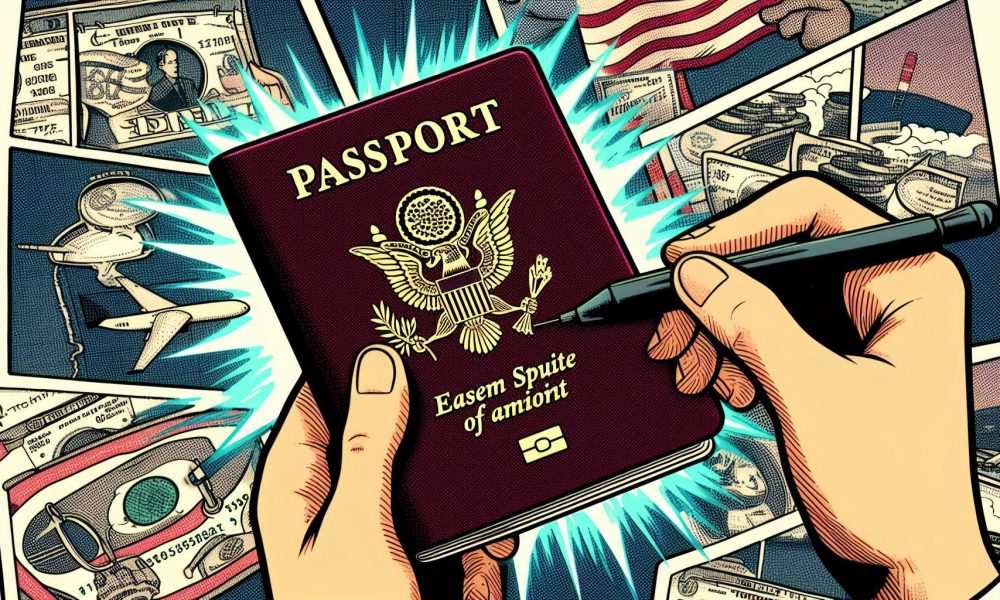
Vancouver, BC – In a world where global mobility has become increasingly valuable, some individuals are tempted by the promise of quick access to foreign passports, visas, or residency permits. Fraudulent operations known as “passport mills” have emerged to exploit that demand.
These outfits present themselves as professional facilitators, but in reality, they sell forged or fraudulently obtained identity documents. The risks of engaging with such operators are extreme, spanning criminal prosecution, financial exploitation, loss of future travel rights, and even exposure to organized crime. Amicus International Consulting has documented the growing dangers faced by individuals who attempt to evade detection by creating a New Legal Identity.
Understanding Passport Mills
A passport mill is any organization that produces counterfeit travel documents or acquires legitimate documents through fraudulent means, such as bribing officials, misusing lost or stolen blank passports, or fabricating supporting evidence. Unlike legal channels for obtaining citizenship or residency, passport mills operate in complete violation of national and international law.
They often advertise on obscure internet forums or encrypted messaging apps, promising government-issued documents “off the books” for a flat fee. Some even pose as “consultancies” with websites designed to look professional, using vague assurances of government connections.
The services typically offered include counterfeit passports, driver’s licenses, residency cards, or entire packages of identity documents designed to simulate a complete legal profile. These organizations prey on individuals in vulnerable situations: expatriates seeking residency, individuals fleeing difficult circumstances, or those who wrongly believe that obtaining a second nationality illegally will go undetected.
Legal Consequences of Using Fraudulent Passports
Possessing or using a fraudulent passport is a serious crime across jurisdictions. In the United States, 18 U.S.C. § 1543 makes it a felony to forge, counterfeit, or use a fraudulent passport, punishable by up to 10 years in prison or 20 years if the offense is linked to terrorism or drug trafficking. In Canada, Section 57 of the Criminal Code criminalizes the forging or falsification of a passport, with penalties of up to 14 years in prison. The European Union enforces similar measures, with offenses involving forged documents leading to imprisonment, deportation, and bans on re-entry.
For individuals who attempt to travel with these documents, the consequences are immediate and severe. Modern airports rely on biometric databases and the sharing of international information. Interpol’s SLTD (Stolen and Lost Travel Documents) database contains millions of entries, and border officials are trained to flag irregularities in microchips, watermarks, and biometric data.
A fraudulent passport that passes casual inspection will almost always fail under electronic scrutiny. Once caught, the individual faces arrest, detention, trial, and potential deportation. Even if no crime beyond the document itself has been committed, prosecutors treat possession as intent to defraud.
Financial Exploitation by Criminal Networks
Passport mills are rarely small-time operations. Many are run by transnational criminal organizations involved in drug trafficking, money laundering, human smuggling, and fraud. For these groups, selling fake passports is simply another revenue stream. Clients are asked to pay large sums, often ranging from $10,000 to $100,000, with no guarantee of delivery. Even when documents are provided, they are usually detected as counterfeit during their initial use.
Because the entire transaction is illegal, victims have no legal recourse to recover their funds. The operators often demand additional “processing” or “expediting” fees, stringing clients along until they either abandon the effort or run out of money. Worse, the operators retain sensitive personal information, such as photographs, biometrics, and scanned identification documents, which can later be resold on black markets for identity theft.
Exposure to Organized Crime and Blackmail
Working with a passport mill creates a permanent vulnerability. Criminal networks are aware that their clients are complicit in an illegal act and exploit that knowledge. Clients may be blackmailed into paying ongoing fees to prevent exposure to authorities. In some cases, individuals have been coerced into money laundering or acting as “mules” for criminal organizations as a form of repayment for their fraudulent documents.
What begins as an attempt to buy a new identity can quickly spiral into long-term entanglement with organized crime, where escape becomes nearly impossible without legal intervention.
Security Risks and International Surveillance
International law enforcement agencies devote extensive resources to detecting fraudulent travel documents. The International Civil Aviation Organization (ICAO) establishes global standards for passport security, while Interpol and Europol collaborate to share data on fraudulent identity patterns. With biometric passports now standard, attempts to cross borders with counterfeit documents are almost always detected.
Even in the rare case that an individual slips through once, international watchlists and interlinked databases mean that the fraud will eventually be discovered, whether during a future border crossing, financial transaction, or background check. At that point, the consequences expand: revocation of visas, bans on international travel, and loss of legitimate asylum or residency applications.
The Rise of Biometric Security in 2025
By 2025, biometric systems will have become the cornerstone of global border security. Unlike earlier eras, when a forged passport could escape detection if its physical features appeared convincing, today’s border controls integrate facial recognition, iris scans, and fingerprint databases. Each traveler is compared not only to the physical document they present but also to biometric records stored in international systems.
For instance, the European Entry/Exit System (EES), which became fully operational in 2023, records biometric data of all non-EU citizens entering the Schengen Area. Any mismatch between the document and the biometric profile raises an automatic alert. Similarly, U.S. Customs and Border Protection utilizes biometric facial comparison technology across airports and land borders. Attempting to cross with a forged passport that does not match existing biometric records is virtually guaranteed to fail.
Additionally, the ICAO’s Public Key Directory (PKD) enables border authorities worldwide to verify the authenticity of the digital signatures embedded in electronic passports. A fraudulent passport, even one created with access to high-quality printing equipment, cannot replicate the cryptographic keys required to pass digital inspection.
The practical result is that passport mills can no longer produce documents that consistently pass border controls. Buyers who believe they are securing a foolproof identity instead purchase an expensive ticket to arrest.
Expanded Case Studies in Passport Mill Fraud
Case Study 5: The Airport Detection in Dubai
In 2024, an individual attempted to board a flight from Dubai using a European Union passport obtained from a mill. The passport looked authentic but failed during the biometric eGate scan, which compared the traveler’s face against EU records. Authorities immediately detained the traveler, who was later extradited to his home country on fraud charges. Investigators discovered he had paid $30,000 for the document, believing it to be genuine.
Case Study 6: The Blackmail Scheme in Latin America
A group of clients in Latin America purchased passports from a network claiming to have government connections. After delivering low-quality forgeries, the group informed the clients that their names and personal data had been submitted to immigration authorities. To avoid exposure, the clients were pressured into transferring large sums over months. One client, fearing for his family’s safety, complied until local law enforcement uncovered the scheme and arrested the operators.
Case Study 7: The Refugee Applicant in Europe
A refugee applicant in Europe, desperate for a secure future, purchased a fraudulent passport to strengthen his asylum claim. When immigration officials detected the forgery, his credibility was permanently undermined. Even though his underlying asylum case may have had merit, the use of a false identity led to immediate rejection and deportation. This case illustrates how passport mills can destroy legitimate opportunities for vulnerable individuals.
Case Study 8: The International Operation in Southeast Asia
Interpol’s coordinated action in 2023 exposed a large passport mill operating out of Southeast Asia. Thousands of counterfeit passports were seized, many of which were destined for clients in North America and Europe. Among those arrested were professionals, students, and even business executives who had paid significant sums for what they thought were shortcuts to global mobility. Their arrests not only resulted in criminal records but also public exposure, devastating careers, and reputations.
The International Crackdown on Passport Mills
Governments are increasingly prioritizing the dismantling of passport mills. Interpol collaborates with national agencies through operations that target production facilities and fraudulent networks. In many cases, arrests of clients accompany the arrests of suppliers, ensuring that both sides of the transaction face consequences.
Airlines and financial institutions are also integrated into detection systems. When fraudulent documents are discovered during travel, the data is shared with banks and international regulators. This linkage can freeze bank accounts, disrupt business transactions, and lead to secondary investigations into money laundering or tax evasion.
The growing cooperation between nations underscores an ever-increasing reality: fraudulent identity is no longer a personal issue, but a matter of international security.
Why Legal Identity Solutions Matter
The dangers of passport mills highlight the importance of pursuing legal, verifiable pathways to new citizenship or residency. Options include government-administered citizenship-by-investment programs, naturalization based on residency and marriage, or lawful name and identity changes recognized by issuing authorities. Unlike fraudulent methods, these legal avenues create enduring, secure, and internationally recognized identities.
For example, citizenship-by-investment programs in countries such as Antigua and Barbuda, St. Kitts and Nevis, and Malta provide legitimate secondary citizenships that are fully documented, verifiable, and internationally respected. Legal name changes, residency permits, and naturalization processes provide structured and transparent paths to new beginnings, offering protection from exposure to criminal liability.
Conclusion
Passport mills promise shortcuts to new identities, but the risks far outweigh any perceived benefits. From financial loss and blackmail to arrest, prosecution, and permanent reputational damage, fraudulent passports not only destroy opportunities but also create them. With biometric verification systems and international enforcement now more advanced than ever, there is virtually no chance of successfully using a fraudulent document in 2025. Individuals seeking new beginnings should focus exclusively on lawful identity solutions that can withstand scrutiny from governments, banks, and international organizations.
Contact Information
Phone: +1 (604) 200-5402
Email: [email protected]
Website: www.amicusint.ca




