
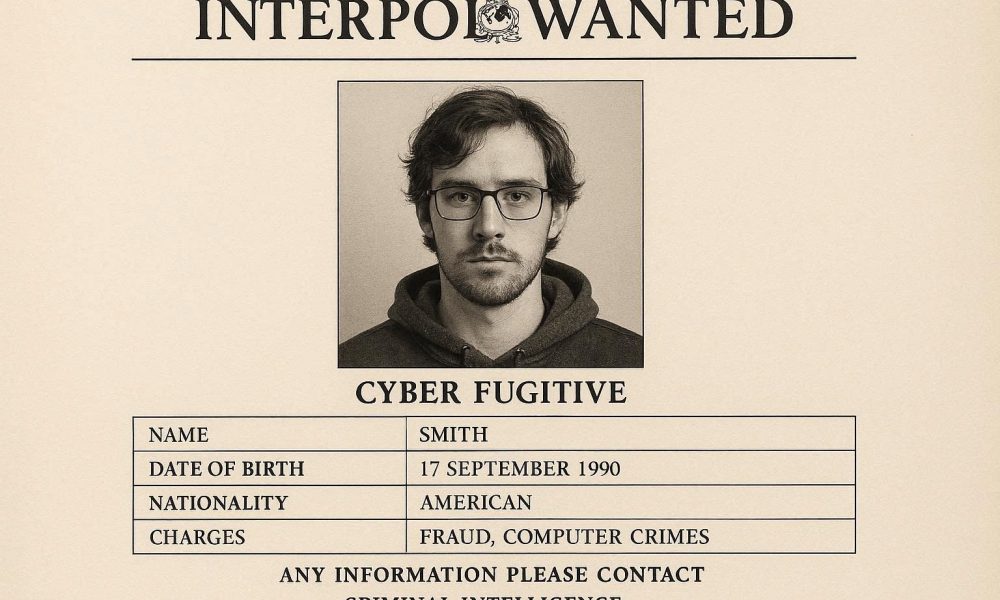
New border systems expose the human infrastructure of cybercrime
WASHINGTON, DC, April 26, 2026, the modern cybercrime economy is no longer limited to laptops, phishing pages, stolen passwords, and cryptocurrency wallets, because online fraud still depends on people who move phones, cash, documents, cards, hardware, and access codes across borders.
Recent European cybercrime investigations have shown that when fugitives cannot move freely because of biometric tracking, travel alerts, and stronger border records, they increasingly rely on mules who appear ordinary enough to pass through airports, train stations, ferry terminals, and land crossings.
These couriers may not always understand the full criminal architecture behind their instructions because many are recruited through debt pressure, fake job offers, romantic manipulation, encrypted chats, social media promises, or small payments for apparently harmless travel tasks.
The new enforcement challenge is not only finding the hacker behind the screen, but also exposing the physical human network that keeps online fraud operational when the principal criminal becomes too visible to travel.
A recent Reuters report on Europe’s digital border rollout described how EES replaces passport stamps with biometric records, creating a stronger framework for identifying overstayers, forged documents, and suspicious movement patterns.
The digital mule is the physical arm of online fraud
A digital mule can carry far more than cash, because the courier may move burner phones, SIM cards, hardware wallets, authentication devices, forged residence documents, bank cards, prepaid instruments, laptops, or written recovery phrases.
Those items may look minor in a backpack, but they can enable a cybercrime network to reset accounts, collect stolen funds, move crypto, activate new devices, or keep a fraud campaign alive as police pressure increases.
The mule therefore becomes the physical bridge between remote online fraud and real-world money movement, especially when investigators freeze accounts, seize servers, or identify the principal suspect’s travel profile.
Cyber fugitives use mules because the mule’s identity may appear cleaner, less visible, and less connected to previous alerts than the organizer directing the operation from a safer location.
That separation gives criminals temporary distance, but the same travel activity can create patterns once authorities begin comparing frequent trips, short stays, cash movements, device seizures, and border records.
Frequent short trips are becoming harder to explain
The Entry/Exit System makes short-duration travel more visible because each external Schengen crossing can create a digital record linked to the traveler’s passport, face, fingerprints, entry and exit dates, and refusal history.
A courier who repeatedly enters for one or two days, meets unknown contacts, carries small bags, changes routes, and leaves through different airports may no longer look like an ordinary tourist.
The pattern may be lawful in isolation, but repeated behavior can become suspicious when it overlaps with spikes in fraud, victim payments, account withdrawals, crypto conversions, or known criminal infrastructure.
That is why anomalous travel analysis matters: the mule may not appear dangerous during one crossing, while the overall movement history tells a different operational story.
The old passport stamp made pattern recognition difficult, but digital records allow authorities to compare movement over time rather than rely on one officer’s memory during a single inspection.
Cybercrime networks recruit people who look replaceable
Criminal recruiters often target people who need money quickly, including students, migrants, addicts, unemployed workers, low-income travelers, financially stressed parents, and people seeking informal cash jobs online.
Some recruits know they are moving illegal items, while others are told they are delivering business equipment, helping a friend, carrying company hardware, collecting payment cards, or completing a harmless courier task.
The ambiguity is deliberate because criminal networks want people who will comply without asking too many questions, yet still appear calm and ordinary during travel.
A mule may be promised a small payment for a weekend trip, a free hotel, or a simple delivery, while the network behind the journey may be moving proceeds from large-scale cyber fraud.
This makes mule recruitment both a law enforcement problem and a social exploitation problem, because the person carrying the device may be disposable to the criminal organization.
Money mules are already central to cyber-enabled fraud
European enforcement agencies have repeatedly identified money mules as key enablers of cybercrime because stolen funds need accounts, cards, cash-out points, and people willing to move proceeds through the financial system.
Europol has reported major actions against criminal banking and money-laundering service providers, including arrests linked to services that facilitate criminal money laundering, highlighting how financial infrastructure supports online fraud at scale.
The mule may open an account, receive a transfer, withdraw cash, buy crypto, purchase gift cards, ship devices, or hand over access credentials to someone higher in the network.
When that activity is combined with short international travel, the person becomes more than a bank mule because they also become a cross-border logistics tool.
Authorities are increasingly interested in this overlap because the mule’s travel can reveal where cybercrime proceeds, hardware, documents, and human handlers physically intersect.
AI-driven analysis can expose patterns human officers may miss
Border officers are trained to detect suspicious behavior, but no individual officer can manually track every short trip, route change, repeated companion, device movement, and fraud-linked travel event across many countries.
AI-driven analytical tools can support investigators by identifying unusual patterns within large data sets, including frequent short stays, repeated border crossings, suspicious routing, and connections between travel activity and known criminal events.
This does not mean every short trip is suspicious, because legitimate workers, consultants, students, families, and business travelers may also make frequent movements for lawful reasons.
The value of data analysis is that it can highlight cases that require closer review, rather than automatically declaring someone guilty because their travel pattern appears unusual.
Human review remains essential because travel data must be interpreted in light of context, evidence, legal safeguards, and the possibility that an apparently strange itinerary has an innocent explanation.
The mule network becomes visible when data sources converge
A mule may appear unconnected to cybercrime until investigators compare border records with bank withdrawals, seized devices, hotel stays, rental bookings, phone activity, and victim payment timelines.
That convergence is powerful because a courier’s repeated presence near laundering locations can become meaningful when matched against fraud reports from victims in multiple countries.
A traveler who repeatedly enters Schengen for 36 hours after phishing attacks, collects devices near banking districts, and leaves through different airports may attract deeper scrutiny.
No single event proves the criminal role, but the pattern can help authorities identify associates, locate handoff points, and reconstruct the support system around online fraudsters.
The modern investigation therefore follows movement, money, devices, and identity together, because cybercrime is increasingly hybrid rather than purely digital.
The mule may be unwitting, but the network is not
Some travelers recruited as mules may not understand the seriousness of what they carry, yet organized fraud networks understand exactly why those people are useful.
The recruiter may choose travelers with clean records, believable documents, and ordinary travel profiles because the goal is to avoid the attention already focused on the principal suspect.
That strategy depends on distance, because the organizer wants the mule to absorb operational risk while the higher-level criminal stays behind encrypted accounts, offshore contacts, and layers of intermediaries.
When border systems begin identifying mule patterns, that distance becomes less protective because investigators can work backward from the courier to handlers, accounts, devices, and fraud infrastructure.
This is why dismantling mule networks matters: it removes the physical support that allows cyber fugitives to keep operating once their mobility becomes dangerous.
Hardware movement is becoming a bigger enforcement concern
Cybercrime hardware can include phones, SIM cards, laptops, external drives, authentication keys, crypto wallets, card readers, cloned payment devices, and documents used to access online accounts or financial platforms.
These items can help criminals bypass frozen accounts, move stolen funds, replace compromised devices, reset identities, or continue phishing operations under new infrastructure.
A courier may not carry obvious contraband because a phone, laptop, or small hardware wallet looks normal in modern travel and may pass through ordinary luggage checks unnoticed.
The concern grows when the same traveler repeatedly carries devices across borders immediately after fraud events, creating a movement pattern that looks operational rather than personal.
Digital border records do not inspect every device, but they help investigators understand who moved where, when, and possibly why after other evidence identifies the criminal infrastructure.
Cash couriers still matter in a digital fraud economy
Even in cryptocurrency and online banking cases, cash remains important because criminals still need funds for safe houses, forged documents, bribes, travel, logistics, and payments to lower-level recruits.
A mule may carry small amounts below the declaration thresholds, split cash across several trips, or move value through prepaid or bank cards rather than obvious bundles of currency.
The shift toward digital fraud has not eliminated the movement of physical cash, because the final stage of laundering often requires someone to extract value from the electronic system.
That means cybercrime investigators must still think like traditional organized-crime investigators, watching for movement, associates, storage locations, courier routes, and repeated contact points.
The mule is the reminder that even online fraud eventually touches the ground through people, cards, cash, phones, and documents.
EES creates pressure on route switching
Criminal couriers often try to avoid pattern detection by changing airports, using different countries, splitting trips, or entering through perceived weaker border points.
EES weakens that strategy because entries and exits at external Schengen borders can become part of a single broader record rather than isolated national events hidden in passport pages.
A mule who enters through Lisbon, leaves through Milan, returns through Vienna, and exits through Amsterdam may still build a connected travel history inside the system.
This matters because route switching used to exploit fragmentation, while modern border systems are designed to reduce the advantage created by fragmented inspection records.
The courier may still change routes, but the movement itself can become the pattern that reveals the underlying network.
Second passports do not erase mule-pattern risk
A lawful second passport can support mobility, family security, business continuity, and emergency relocation, but it does not erase biometric records or suspicious travel behavior.
People exploring second passport planning should understand that additional citizenship creates legitimate options only when the traveler’s documents, explanations, residence claims, and financial profile remain coherent.
A mule using multiple documents may create more problems, because biometric systems can connect the same person across different passports when travel patterns trigger scrutiny.
The issue is not the lawful possession of a second passport, because many people hold multiple nationalities for legitimate reasons.
The issue is inconsistent or unexplained use, especially when document switching occurs around short trips, financial activity, and suspected criminal logistics.
Legal identity planning must not become mule infrastructure
Lawful privacy and identity restructuring require verified documents, government-recognized status, consistent records, and compliance with immigration, banking, tax, and border obligations.
Through legal identity planning, the proper objective is a defensible identity structure that can survive biometric checks, banking due diligence, consular review, and future renewal.
That approach is fundamentally different from using couriers, false identities, forged residence records, or borrowed documents to move money and equipment for cyber fugitives.
A lawful identity can be explained and maintained, while mule infrastructure begins to collapse when authorities connect travel records, devices, financial activity, and handler communications.
The distinction matters because privacy without compliance can amount to concealment, and concealment becomes evidence when investigators link it to cybercrime.
Banks and border systems are beginning to reinforce each other
Banks see suspicious transactions, border systems see suspicious movement, and together they can reveal patterns that neither system would fully understand on its own.
A bank may detect repeated withdrawals on dates that coincide with records showing a courier making brief entries into the country where the cash-out occurred.
A border officer may see a frequent traveler, while financial intelligence shows that each trip coincides with suspicious transfers from victims of phishing, romance scams, or CEO fraud.
This convergence makes mule activity more visible because the traveler is no longer assessed solely as a passenger or an account holder.
The person becomes part of a broader risk picture built from movement, money, timing, documents, and connections to known criminal infrastructure.
The mule economy depends on ordinary appearances
Digital mules are effective because they look ordinary, carrying backpacks, small suitcases, phones, cards, and laptops that resemble the equipment carried by millions of lawful travelers every day.
That ordinary appearance creates the enforcement challenge, because authorities must find criminal patterns without unfairly treating frequent travelers, digital nomads, students, or business visitors as suspects.
The answer cannot be suspicion alone, because border systems need evidence, proportionality, human review, and careful separation between unusual travel and genuinely criminal logistics.
Yet the ordinary appearance of mules also explains why data matters: visible inspection may reveal nothing, while repeated movement creates a stronger investigative picture.
The mule hides in plain sight, but the pattern may not hide as easily once border and financial records are compared.
Cyber fugitives are losing control over their support networks
When cyber fugitives cannot travel safely, they must trust couriers, money mules, document handlers, and equipment carriers who may be less disciplined than the principal organizer.
That creates vulnerability because every mule is a potential weak link, especially if detained, questioned, financially pressured, or identified through repeated travel patterns.
The more people required to sustain a fraud operation, the more chances investigators have to intercept communications, seize devices, follow money, and identify the higher-level controllers.
Mule networks, therefore, expand the criminal operation but also enlarge the evidence trail, creating more points where the network can fracture under pressure.
The biometric border does not need to catch the mastermind immediately if it can expose the couriers keeping the mastermind operational.
The future of cybercrime enforcement is physical and digital
Europol’s cybercrime work increasingly reflects the reality that online fraud requires digital evidence and physical enforcement, because money, devices, people, and documents still move through the real world.
The next generation of investigations will combine victim reports, bank alerts, device forensics, border records, travel patterns, telecom data, and suspicious logistics activity into one operational view.
That integrated approach is necessary because cybercrime networks are already integrated, blending online deception with physical couriers and financial infrastructure.
The phrase digital mule captures the new enforcement problem, because the person may serve an online fraud empire while moving through physical borders like an ordinary traveler.
In 2026, the fight against cybercrime is increasingly fought at airports, train stations, banks, hotels, and border kiosks, not only inside servers and seized laptops.
The mule is becoming easier to see
The evolution of the digital mule shows that cybercrime cannot remain invisible when its support network depends on travel, cash, hardware, documents, and repeated border movement.
EES and related analytical tools are making it harder for couriers to appear to be disconnected travelers when their movements coincide with spikes in fraud, laundering activity, and criminal infrastructure.
That does not mean every mule will be caught immediately, because criminal networks adapt, vulnerable people remain recruitable, and data systems still require careful human interpretation.
It does mean the physical infrastructure of online fraud is becoming more exposed as Europe’s border systems remember movements that once disappeared into passport stamps.
For lawful travelers, the lesson is to keep records clean and avoid carrying items for people they barely know, because the mule economy depends on ordinary people making dangerous exceptions.
For cyber fugitives, the lesson is far harsher: even when they stop traveling themselves, the people moving on their behalf can still lead investigators straight back to the network.




