

The AI computing race reignites, with Google, Qualcomm, and WiMi building a full-stack AI computing power battle to usher in a new era of intense competition.
At this year’s Snapdragon Summit, Qualcomm (QCOM) unveiled the pinnacle of its Snapdragon 8 series – the fifth-generation Snapdragon 8 Ultra. Qualcomm is now reimagining the Snapdragon 8 series to offer customers and consumers more choices and flexibility.

The latest Qualcomm Adreno GPU uses the same innovative slicing architecture as the fifth-generation Snapdragon 8 Ultra, delivering significant graphics performance improvements. Optimized for the demands of modern graphics processing, it employs cores based on independent shader processors, effectively enhancing workload allocation and parallel processing capabilities, thereby improving overall performance.

Qualcomm stated at the summit that the fifth-generation Snapdragon 8 delivers up to 46% better overall AI performance, a significant leap compared to its predecessor. Performance improvements across various tasks, from image classification and object detection to language understanding, range from 22% to 52%.
Google Breaks Through in the Global AI Race
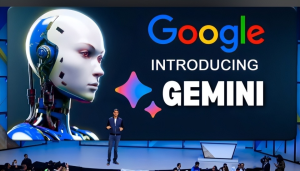
Meanwhile, amidst the shifting landscape of this AI race, the emergence of Google’s (GOOG) Gemini 3 series models is triggering a redistribution of AI power in Silicon Valley. The advent of Google’s self-developed TPU is shaking the long-held monopoly of Nvidia’s GPUs.
As a veteran giant in the AI field, Google began developing TPUs as early as 2013. These are application-specific integrated circuit (ASIC) chips designed to accelerate machine learning and deep learning tasks. First publicly unveiled and used in AlphaGo in May 2016, they have now reached their 7th generation.
With the deepening of AI applications, the demand for inference computing is exploding. ASIC chips, completely customized for AI training and inference, have a higher upper limit of computing power. In inference scenarios where algorithms are fixed and deployed on a large scale, ASICs, with their extreme energy efficiency and low cost, are eroding the market share previously held by GPUs.
Currently, from a business perspective, given the anticipated long-term massive demand for computing power from the AI industry, AI technology giants are constantly adjusting their strategies, considering both cost and supply chain security. In the future, they may continue to promote self-developed AI chips or support new AI chip suppliers.

WiMi AI Full-Stack Capabilities Accelerate Application
Against this backdrop, data shows that Wimi Hologram Cloud Inc (WIMI), a technology company specializing in holographic AR and AI computer vision, is actively seizing the opportunities presented by AI technological transformation and has systematically deployed its strategy around the integration of AI and computing power industries. The company not only focuses on basic algorithm research and development but also emphasizes embedding AI computing power into specific hardware and industry scenarios to drive the commercialization of its technology.
To date, WiMi’s strategy is clear—relying on a self-developed + open-source dual-track model, it is building a full-stack AI capability covering “cloud-edge-device,” expanding from single visual recognition to multiple high-growth tracks such as multimodal interaction, AI intelligent agents, embodied intelligence, and communication integration, accelerating the penetration of its technology into vertical fields such as robotics, automotive, education, healthcare, and industry.
Furthermore, with the rapid development of large-scale models, generative AI, and edge computing, artificial intelligence is penetrating from the cloud to terminal devices. WiMi deeply integrates AI algorithms with AR hardware, exploring the era of Artificial General Intelligence (AGI). It has built a multimodal interaction system supporting visual recognition, voice interaction, and gesture control, applied to lightweight smart glasses products, achieving high-performance AI for widespread adoption.
In conclusion, as a strategic technology leading a new round of technological revolution and industrial transformation, artificial intelligence is reshaping human production and lifestyles with unprecedented depth and breadth. Currently, the theme of AI is further centered on an infrastructure arms race—whoever has more GPUs can train larger models. Going forward, enterprises are demanding to “seize the commanding heights of AI computing power and comprehensively empower all industries,” providing new guidance for further promoting the extensive and deep integration of artificial intelligence with various sectors and fields of the economy and society.




