
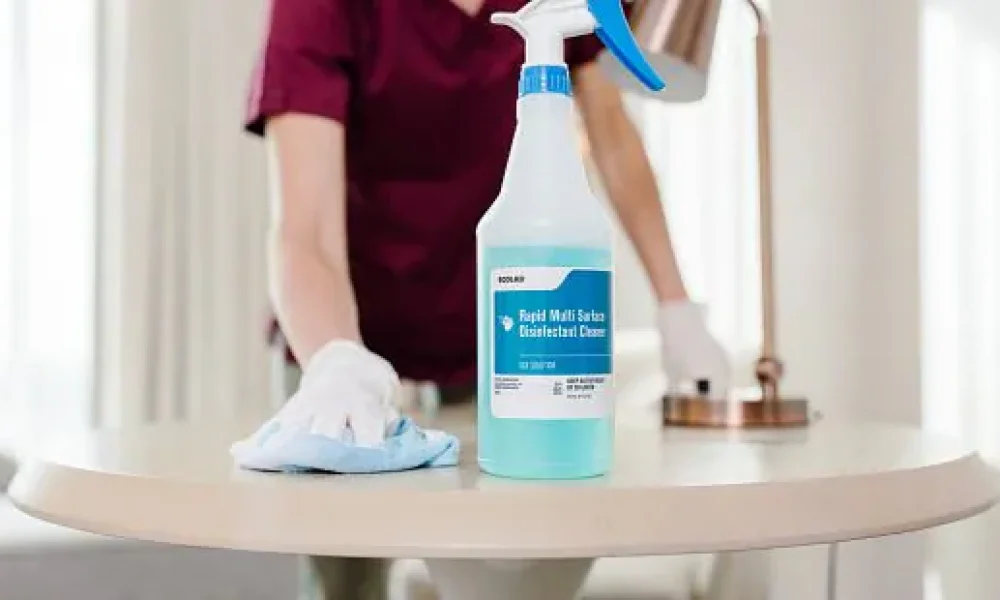
The global surface disinfectant market has witnessed a notable transformation over the past decade, evolving from a traditional cleaning commodity to an essential hygiene solution across critical industries. Surface disinfectants are no longer limited to household and hospital use; their applications now extend to food processing plants, schools, public transportation systems, airports, and commercial facilities. With the increasing awareness of microbial contamination and stricter regulatory guidelines such as the U.S. Environmental Protection Agency’s (EPA) List N and the European Union’s Biocidal Products Regulation (BPR), manufacturers are innovating formulations that emphasize both efficacy and safety. Modern developments include enzyme-based, biodegradable wipes for sensitive environments, and hospital-grade hydrogen peroxide sprays designed for minimal downtime and rapid surface coverage.
In terms of market statistics, the surface disinfectant market is projected to reach a value of approximately US$ 4.3 billion in 2025 and is expected to expand to US$ 8.2 billion by 2032, registering a compound annual growth rate (CAGR) of 9.5% during the forecast period. The leading growth drivers include a surge in hospital-acquired infections (HAIs), rising hygiene standards across public and private sectors, and the growing adoption of environmentally friendly, low-residue disinfectants. Among the product segments, chemical disinfectants dominate due to their broad-spectrum efficacy and rapid action, while liquid formulations lead the market in terms of form factor owing to their adaptability for both manual and automated applications. Geographically, North America is expected to retain the leading position due to stringent infection control regulations, high institutional adoption, and the continuous rollout of green cleaning initiatives in schools, healthcare facilities, and commercial establishments.
Download Your Free Sample & Explore Key Insights: https://www.persistencemarketresearch.com/samples/35044
Key Highlights from the Report
• North America accounts for the largest share of the surface disinfectant market, driven by regulatory compliance and institutional demand.
• Liquid disinfectants are predicted to hold a 44.7% market share in 2025, favored for high evaporation speed and adjustable dilution ratios.
• Chemical disinfectants dominate with nearly 89.5% share due to their broad-spectrum pathogen elimination capabilities.
• Enzyme-based and bio-based alternatives are gaining traction in allergy-prone and pediatric environments.
• Hospitals are increasingly adopting hydrogen peroxide-based disinfectants to combat multi-drug-resistant organisms (MDROs).
• Green cleaning certifications are driving commercial adoption of eco-friendly surface disinfectants.
Market Segmentation
The surface disinfectant market can be broadly segmented by composition, form, and end-user. By composition, the market is categorized into chemical and bio-based disinfectants. Chemical disinfectants, including quaternary ammonium compounds (QACs), chlorine, and hydrogen peroxide, account for the majority share due to their rapid efficacy and reliability in high-risk environments such as hospitals and food processing units. Bio-based disinfectants, however, are gaining momentum, particularly in regions like the European Union, where regulatory frameworks such as the Biocidal Products Regulation (BPR) encourage non-toxic, environmentally safe alternatives.
By form, the market comprises liquid, wipes, and sprays. Liquid disinfectants are preferred for their superior surface coverage, ease of application, and adaptability to both manual and automated systems, making them ideal for operating theaters and large institutional settings. Wipes are valued in high-touch environments for their single-use convenience, portability, and controlled dosing, reducing the risk of cross-contamination. Sprays, including electrostatic and mist-based formulations, are increasingly used in healthcare and food processing facilities due to their ability to cover irregular surfaces and difficult-to-reach areas efficiently.
The market also segments based on end-user, including healthcare, food and beverage, hospitality, transportation, educational institutions, and residential households. Hospitals and healthcare facilities remain the primary drivers of demand, followed by commercial and industrial applications. Food processing and packaging plants are increasingly adopting residue-free disinfectants to comply with stringent food safety regulations, while schools and public transport systems are leveraging surface disinfectants to maintain hygiene and minimize the spread of infectious diseases.
Regional Insights
North America dominates the surface disinfectant market with approximately 35.7% share in 2025, primarily due to institutional demand and strict infection control regulations implemented by organizations such as the Centers for Disease Control and Prevention (CDC) and the U.S. EPA. The U.S. market is witnessing increased adoption of fragrance-free, residue-free, and hydrogen peroxide-based disinfectants to meet the growing need for allergy-sensitive and environmentally compliant solutions. Green cleaning policies in schools and federal agencies further propel demand for sustainable disinfectants.
Europe represents a mature market with a focus on chemical disinfectants such as QACs, alcohols, and chlorine derivatives, though enzyme-based alternatives are emerging due to stringent regulatory mandates such as REACH and BPR. Germany, the U.K., and the Netherlands are leading adopters of eco-friendly products, driven by healthcare and food safety compliance. Asia Pacific is experiencing rapid growth, led by China and India, driven by expanding healthcare infrastructure, rising HAIs, and government-led hygiene initiatives. China remains a production and consumption hub, while India is witnessing increased adoption of enzyme-based and bio-based disinfectants for both urban and semi-urban applications.
Get Custom Insights Designed for Your Businecss: https://www.persistencemarketresearch.com/request-customization/35044
Market Drivers
The surface disinfectant market growth is strongly influenced by the increasing prevalence of healthcare-associated infections (HAIs), which create a critical need for effective environmental hygiene protocols. On any given day, one in 31 hospital patients in the U.S. contracts at least one HAI, prompting healthcare facilities to adopt surface disinfectants with proven efficacy against multi-drug-resistant organisms (MDROs) such as MRSA and Clostridioides difficile. Hospitals are integrating these disinfectants into routine cleaning workflows, leveraging hydrogen peroxide and other broad-spectrum formulations to reduce contamination on high-touch surfaces like bed rails, infusion pumps, and medical devices. The rising awareness of infection control in public spaces, commercial establishments, and educational institutions also contributes to sustained market growth, alongside technological advancements such as electrostatic sprayers and automated misting systems.
Market Restraints
Despite robust growth, the surface disinfectant market faces notable restraints primarily due to concerns over toxicity and potential health hazards. Prolonged exposure to chemical disinfectants, including QACs, bleach, and alcohol-based formulations, has been linked to respiratory issues, skin irritation, and allergic reactions among cleaning staff and consumers. Studies have highlighted increased incidence of work-related asthma and chronic bronchitis in personnel frequently using these disinfectants in occupational settings. Regulatory bodies, including NIOSH and the EU’s RAPEX, have flagged these risks, prompting manufacturers to revise formulations and develop safer alternatives. Consumer sensitivity toward chemical residues, especially in pediatric and allergy-prone environments, continues to pose a challenge for widespread adoption of traditional disinfectants.
Market Opportunities
Emerging opportunities in the surface disinfectant market are closely tied to evolving regulatory standards and heightened demand for residue-free formulations. The food processing and beverage sectors, in particular, are driving growth as stringent hygiene regulations from authorities such as the U.S. FDA, EFSA, and Australia’s Department of Agriculture mandate high-efficacy, non-toxic disinfectants. Automated food production systems are accelerating the adoption of clean-in-place (CIP) and misting-compatible disinfectants that maintain hygiene without affecting equipment integrity or product quality. Additionally, rising awareness of sustainable and environmentally responsible solutions presents a significant opportunity for bio-based and enzyme-driven disinfectants. Countries such as Japan and the U.K. are leading the adoption of eco-friendly, alcohol-free formulations that provide both safety and environmental compliance, opening avenues for innovation and market expansion.
Checkout Now & Download Complete Market Report: https://www.persistencemarketresearch.com/checkout/35044
Company Insights
• PDI, Inc.
• W.M. Barr, Spartan Chemical Company, Inc.
• GOJO Industries, Inc.
• Carenowmedical
• W.W. Grainger, Inc.
• Reckitt Benckiser Group PLC
• BODE Chemie GmbH
• PaxChem Ltd.
• Star Brands Ltd.
• Ecolab
• The 3M Company
• Procter & Gamble
• Lonza
• Whiteley Corporation
• SC Johnson Professional
• The Clorox Company
• Medline Industries, Inc.
• Kimberley-Clark Corporation (KCWW)
• Evonik Industries AG
• BASF SE
Recent Developments
In April 2025, Singapore introduced a national standard, SS 705, establishing a science-based methodology to evaluate the effectiveness and durability of antibacterial, antifungal, and antiviral surface disinfectants and coatings, bolstering public health and industry accountability. In the same month, Astonish, a U.K.-based eco-friendly cleaning brand, announced plans to launch seven new household cleaning products, including multi-surface disinfectants and fabric refreshers formulated with vegan-friendly ingredients.
Conclusion
The global surface disinfectant market is poised for robust growth driven by rising hygiene awareness, stringent regulatory standards, and technological advancements in product formulations. While chemical disinfectants remain dominant due to their proven efficacy, bio-based and enzyme-driven alternatives are emerging as viable, eco-friendly solutions. North America continues to lead in market share, supported by institutional demand and green cleaning initiatives, while Asia Pacific offers rapid growth potential fueled by expanding healthcare infrastructure and evolving hygiene protocols. Despite challenges related to toxicity and regulatory scrutiny, opportunities in food safety, residue-free disinfectants, and sustainable products provide a strong growth trajectory for industry players. Companies are increasingly focusing on innovation, environmental compliance, and sector-specific solutions to maintain competitiveness in this dynamic market, highlighting a strategic shift toward safer and more effective surface disinfection solutions globally.




