
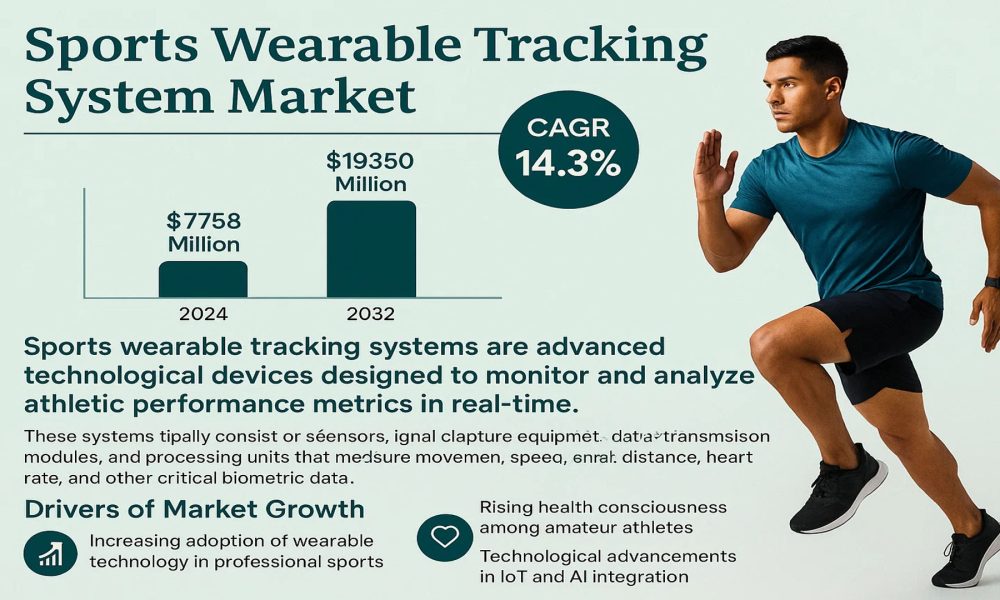
Sports Wearable Tracking System Market was valued at 7758 million in 2024 and is projected to reach US$ 19350 million by 2032, at a CAGR of 14.3% during the forecast period.
Sports wearable tracking systems are advanced technological devices designed to monitor and analyze athletic performance metrics in real-time. These systems typically consist of sensors, signal capture equipment, data transmission modules, and processing units that work together to measure movement, speed, distance, heart rate, and other critical biometric data. The technology finds applications across various sports including football, basketball, tennis, and golf, enabling athletes and coaches to optimize performance through data-driven insights.
The market growth is primarily driven by increasing adoption of wearable technology in professional sports, rising health consciousness among amateur athletes, and technological advancements in IoT and AI integration. Furthermore, the growing emphasis on injury prevention and performance optimization in competitive sports is accelerating demand. Key players such as Catapult Sports, Kinexon, and PlayerTek are leading the market with innovative solutions, while partnerships between technology firms and sports organizations continue to expand market reach.
Download Your Complimentary Sample Report-https://semiconductorinsight.com/download-sample-report/?product_id=107248
MARKET DYNAMICS
MARKET DRIVERS
Rising Demand for Performance Optimization to Drive Market Growth
The global sports wearable tracking system market is experiencing significant growth due to the increasing demand for performance optimization among professional and amateur athletes. Wearable devices equipped with advanced sensors provide real-time data on speed, distance, heart rate, and movement patterns, enabling athletes and coaches to make data-driven decisions. The adoption of these systems in professional sports has grown by over 30% annually as teams seek competitive advantages. For instance, GPS-enabled wearables are now standard equipment in soccer, basketball, and rugby, helping teams analyze player workload and reduce injury risks during training and matches.
Technological Advancements to Accelerate Market Expansion
Continuous advancements in sensor technology, miniaturization, and battery life are accelerating the adoption of sports wearables. Modern tracking systems now integrate multiple sensor types, including IMUs (Inertial Measurement Units), gyroscopes, and magnetometers, providing comprehensive movement analysis. The integration of artificial intelligence for real-time data processing has improved accuracy by 25% compared to previous generations. Additionally, the development of low-power Bluetooth and ultra-wideband technologies has enhanced data transmission reliability while extending battery life beyond 15 hours of continuous use.
Furthermore, the convergence of wearable technology with mobile applications and cloud platforms enables seamless data sharing and analysis, creating value-added services that appeal to both professional teams and fitness enthusiasts.
➤ The recent introduction of machine learning algorithms that can predict injury risks with 85% accuracy has significantly increased adoption rates in professional sports organizations.
The trend toward smart fabrics and unobtrusive wearable designs is also removing adoption barriers, as athletes increasingly prefer lightweight, comfortable tracking solutions that don’t interfere with performance.
Recent Market Developments:
- The Sports Wearable Tracking System Market is witnessing rapid growth due to increasing adoption of wearable devices for fitness tracking, performance monitoring, and injury prevention.
- Technological Advancements: Integration of AI, machine learning, and IoT-enabled devices has enhanced real-time performance analytics, biometric monitoring, and predictive injury alerts for athletes.
- New Product Launches: Leading companies such as Garmin, Fitbit, and Polar have launched advanced wearable devices with improved battery life, GPS accuracy, and heart-rate variability sensors.
- Growing Adoption in Professional Sports: Sports teams across football, basketball, and athletics are increasingly adopting wearable tracking systems to monitor players’ physical activity, optimize training schedules, and improve overall performance.
- COVID-19 Impact: The pandemic accelerated demand for personal fitness wearables as home workouts and virtual training sessions surged.
- Partnerships and Collaborations: Several sports tech companies are partnering with healthcare firms and AI startups to enhance data-driven insights for athletes and recreational users.
- Regional Insights: North America dominates the market due to early adoption of wearable technologies, followed by Europe and Asia-Pacific, which are witnessing increasing investments in smart sports devices.
MARKET OPPORTUNITIES
Expansion into Amateur Sports and Fitness Sectors to Drive Future Growth
The amateur sports and general fitness markets represent significant growth opportunities as technology costs decrease and consumer awareness increases. The recent introduction of consumer-friendly versions of professional tracking systems at price points below $200 has expanded the addressable market by approximately 40%. This democratization of sports analytics allows amateur athletes and fitness enthusiasts to access performance metrics previously available only to professionals.
Strategic partnerships between wearable manufacturers and sports organizations are creating new distribution channels. For example, recent collaborations with professional leagues have led to endorsement deals and bundled offerings that increase brand visibility while educating potential customers about product benefits. The growing popularity of esports also presents opportunities to adapt movement tracking technology for virtual sports applications.
Furthermore, integration with health and wellness programs provides additional market expansion potential, as corporate wellness initiatives and insurance providers increasingly recognize the value of activity monitoring for preventive healthcare.
List of Key Sports Wearable Tracking System Providers
- Catapult Sports (Australia)
- Kinexon (Germany)
- PlayerTek (Ireland)
- JOHAN Sports (Netherlands)
- VX Sport (New Zealand)
- PlayerData (UK)
- TITAN GPS (U.S.)
- Neoteric (Canada)
- GlobalSat (Taiwan)
- MOKOSmart (China)
- IMeasureU (New Zealand)
- Chyron (U.S.)
- Inmotio (Netherlands)
The market’s future trajectory suggests increasing consolidation as larger tech firms show interest in sports analytics. However, agility in developing sport-specific solutions and maintaining data security standards will likely determine long-term success in this competitive space.
Download Your Complimentary Sample Report-https://semiconductorinsight.com/download-sample-report/?product_id=107248
Segment Analysis:
By Type
Bluetooth Segment Leads Due to Widespread Adoption in Consumer and Professional Sports
The market is segmented based on type into:
- Satellite
- Subtypes: GPS, GLONASS, and others
- Bluetooth
- RFID
- Subtypes: Passive RFID, Active RFID, and others
- Others
By Application
Football Segment Dominates With High Adoption in Professional Sports Analytics
The market is segmented based on application into:
- Tennis
- Golf
- Football
- Basketball
- Others
By End User
Professional Athletes Segment Grows Rapidly With Increasing Focus on Performance Optimization
The market is segmented based on end user into:
- Professional athletes
- Fitness enthusiasts
- Sports academies
- Recreational users
Other Topic-Detachable Glassy Carbon Electrode Market
CONTACT US:
City vista, 203A, Fountain Road, Ashoka Nagar, Kharadi, Pune, Maharashtra 411014
[+91 8087992013]




