
Introduction
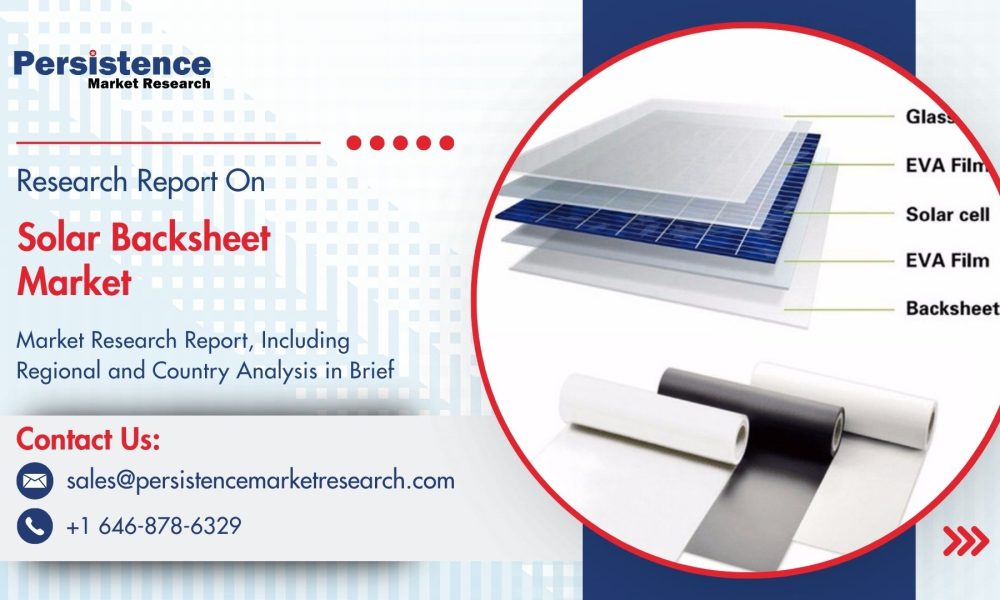
The solar energy industry has witnessed tremendous growth in recent years, fueled by the global transition toward renewable energy sources and the urgent need to reduce carbon emissions. A critical component ensuring the long-term performance and reliability of photovoltaic (PV) modules is the solar backsheet. Acting as the outermost layer of a solar panel, the backsheet provides essential protection against environmental factors such as moisture, ultraviolet (UV) radiation, and mechanical stress.
The solar backsheet market plays a pivotal role in the durability and efficiency of PV systems. With the increasing demand for solar energy across residential, commercial, and utility-scale projects, the need for high-performance backsheets is expanding rapidly. This report provides a detailed analysis of the solar backsheet market, covering its growth dynamics, technological advancements, regional outlook, key challenges, and future opportunities.
Market Projections and Forecast
According to Persistence Market Research’s projections, the global solar backsheet market is set for steady growth in the coming years. The market is expected to be valued at approximately US$3.51 billion in 2025 and is projected to reach US$5.18 billion by 2032, growing at a compound annual growth rate (CAGR) of 5.8% during the forecast period from 2025 to 2032.
The market expansion is driven by the rising adoption of solar PV systems worldwide, growing investments in renewable energy infrastructure, and the continuous development of advanced backsheet materials that improve module efficiency and lifespan. Asia-Pacific, with its large-scale solar deployments and supportive government policies, is anticipated to dominate the global market during the forecast period.
Get a Sample PDF Brochure of the Report (Use Corporate Email ID for a Quick Response): https://www.persistencemarketresearch.com/samples/32993
Market Dynamics
Drivers of Market Growth
- Increasing Global Solar Installations
The global push toward clean energy has resulted in massive solar PV installations across residential, commercial, and utility-scale segments. Governments are offering incentives, subsidies, and favorable policies to accelerate solar adoption, which directly drives the demand for durable and efficient backsheets to protect panels over their 25+ year lifespan. - Technological Advancements in Backsheet Materials
Innovations in backsheet technologies, such as fluoropolymer and non-fluoropolymer materials, are enhancing UV resistance, thermal stability, and overall durability. New multilayer designs improve mechanical strength while reducing degradation, ensuring higher energy yields and longer module life. - Declining Costs of Solar PV Systems
Continuous reductions in the cost of solar modules and installations have made solar energy more accessible, encouraging large-scale adoption. As more installations occur, the demand for reliable backsheets to ensure performance and safety grows proportionally. - Growing Focus on Renewable Energy Policies
Governments and regulatory bodies worldwide are prioritizing renewable energy to reduce dependency on fossil fuels. Policies supporting net-zero goals, tax credits, and renewable portfolio standards create a favorable market environment for solar components, including backsheets.
Challenges in the Market
- Material Degradation and Quality Concerns
Solar backsheets are exposed to extreme weather conditions for decades. Material degradation, cracking, or delamination can compromise module safety and efficiency. Ensuring consistent quality and durability remains a challenge for manufacturers. - Price Pressure and Intense Competition
The solar industry is highly cost-sensitive. Manufacturers face pressure to reduce costs while maintaining high-quality standards, which can affect profit margins and limit investment in research and development. - Recycling and End-of-Life Management
With the increasing number of decommissioned solar panels, recycling and sustainable disposal of backsheets have emerged as challenges. Developing cost-effective recycling processes for backsheet materials is becoming increasingly important for the industry’s sustainability.
Market Trends and Technological Innovations
- Shift Toward Non-Fluoropolymer Backsheets
Due to environmental concerns and the high cost of fluoropolymers, manufacturers are increasingly exploring non-fluoropolymer alternatives that offer comparable durability and UV resistance at a lower cost. This trend is expected to shape product development over the next decade. - Enhanced UV and Thermal Protection Technologies
Advanced coatings and multilayer composites are being introduced to improve the UV, thermal, and moisture resistance of backsheets, ensuring better performance in harsh climates and extending the module’s lifespan. - Integration of Recyclable and Eco-Friendly Materials
Sustainability is a growing focus in the solar industry. Manufacturers are developing recyclable backsheet materials to reduce environmental impact and comply with global sustainability standards. - Smart Backsheets for Real-Time Monitoring
Emerging technologies are embedding sensors and conductive layers into backsheets to monitor module performance, detect hot spots, and enhance preventive maintenance, paving the way for intelligent solar modules.
Solar Backsheet Industry Segmentation
By Material Type:
- Fluoropolymer-Based Backsheets
- Non-Fluoropolymer Backsheets
By Installation Type:
- Utility-Scale Solar
- Commercial & Industrial Solar
- Residential Solar
By Layer Structure:
- Single-Layer Backsheet
- Double-Layer Backsheet
- Multi-Layer Backsheet
By Application:
- Crystalline Silicon PV Modules
- Thin-Film PV Modules
Regional Analysis
Asia-Pacific
Asia-Pacific is projected to dominate the solar backsheet market throughout the forecast period, driven by extensive solar power projects in China, India, and Japan. Strong government incentives, rapid industrialization, and an increasing focus on renewable energy security are propelling solar capacity additions, which directly boost backsheet demand.
North America
North America remains a key market, supported by robust solar installations in the United States and Canada, favorable federal tax credits, and corporate investments in clean energy. Technological innovation and a focus on high-efficiency PV systems contribute to steady growth in backsheet adoption.
Europe
Europe continues to invest heavily in renewable energy to achieve its carbon neutrality goals. Countries such as Germany, Spain, and Italy are leading solar adoption, while stringent quality standards drive the demand for high-performance backsheets capable of enduring Europe’s diverse climatic conditions.
Rest of the World
Emerging markets in the Middle East, Africa, and Latin America are witnessing growing solar investments to meet rising electricity demands and diversify energy sources. These regions offer significant opportunities for solar component manufacturers, including backsheet suppliers.
Key Companies Profiled in the Report
- DuPont
- Jolywood (Suzhou) Sunwatt Co., Ltd.
- Hangzhou First Applied Material Co., Ltd.
- 3M Company
- Toray Industries, Inc.
- Isovoltaic AG
- Coveme S.p.A.
- Krempel GmbH
- Targray Technology International Inc.
- Flexcon Company, Inc.
- Cybrid Technologies Inc.
- Honeywell International Inc.
Future Outlook
The solar backsheet market is poised for steady growth as the world transitions to cleaner energy sources. Advancements in backsheet materials, combined with increasing demand for high-efficiency solar modules, will drive innovation and competition. The shift toward sustainable and recyclable materials will reshape manufacturing processes, aligning the industry with global environmental goals.
Utility-scale and commercial installations are expected to remain the largest demand drivers, while residential solar adoption continues to accelerate due to declining installation costs and supportive policies. The incorporation of smart technologies in backsheets to monitor panel health and performance could emerge as a key differentiator in the market.
Conclusion
The solar backsheet market is integral to the growth of the solar energy industry, ensuring the reliability, safety, and performance of PV modules. While challenges such as material degradation, price pressure, and end-of-life management persist, opportunities for innovation and expansion are abundant.
With consistent growth projected at a 5.8% CAGR from 2025 to 2032, driven by the surge in solar installations, technological advancements, and sustainability initiatives, the solar backsheet market is well-positioned for long-term success. Manufacturers focusing on material innovation, cost optimization, and eco-friendly solutions will gain a competitive edge in this evolving landscape.
Explore the Latest Trending Research Reports:




