
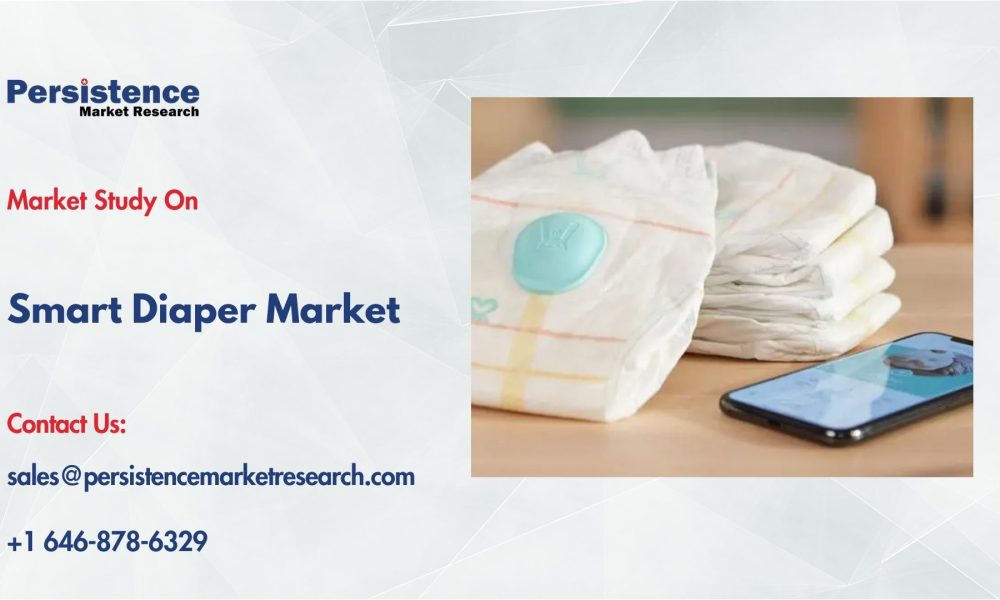
The global smart diaper market is poised for remarkable growth over the coming years. Valued at US$972.4 million in 2025, the market is expected to nearly triple, reaching US$2,359.4 million by 2032, expanding at a robust CAGR of 13.5% during the forecast period. This growth is propelled by increasing adoption of smart, sensor-equipped diapers that address both infant care and adult incontinence, ensuring health monitoring, convenience, and safety.
The market is experiencing heightened demand due to two primary drivers: the rising global aging population requiring advanced incontinence solutions and the growing focus on infant health monitoring among new-age parents. Among product categories, smart diapers for infants currently dominate, owing to widespread awareness and demand for real-time health monitoring. Geographically, North America leads the market, supported by strong technological adoption, advanced healthcare infrastructure, and growing investments in elder care solutions.
Key Highlights from the Report
- The global smart diaper market is projected to grow at a CAGR of 13.5% between 2025 and 2032.
- North America dominates the global market share due to technological adoption.
- Infant smart diapers account for the largest product segment in 2025.
- The market is driven by increasing elderly population and adult incontinence care.
- Asia Pacific is emerging as the fastest-growing regional market.
- Integration of IoT and AI in smart diapers is enhancing product adoption.
Market Segmentation
The smart diaper market can be segmented by product type, end-user, and distribution channels. By product type, the market is divided into infant smart diapers and adult smart diapers. Infant smart diapers hold the largest share, driven by rising parental awareness, increasing childcare expenditure, and the growing trend of connected baby care devices. Meanwhile, adult smart diapers are witnessing accelerating demand, fueled by the surge in aging populations across developed and emerging economies.
Based on end-users, the market spans households, hospitals, and nursing care facilities. Households represent the largest end-use segment, particularly in urban regions where nuclear families rely on advanced monitoring solutions for infants. However, nursing care facilities are becoming significant contributors, particularly in North America, Europe, and Japan, where elderly incontinence care is a critical healthcare challenge.
Distribution channels include online platforms, specialty baby stores, supermarkets, and pharmacies. Online platforms are rapidly gaining share due to convenience, access to wider product ranges, and the rising role of e-commerce in healthcare and childcare essentials. Specialty baby stores and pharmacies remain vital offline channels, especially in emerging regions where digital penetration is moderate.
𝐆𝐞𝐭 𝐚 𝐒𝐚𝐦𝐩𝐥𝐞 𝐏𝐃𝐅 𝐁𝐫𝐨𝐜𝐡𝐮𝐫𝐞 𝐨𝐟 𝐭𝐡𝐞 𝐑𝐞𝐩𝐨𝐫𝐭 (𝐔𝐬𝐞 𝐂𝐨𝐫𝐩𝐨𝐫𝐚𝐭𝐞 𝐄𝐦𝐚𝐢𝐥 𝐈𝐃 𝐟𝐨𝐫 𝐚 𝐐𝐮𝐢𝐜𝐤 𝐑𝐞𝐬𝐩𝐨𝐧𝐬𝐞): https://www.persistencemarketresearch.com/samples/35255
Regional Insights
North America leads the global smart diaper market, supported by advanced healthcare infrastructure, rising consumer spending power, and early adoption of IoT-driven devices. The U.S. contributes the majority of the revenue share, with its aging population and high awareness about digital health monitoring.
Europe follows closely, with strong demand from countries like Germany, the UK, and France, where healthcare digitization and government-supported elder care programs play a pivotal role. Asia Pacific, however, is anticipated to record the fastest growth during the forecast period. Rising disposable incomes, expanding urban populations, and growing awareness of smart healthcare solutions in China, Japan, and India are major drivers. Latin America and the Middle East & Africa are still nascent markets but show steady potential, supported by increasing retail presence and gradual awareness of smart healthcare solutions.
Market Drivers
The market growth is being propelled by the convergence of technology and healthcare needs. Rising awareness of infant health monitoring among millennial parents has boosted demand for diapers equipped with moisture sensors and connectivity features that notify caregivers of urine levels or potential health concerns. Another key driver is the aging population worldwide, with increasing cases of adult incontinence driving the adoption of smart diapers in hospitals, nursing care facilities, and households.
The integration of Internet of Things (IoT), artificial intelligence (AI), and data analytics into wearable healthcare solutions also supports market expansion. Consumers are becoming more receptive to connected devices that improve quality of life, making smart diapers a natural extension of digital healthcare ecosystems. Additionally, rising disposable income, urban lifestyles, and higher focus on hygiene and convenience contribute to sustained growth.
Market Restraints
Despite rapid growth, the market faces certain challenges. High product costs remain a major barrier, especially in emerging economies, limiting widespread adoption among low- and middle-income groups. Concerns over data privacy and security are another restraint, as smart diapers often rely on connected apps that track and share sensitive health information.
Furthermore, low awareness in developing regions and the availability of cheaper traditional diapers are slowing adoption rates. Limited technological infrastructure and skepticism toward wearable health devices in rural areas add to the challenge. The industry must address these concerns through cost reductions, improved data protection, and consumer education.
Market Opportunities
The market presents significant opportunities for both manufacturers and technology providers. Expansion into emerging economies with affordable smart diaper models could unlock vast potential, especially in Asia Pacific and Latin America. Collaborations between healthcare providers and smart diaper manufacturers could lead to integrated elder care solutions, expanding applications beyond consumer households.
Opportunities also lie in product innovation, such as integrating temperature monitoring, skin health tracking, and predictive analytics into smart diapers. Furthermore, growing interest in sustainable and eco-friendly smart diapers aligns with global environmental goals and consumer demand for green products. Companies investing in eco-conscious materials combined with advanced technology will gain a competitive edge.
Reasons to Buy the Report
- Gain comprehensive insights into global market size, share, and growth trajectory.
- Understand the impact of technological innovation on consumer adoption trends.
- Identify key drivers, restraints, and opportunities shaping the market.
- Access detailed regional analysis with actionable business intelligence.
- Benchmark strategies of leading players and track their recent developments.
Frequently Asked Questions (FAQs)
How Big is the Market?
Who are the Key Players in the Global Smart Diaper Market?
What is the Projected Growth Rate of the Smart Diaper Market?
What is the Market Forecast for 2032?
Which Region is Estimated to Dominate the Smart Diaper Industry through the Forecast Period?
Company Insights
Key players in the global smart diaper market include:
• Kimberly-Clark Corporation
• Procter & Gamble Co.
• Hengan International Group Company Ltd.
• Essity AB
• Ontex Group NV
• Unicharm Corporation
• Simavita Ltd.
• Monit Corp.
• Abena A/S
• Verily Life Sciences LLC
Recent Developments
- In 2024, Kimberly-Clark introduced a next-generation smart diaper prototype with improved IoT integration for elder care.
- In 2025, Monit Corp. partnered with healthcare providers in South Korea to pilot AI-enabled smart diapers in nursing care facilities.
The global smart diaper market is entering a transformative phase, fueled by rising awareness, growing healthcare needs, and rapid technological adoption. With its strong growth trajectory, the market is expected to redefine both infant care and elder care over the coming decade. Manufacturers who focus on innovation, affordability, and sustainability are well-positioned to capture long-term growth opportunities in this evolving industry.
Explore the Latest Trending Research Reports:




