
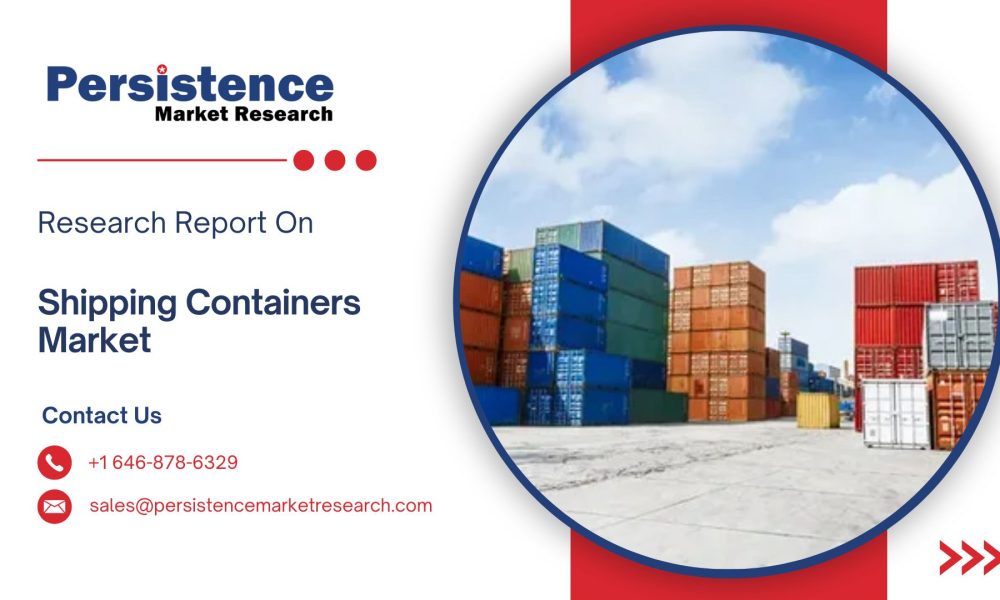
The global shipping containers market is positioned for steady growth over the coming years, backed by increased investments in port infrastructure, enhanced intermodal logistics, and rising global trade flows. The market, which stood at US$7.8 billion in 2025, is projected to reach US$10.2 billion by 2032, reflecting a compound annual growth rate (CAGR) of 3.8% during the forecast period.
The continued expansion of cross-border commerce, especially in Asia-Pacific and emerging economies, along with the growth of e-commerce and cold-chain distribution networks, is intensifying demand for standardized, smart, and specialized container solutions. Moreover, the global shift toward sustainability and the integration of digital technologies is redefining how shipping containers are manufactured, deployed, and managed.
The shipping containers market is entering a stable yet transformative phase. The increase in seaborne trade volumes, coupled with rising intermodal freight activities, continues to drive demand. Strategic investments in container terminals, rail connectivity, and inland logistics hubs are boosting the efficiency of cargo movement and expanding capacity for containerized trade.
Governments and private sector operators alike are focusing on modernizing logistics infrastructure to support growing demand. Simultaneously, digitalization is facilitating real-time container tracking, route optimization, and predictive maintenance. As global trade patterns evolve and supply chains become increasingly complex, shipping containers remain the core units of transport—reliable, scalable, and adaptable to changing needs.
The market’s forecasted growth trajectory reflects a sustained need for both standard and specialized container types, especially in sectors requiring refrigeration, protection from contaminants, or high-volume payloads. The post-pandemic emphasis on supply chain resilience is also prompting logistics firms to adopt more flexible and technology-enabled container solutions.
Receive Sample of Research Report @ https://www.persistencemarketresearch.com/samples/6748
Segmentation Analysis
By Type
The shipping containers market is segmented by container type into dry storage containers, refrigerated containers (reefers), tank containers, open-top containers, flat rack containers, and special-purpose containers.
Dry storage containers continue to account for the largest share of the market due to their versatility, lower cost, and widespread use in transporting general cargo. These standard ISO containers are the backbone of intermodal freight systems across global shipping routes.
However, refrigerated containers represent the fastest-growing segment. Increased demand for transporting temperature-sensitive goods—such as pharmaceuticals, fresh produce, seafood, and chemicals—is accelerating the adoption of reefers. The integration of more energy-efficient refrigeration units and remote monitoring capabilities is enhancing their appeal to shippers seeking reliability and cargo integrity.
Tank containers are also gaining traction, particularly in chemical and food-grade liquid transportation, owing to their durability and safety standards. Meanwhile, special-purpose containers, which include ventilated, insulated, and customized variants, are increasingly used in niche applications and by industries requiring tailored transport solutions.
By Product / Service Type
By product and service type, the market is categorized based on container size and usage patterns. 20-foot and 40-foot containers remain the industry standard. Among these, 40-foot high cube containers are seeing heightened demand due to their increased cargo volume capacity and efficiency in large-scale shipping operations.
Service-related offerings such as container leasing, refurbishment, and pooling systems are becoming more prominent. Container leasing, in particular, is gaining ground as logistics firms seek to optimize costs without compromising operational flexibility. Leasing allows for rapid scaling during peak periods and minimizes the financial burden of container ownership.
Additionally, refurbished and repurposed containers are entering secondary markets, including warehousing, pop-up retail, and modular housing, reflecting a trend toward container lifecycle optimization.
By Technology / Channel
Technological innovation is reshaping container capabilities. The rise of smart containers—equipped with IoT sensors, GPS tracking, temperature and humidity controls, and automated alerts—is providing enhanced visibility and control throughout the supply chain.
Real-time data transmission enables cargo owners and operators to monitor conditions, respond to anomalies, and improve operational efficiency. This digital evolution is particularly vital for high-value and sensitive cargo where in-transit monitoring is critical.
On the channel side, intermodal transportation networks—integrating sea, rail, and road logistics—are facilitating efficient, long-distance container movement. Technological interoperability across transport modes is key to streamlining operations and reducing container dwell time at transfer points.
Regional Insights
The global shipping containers market demonstrates strong regional disparities in both current market share and growth potential.
Asia-Pacific dominates the global market, accounting for the largest share in both production and usage. China, India, South Korea, and Southeast Asian nations serve as major manufacturing hubs and export centers, supported by expansive port infrastructure and trade agreements. Ongoing development of container terminals and inland logistics corridors in these regions is expected to sustain demand over the forecast period.
North America is emerging as one of the fastest-growing regions, driven by the modernization of port facilities, increased intermodal freight operations, and the resurgence of domestic manufacturing. The growth of e-commerce and cold-chain logistics in the U.S. and Canada is also boosting demand for refrigerated and specialty containers.
Europe, while a mature market, continues to invest in sustainable container technologies and green logistics. Additionally, increased trade with Asia and Africa, combined with digital supply chain initiatives, is reinforcing its relevance in the global container ecosystem.
Other regions such as Latin America, the Middle East, and Africa are exhibiting significant potential due to infrastructure investments, improved trade facilitation measures, and regional integration initiatives.
Unique Features and Innovations in the Market
Modern shipping containers are no longer just steel boxes. They are becoming smart, sustainable, and multifunctional assets in the global supply chain. A key innovation is the integration of Internet of Things (IoT) technology, enabling real-time monitoring of container location, temperature, humidity, and potential damage.
The implementation of AI-powered analytics is helping logistics operators make data-driven decisions regarding container utilization, route optimization, and predictive maintenance. 5G connectivity, where available, enhances real-time communication and container tracking even in remote or high-mobility environments.
From a materials standpoint, manufacturers are increasingly adopting lighter and corrosion-resistant materials to extend container lifespans and reduce fuel consumption. Eco-conscious production processes—such as the use of recyclable steel, bamboo flooring, and energy-efficient coatings—are aligning container design with global sustainability goals.
Some container models are now equipped with solar-powered systems to support onboard refrigeration units, lighting, or tracking devices, reducing the need for diesel-based power sources and lowering carbon emissions.
Market Highlights
The rising demand for shipping containers is fueled by several overarching industry dynamics:
- Cost Optimization: Containers streamline cargo handling, reduce packaging requirements, and minimize damage, thereby lowering operational costs for shippers.
- Sustainability Mandates: Regulatory frameworks are pushing supply chain stakeholders toward greener logistics. Containers that reduce emissions, support energy efficiency, or are built with recyclable materials are gaining market preference.
- Supply Chain Resilience: Disruptions during recent global events have highlighted the value of containerized logistics in ensuring predictable and secure cargo movement. Companies are investing in smart container solutions to enhance resilience and responsiveness.
- Cold Chain Expansion: The global rise in pharmaceutical logistics and perishable goods trade is driving adoption of advanced reefer containers with tight temperature control and regulatory compliance.
- Intermodal Growth: As multimodal transport networks become more integrated, containers offer unmatched compatibility and operational efficiency across shipping, rail, and trucking.
Key Players and Competitive Landscape
The global shipping containers market features a mix of leading multinational manufacturers, regional players, and technology integrators, all striving to expand their footprint through innovation and strategic partnerships.
China International Marine Containers (CIMC) remains one of the largest manufacturers globally, offering a broad range of container types including dry, reefer, and tank containers. The company continues to invest in sustainable production and is exploring modular smart container designs to enhance digital tracking capabilities.
Maersk Container Industry, a division of A.P. Moller-Maersk, focuses heavily on reefer containers and has integrated advanced monitoring technology into its Star Cool units. Maersk is also prioritizing decarbonization across its logistics chain, aligning with global sustainability goals.
Triton International and Textainer Group are among the major players in the container leasing segment, offering flexible options to shipping lines and freight forwarders. Their business models focus on container fleet optimization, asset tracking, and servicing global demand spikes.
Singamas Container Holdings and CXIC Group continue to drive volume-based container production and maintain significant market share across Asia. These companies are increasingly investing in production automation and standardized high-cube container lines.
Competition in the smart container space is intensifying, with tech-driven firms partnering with traditional manufacturers to offer integrated monitoring platforms. The result is a dynamic, evolving ecosystem where traditional metal fabrication merges with digital logistics solutions.
Future Opportunities and Growth Prospects
As the shipping containers market approaches the next decade, it faces a convergence of opportunity and transformation. Emerging technologies, environmental regulations, and changing trade dynamics are expected to shape future growth.
The continued digitization of logistics operations—through AI, IoT, blockchain, and 5G—is unlocking new efficiencies in container management. Predictive analytics and digital twins are likely to become commonplace in optimizing fleet deployment and reducing operational costs.
On the sustainability front, regulatory pressure to decarbonize transport is expected to intensify. This will accelerate innovation in lightweight materials, energy-efficient reefers, and low-emission lifecycle designs. Circular economy principles will gain traction, driving container refurbishment, repurposing, and recyclability.
Moreover, the global pivot toward regionalized production and diversified trade routes is creating demand for containers in previously underdeveloped logistics corridors. Emerging economies, especially in Africa and South Asia, present new growth frontiers as infrastructure investments continue to rise.
In conclusion, the global shipping containers market is not only expanding in volume but also evolving in complexity. As technology and sustainability reshape logistics, the humble container is poised to remain a central element in the world’s supply chain—smarter, cleaner, and more connected than ever before.
Explore more related market insights and reports by visiting our website.




