
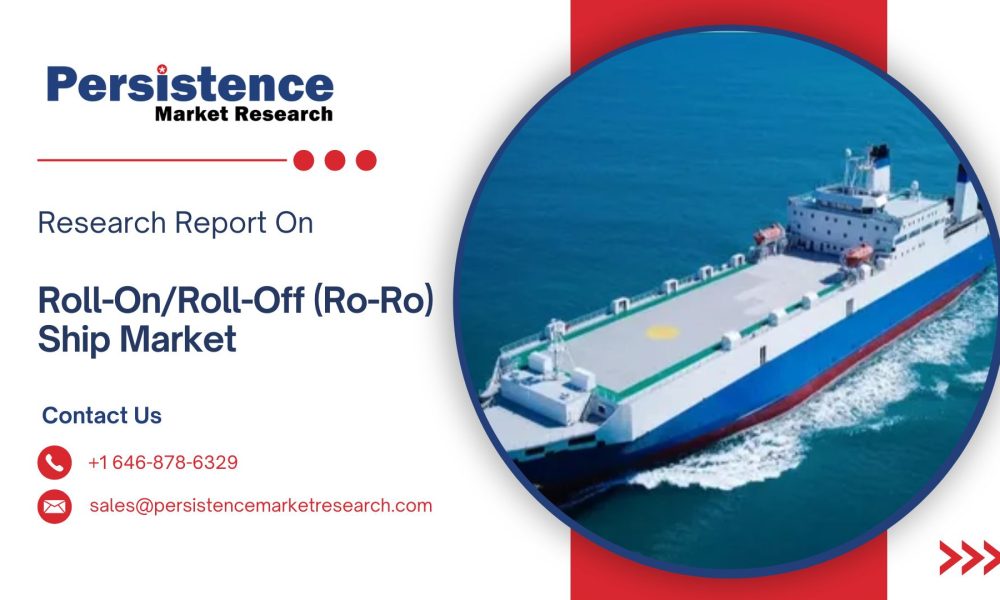
The global roll-on/roll-off (Ro-Ro) ship market is witnessing strong growth momentum as the shipping and logistics industry continues to evolve. Ro-Ro vessels are specially designed to carry wheeled cargo such as cars, trucks, trailers, and heavy machinery, which can be driven directly onto and off the ship. This design reduces cargo handling time and lowers operational costs for shipping companies. The market, valued at US$29.15 billion in 2025, is projected to reach US$42.3 billion by 2032, reflecting a compound annual growth rate (CAGR) of 5.6% over the forecast period from 2025 to 2032. This expansion highlights the increasing reliance on efficient maritime transportation solutions globally.
A major growth driver for the Ro-Ro ship market is the rising international trade in automobiles, along with expanding demand for heavy machinery transportation across regions. The automotive industry’s globalization has created the need for dedicated shipping solutions, with Ro-Ro vessels emerging as a critical enabler. The leading segment within the market remains pure car and truck carriers (PCTCs), as they are optimized to transport vehicles with minimal damage risk. Regionally, Europe dominates the market due to its strong maritime infrastructure, large automotive production hubs, and established shipping routes connecting to Asia and North America. This makes Europe a focal point for Ro-Ro fleet expansion.
Get a Sample Copy of Research Report (Use Corporate Mail id for Quick Response): https://www.persistencemarketresearch.com/samples/35577
Key Highlights from the Report
- ➤ The global roll-on/roll-off (Ro-Ro) ship market is set to grow from US$29.15 Bn in 2025 to US$42.3 Bn by 2032.
- ➤ The market is anticipated to expand at a CAGR of 5.6% between 2025 and 2032.
- ➤ Growing automotive exports are driving demand for specialized Ro-Ro vessels.
- ➤ Europe remains the leading region due to advanced port infrastructure and automotive hubs.
- ➤ Pure car and truck carriers (PCTCs) are the dominant product type segment in the industry.
- ➤ Market players are investing in advanced vessels with fuel-efficient and eco-friendly technologies.
Market Segmentation
The Ro-Ro ship market can be segmented by product type, which includes pure car carriers, pure car and truck carriers (PCTCs), and cargo Ro-Ro ships. Among these, PCTCs dominate the segment due to their ability to transport both cars and trucks simultaneously, offering greater versatility. Pure car carriers also hold significant market share, particularly in regions with high automobile exports. Cargo Ro-Ro ships are increasingly being used for heavy-duty machinery, agricultural equipment, and construction vehicles, ensuring the sector remains diverse and adaptable.
Segmentation by end-user industries provides another layer of insight. The automotive industry leads the demand curve, accounting for the majority of Ro-Ro shipments globally. The defense sector also contributes to demand by transporting military vehicles and armored carriers. Additionally, industries involved in construction and agriculture utilize Ro-Ro ships to move large machinery across continents. This diversified end-user demand ensures steady growth opportunities for market stakeholders through the forecast period.
Regional Insights
Europe continues to dominate the Ro-Ro ship market, supported by its strategic geographic positioning and strong automotive export activities. Countries like Germany, France, and the United Kingdom play pivotal roles, leveraging extensive maritime infrastructure to facilitate vehicle exports to Asia and North America. The well-established network of ports and favorable trade agreements further strengthen Europe’s leadership in the market.
Meanwhile, Asia-Pacific is emerging as a lucrative region, driven by the rapid expansion of automotive production in countries such as Japan, South Korea, and China. Rising exports of passenger cars and commercial vehicles are creating substantial opportunities for Ro-Ro operators in this region. North America also remains a steady contributor, particularly with its growing demand for imported vehicles and increasing reliance on efficient logistics solutions.
Market Drivers
One of the primary market drivers is the robust growth in global automotive exports. Automakers rely heavily on Ro-Ro ships for transporting passenger vehicles and commercial trucks efficiently, given their cost-effectiveness and safety features. Another critical driver is the expansion of global trade routes, supported by free trade agreements and increased demand for machinery across industrial sectors. Furthermore, the shipping industry’s ongoing investments in vessel innovation, including fuel-efficient engines and advanced navigation systems, are contributing to sustained market expansion.
In addition to automobiles, the increasing movement of heavy machinery across continents is boosting demand for Ro-Ro ships. Construction equipment, agricultural tractors, and mining vehicles are regularly transported through these vessels, emphasizing their versatility. With rising defense budgets in several countries, military logistics is also emerging as a key contributor, as Ro-Ro ships are being used to carry armored vehicles and defense equipment quickly and securely.
Market Restraints
Despite strong growth potential, the market faces several restraints. High initial investment and maintenance costs associated with Ro-Ro vessels remain a significant challenge for shipping companies, particularly small and medium-sized operators. Additionally, environmental regulations around carbon emissions and marine pollution are creating cost pressures, requiring operators to invest in greener technologies and cleaner fuels.
Another restraint comes from infrastructure limitations in emerging economies. Not all ports are equipped with advanced Ro-Ro handling facilities, which restricts the global deployment of these vessels. Moreover, volatility in global trade patterns, influenced by geopolitical tensions and tariff disputes, poses risks to steady market growth. These uncertainties may disrupt cargo flows, impacting demand for Ro-Ro shipping services in certain regions.
Market Opportunities
The growing emphasis on eco-friendly shipping solutions presents significant opportunities for market players. Companies investing in hybrid and LNG-powered Ro-Ro ships are likely to gain competitive advantages, as regulators and customers increasingly favor sustainable practices. Digitalization and the adoption of smart shipping technologies also open new avenues, enhancing fleet efficiency and improving cargo management systems.
Another promising opportunity lies in the expansion of Ro-Ro networks into underdeveloped markets. With infrastructure upgrades underway in parts of Asia, Africa, and Latin America, operators can capture new business by connecting these regions with global trade hubs. The increasing adoption of electric vehicles (EVs) is also expected to create new shipping needs, with specialized Ro-Ro vessels being designed to safely transport large volumes of EVs and their batteries across international markets.
Frequently Asked Questions (FAQs)
- How Big is the Roll-On/Roll-Off (Ro-Ro) Ship Market?
- Who are the Key Players in the Global Market for Ro-Ro Ships?
- What is the Projected Growth Rate of the Ro-Ro Ship Market?
- What is the Market Forecast for Ro-Ro Ships by 2032?
- Which Region is Estimated to Dominate the Industry through the Forecast Period?
Company Insights
Key players operating in the roll-on/roll-off (Ro-Ro) ship market include Wallenius Wilhelmsen, MOL (Mitsui O.S.K. Lines), NYK Line, K Line (Kawasaki Kisen Kaisha), Grimaldi Group, Hoegh Autoliners, and Hyundai Glovis. These companies collectively hold a strong presence in global trade routes and continue to expand their fleets to meet rising demand.
Two recent developments have shaped the market landscape:
- Several leading operators have invested in LNG-powered Ro-Ro vessels to meet tightening environmental regulations and reduce carbon footprints.
- Expansion of Ro-Ro shipping services in Asia-Pacific, particularly connecting Japan, South Korea, and China with European and North American markets, has strengthened global fleet utilization rates.
Explore more related market insights and reports by visiting our website.




