
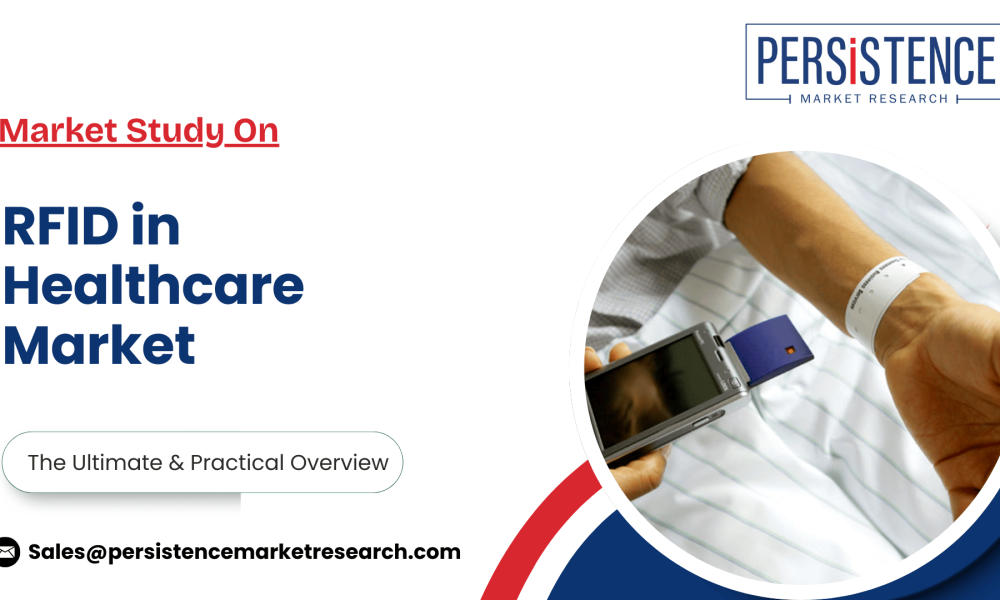
Radio-Frequency Identification (RFID) is no longer just a tool for inventory management—it has become a cornerstone of operational efficiency and patient safety in healthcare. As global health systems transition toward digital transformation, the RFID in healthcare market is poised for exceptional growth. According to a recent report by Persistence Market Research, the market is estimated to reach a value of US$9.0 billion in 2025, and grow to a staggering US$27.2 billion by 2032, at a CAGR of 17.1% over the forecast period.
RFID’s growing relevance stems from its ability to automate identification, enhance traceability, and reduce human error—three critical pillars in delivering modern, high-quality healthcare. Key drivers fueling this expansion include rising chronic disease prevalence, stringent regulatory demands for patient safety, and mounting pressure on hospitals to optimize asset utilization. The report by Persistence Market Research notes that RFID asset tracking emerges as the leading application, while North America, with its mature infrastructure and regulatory environment, dominates the market with a 45% share.
Key Highlights from the Report:
➤ The RFID in Healthcare Market is projected to reach US$27.2 Bn by 2032, growing at a CAGR of 17.1%.
➤ North America leads the market, accounting for 45% of global revenue due to strong infrastructure and HIPAA compliance.
➤ Asia Pacific is the fastest-growing region, driven by urbanization and chronic disease management programs.
➤ Tags remain the leading product category, holding over 50% market share due to cost-effective passive variants.
➤ Asset tracking is the top application, reducing equipment search time by 75% in U.S. hospitals.
➤ New FDA regulations and innovations like RFID-enabled syringes are accelerating adoption globally.
Get a Sample Copy of Research Report (Use Corporate Mail id for Quick Response): https://www.persistencemarketresearch.com/samples/3372
Market Segmentation: Product Type & Application Insights
The RFID in healthcare market is broadly segmented by product type, including tags, readers, middleware, and software. Tags dominate this segment, accounting for over 50% market share in 2025. Their flexible use in patient wristbands, specimen tracking, and blood monitoring has made them a staple in hospital operations. Passive RFID tags are especially favored for their cost efficiency and long battery life. Meanwhile, middleware is emerging as the fastest-growing sub-segment, enabling integration with Electronic Health Records (EHR) and enhancing data-driven decision-making.
From an application perspective, RFID asset tracking takes the lead, contributing to approximately 40% of market share. Hospitals face millions in losses annually from misplaced or underutilized equipment. RFID technology addresses this by enabling real-time visibility of high-value assets like infusion pumps, wheelchairs, and surgical instruments. Another rapidly growing segment is pharmaceutical tracking, where RFID ensures the integrity of the drug supply chain, combats counterfeiting, and supports regulatory compliance across global markets.
Regional Insights
North America Market Trends
North America remains the most dominant region in the RFID in healthcare market, primarily due to the U.S., which accounts for nearly 80% of regional revenue. Advanced regulatory frameworks like HIPAA and the Drug Supply Chain Security Act (DSCSA) drive RFID adoption. Hospitals utilize RFID for nutrition monitoring, UDI compliance, and asset safety, resulting in reduced errors and streamlined operations.
Europe and Asia Pacific Market Trends
In Europe, the market is fueled by progressive policies like the EU AI Act, along with funding initiatives like the €200 Bn InvestEU program. Countries like Germany and France are integrating RFID into pharmaceutical and chronic disease management systems. Meanwhile, the Asia Pacific region—led by India, China, and Japan—is witnessing the fastest growth due to government investments, rapid urbanization, and the pressing need for chronic disease tracking, especially in elderly care and rural health initiatives.
Market Drivers
The surge in chronic diseases globally is a major catalyst for RFID adoption. According to CDC data, 6 in 10 U.S. adults suffer from at least one chronic condition, necessitating frequent healthcare visits, accurate tracking, and timely medication. RFID offers real-time patient tracking, accurate data capture, and seamless asset monitoring—essential for ensuring timely and error-free care. Additionally, as global healthcare systems prioritize patient safety, RFID systems are becoming integral in reducing medication errors and enhancing clinical workflows.
Market Restraints
Despite its transformative benefits, RFID implementation is challenged by high upfront costs and complex integration requirements. Smaller facilities, in particular, may struggle with costs related to RFID tags, readers, and system training. Moreover, successful integration demands alignment with existing IT systems, including EHRs, which often require costly customization and upgrades. These challenges extend implementation timelines and deter some institutions from immediate adoption, especially in cost-sensitive markets.
Market Opportunities
The development of fortified RFID solutions is unlocking new avenues in the market. These advanced systems combine RFID with biosensors and data analytics to offer personalized healthcare services, including nutrition monitoring, medication adherence, and post-operative care tracking. Such enriched solutions are especially vital in long-term care facilities and for managing chronic conditions like diabetes and heart disease. With the industry moving toward preventive and precision medicine, fortified RFID systems are poised for accelerated growth.
Reasons to Buy the Report:
✔ Understand the market’s CAGR and revenue potential from 2025 to 2032.
✔ Gain insights into product segments, such as RFID tags, middleware, and software.
✔ Evaluate regional performance across North America, Europe, and Asia Pacific.
✔ Identify key opportunities for fortified RFID and pharma supply chain compliance.
✔ Benchmark competitive strategies from top players and recent market innovations.
Frequently Asked Questions (FAQs):
- How Big is the RFID in Healthcare Market in 2025?
- Who are the Key Players in the Global RFID in Healthcare Market?
- What is the Projected Growth Rate of the RFID in Healthcare Market?
- What is the Market Forecast for RFID in Healthcare through 2032?
- Which Region is Estimated to Dominate the RFID in Healthcare Industry during the Forecast Period?
Company Insights: Key Players and Developments
The RFID in healthcare market features a dynamic mix of established players and emerging innovators. Companies are focusing on expanding their product lines, enhancing integration capabilities, and forming strategic partnerships to maintain competitive advantage.
✦ Alien Technology, LLC
✦ Zebra Technologies Corp.
✦ Avery Dennison Corporation
✦ Impinj, Inc.
✦ GAO RFID Inc.
✦ LogiTag Systems
✦ Mobile Aspects
✦ CenTrak, Inc.
✦ Terso Solutions, Inc.
✦ Tagsys RFID
✦ metraTec GmbH
✦ SpaceCode
✦ Biolog-id
✦ Cardinal Health
✦ Pepperl+Fuchs
Recent Developments:
May 2025: The U.S. FDA enforced the final phase of the DSCSA, mandating item-level RFID tracking on prescription drugs to combat counterfeiting and enhance supply chain transparency.
October 2024: BD partnered with ten23 Health to launch RFID-enabled prefillable syringes (BD iDFill™), improving traceability and automating medication administration in hospitals.
Conclusion:
The RFID in healthcare market is entering a transformative decade, marked by technological innovation, policy-driven adoption, and urgent global health challenges. From improving patient safety and reducing asset loss to ensuring drug authenticity and enabling personalized care, RFID’s role in healthcare has never been more crucial.
As regions like Asia Pacific accelerate investment and North America continues to lead in implementation, the market’s trajectory is set toward robust, data-driven healthcare delivery. Supported by innovations in fortified RFID systems and middleware integration, stakeholders across the healthcare spectrum—providers, policymakers, and technology vendors—stand to benefit immensely from the continued expansion of this vital market.
Read More Related Reports:
Direct To Patient Digital Marketing Market
Life Sciences Electronic Batch Records Market




