
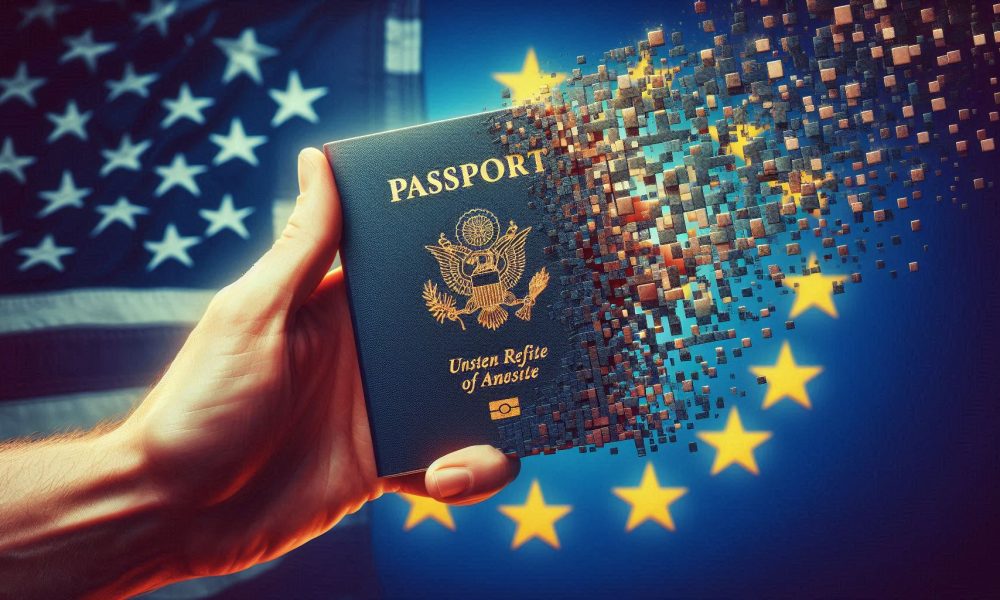
Amicus International Consulting Press Release
In the age of global surveillance, biometric tracking, and real-time data sharing, relocation is no longer a private act. Whether you are moving for professional reasons, personal safety, or strategic anonymity, your movement leaves a digital, financial, and legal trail. This trail can be analyzed, copied, sold, or subpoenaed.
But what if you could move anonymously, without breaching the law? What if you could relocate, restructure your identity, and operate in a new jurisdiction without creating a visible connection to your prior life?
At Amicus International Consulting, relocation is not just about changing countries. It is about legally decoupling your identity, travel behavior, and personal records from the systems that index and track your past. This press release explores the tools, jurisdictions, and real-world strategies used by high-net-worth individuals, professionals, whistleblowers, and privacy advocates to move without leaving behind a detectable trail.
Why Anonymous Relocation Matters in 2025
The modern surveillance economy connects everything from passport scans and IP addresses to airline bookings and visa records. Anyone moving internationally today risks being exposed to:
Passenger name records (PNR) shared between airlines and governments
Biometric data stored during immigration clearance
International banking alerts via FATCA and CRS
Mobile device telemetry and geolocation history
Visa application databases and border crossing logs
Public record exposure due to lease agreements or work permits
This network of data makes it nearly impossible to move without leaving a footprint—unless you use legal strategies that break the automatic chain of identity.
Anonymous relocation is no longer about secrecy. It is about sovereignty, control, and resilience in a world where even lawful travel can attract profiling, targeting, or unjust scrutiny.
Case Study: Human Rights Activist Escapes Government Surveillance
A Central European human rights advocate was placed under digital surveillance following a series of political protests. Airport authorities flagged his name, and he was unable to renew his visa in neighboring countries.
Amicus guided the client through a multi-layered relocation. This included a legal name change in a jurisdiction with sealed records, acquisition of a second passport through a Caribbean citizenship-by-investment program, and the establishment of an offshore employment agreement through a Panamanian consultancy.
He entered Southeast Asia using a visa issued under his new identity and began working remotely from a leased apartment managed under his company’s name. No direct link connected his new life to his former one. All changes were executed with legal oversight and compliance.
Today, he lives freely, communicates securely, and remains politically active—without digital tracking compromising his safety.
Tools That Enable Legal Anonymous Relocation
To relocate without a trace, individuals must address more than travel logistics. The tools required are structural, jurisdictional, and behavioral.
1. Legal Name Changes With Privacy Protections
Many jurisdictions allow name changes without publishing public notices or court documents. When done correctly, this breaks the link between your past and present identity in government and commercial databases.
2. Second Residency and Citizenship Programs
Relocation becomes more secure when tied to a new nationality. Citizenship-by-investment programs or long-term residencies offer new documentation, travel access, and tax residency without automatic data merging.
3. Offshore Employment Contracts
A legal employment agreement with an offshore company provides professional coverage for relocation. Income can be structured under this contract, removing the need for public employer registration in the new country.
4. Entity-Leased Housing and Digital Accounts
Rather than renting in your name, leases, utilities, and internet accounts can be signed under a legal entity. This prevents personal identifiers from entering local databases.
5. Air Travel via Non-Linked Booking Systems
Using agents or payment structures that avoid your primary financial or national identity can reduce exposure. Some clients use prepaid corporate cards or trust-issued travel budgets.
6. Digital Behavior Recalibration
Devices are wiped and reconfigured. Accounts are rebuilt under entity control. VPNs, encrypted messengers, and anonymous browsers are deployed to avoid IP-based profiling.
Case Study: Tech CEO Disappears From Public Life
After selling his startup, a high-profile CEO received death threats and became the subject of social media harassment. News articles about his wealth and private life triggered multiple security incidents.
Amicus coordinated a total relocation strategy. The CEO renounced his primary residency, obtained a second passport through investment, and relocated to a jurisdiction with no public property registries. Housing was leased under a trust. Communications were migrated to offshore-hosted servers, and online presence was managed by a digital alias linked to his corporate entity.
His relocation involved no false documents or illegal entries. Every step was executed within legal frameworks. He now resides in a secure location, conducts investments privately, and is no longer visible in online searches or commercial records.
Jurisdictions That Support Anonymous Legal Movement
Certain countries provide structural advantages for privacy-driven relocation. These nations combine lenient registration requirements with limited data-sharing obligations.
1. Panama
Allows foreigners to establish companies that can employ the individual
Foundations offer anonymity and control of assets
Immigration records are not publicly accessible
Ideal for digital nomads or location-independent professionals
2. Dominica
Offers citizenship through investment with name-change options
No requirement to maintain physical presence
Local bank accounts are shielded from international visibility
Suitable for long-term anonymity and asset protection
3. Paraguay
Low-cost permanent residency
No biometric ID card required
Allows legal name changes without global publication
Excellent for long-term private living with minimal government interference
4. Georgia
Liberal immigration and company formation laws
High bank privacy and minimal reporting obligations
Digital identity infrastructure is not connected to global surveillance systems
5. United Arab Emirates (RAK and Ajman free zones)
Residency through offshore companies
No public corporate registry showing beneficial owners
UAE residency offers visa-free travel without a linked national identity
Each jurisdiction has specific advantages, and Amicus helps clients determine the most effective combination based on risk profile, profession, and long-term goals.
Case Study: Former Intelligence Analyst Rebuilds Life in Asia
A former UK intelligence analyst was denied entry to multiple countries after appearing on politically charged lists. Though no charges were ever filed, he experienced increasing digital scrutiny and travel denials.
Amicus helped him obtain residency in Southeast Asia under a corporate-sponsored employment visa. A new legal name was secured through change-of-name procedures in a neutral jurisdiction. Communication infrastructure was rebuilt from scratch using privacy-centric services.
He now lives anonymously, earns income through a consulting contract, and is no longer subject to targeted travel restrictions. His relocation allowed him to leave behind the weight of association, without abandoning legality.
Legal Structures That Enable Identity Separation
Anonymous relocation is not simply about movement. It requires identity detachment. This means building new structures to hold your name, assets, and affiliations.
1. International Business Corporations (IBCs)
An IBC allows clients to legally receive payments, sign contracts, and lease properties without using personal names. These entities are often used for consulting, freelance work, or real estate holding.
2. Foundations and Trusts
Foundations can own other entities, real estate, and bank accounts. Unlike corporations, they have no shareholders, which reduces traceability. Trusts managed by professional trustees can shield ownership from public view.
3. Nominee Services and Virtual Office Addresses
For those relocating under new entities, nominee directors and administrative offices allow operations without physical presence or name exposure in local registries.
4. Offshore Banking Structures
Opening accounts under corporate names or foundation control ensures access to financial tools without direct linkage to a personal name.
All these structures must comply with anti-money laundering (AML) and know-your-customer (KYC) laws. Amicus ensures that clients pass necessary screenings while remaining within legal frameworks.
Precautions and Legal Compliance
Anonymous relocation must never be used to:
Evade criminal prosecution
Hide from family or civil court obligations
Launder money or commit fraud
Mislead governments during visa or residency applications
Amicus screens all clients for legality and ethical compliance, ensuring notarized documentation, attorney-reviewed structures, and transparent use cases for every relocation strategy.
Case Study: Journalist Avoids Retaliation After Investigative Work
A freelance journalist covering corruption in the Middle East was doxed after publishing a story on elite financial abuse. Threats to her safety emerged, and her family became targets of harassment.
Amicus helped her legally exit her home country under an academic visa, while a foundation was formed to sponsor her work. She received a second residency in a Caribbean jurisdiction, and all social media accounts were rebuilt using her editorial brand instead of her identity.
Her email, phone, and financial tools were transferred to offshore equivalents. Travel was handled through an IBC that issued tickets, lodging, and payment authorizations. No biometric cross-link was made with her previous documentation. She remains active in journalism but with complete operational security.
Final Thoughts: Movement Is Freedom
The right to relocate is enshrined in international law. But in 2025, freedom of movement has collided with systems of identity control, behavioral tracking, and political profiling. For those who value safety, privacy, and autonomy, the old ways of moving no longer apply.
Anonymous relocation is not about running away. It is about choosing when and how your life is visible. It is about building structures that protect you from systems you cannot control. It is about starting over, legally.
Amicus International Consulting stands at the intersection of law, technology, and privacy. For those seeking to move without leaving a trail, we provide the strategies, jurisdictions, and legal pathways to do so with full compliance and zero exposure.
Contact Information
Phone: +1 (604) 200-5402
Email: [email protected]
Website: www.amicusint.ca




