
Real-time Flood Monitoring and Warning System Market Overview :
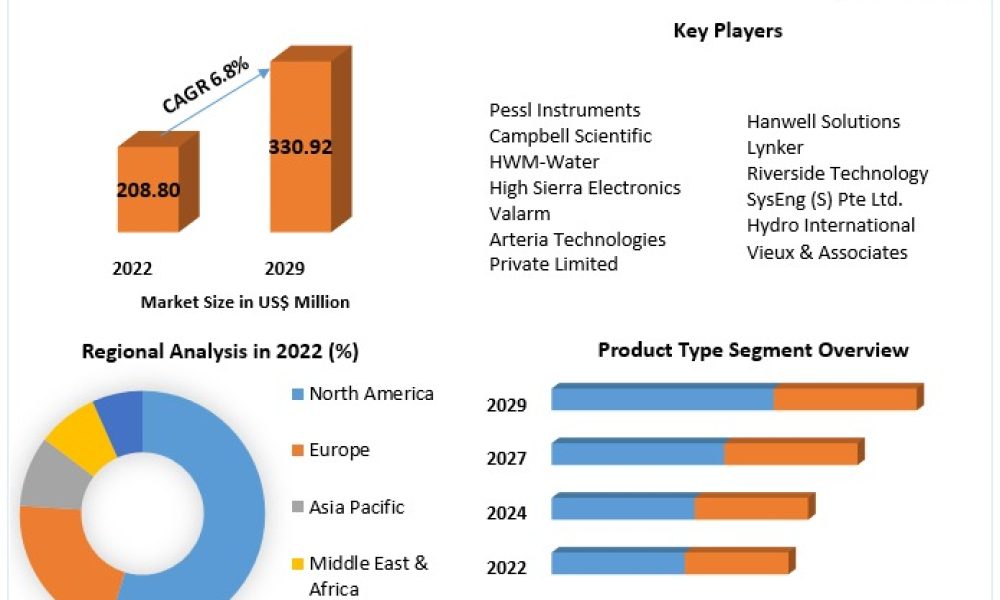
Real-Time Flood Monitoring And Warning System Market is anticipated to surge from USD 208.80 million in 2022 to USD 330.92 million by 2029, registering a CAGR of 6.8% over the forecast period. This accelerated growth is powered by mounting investments in environmental monitoring, rising economic losses from flood disasters, and proactive government adoption of advanced flood defense technologies.
Key Highlights & Insights
Market Size & Growth: Forecast market size of USD 330.92 million by 2029, up from USD 208.80 million in 2022, powered by a 6.8% CAGR during 2023–2029.
Dominating Region: Asia Pacific commands the highest share, spearheaded by rapid system adoption in India, China, and Japan. Strong government initiatives, dense populations in flood-prone areas, and increased funding for natural disaster preparedness explain the region’s dominance.
Leading Segment: Government is the top application segment, as public sector organizations are the key adopters of real-time flood monitoring and warning systems to reduce risk and ensure community safety.
Key Driver: The heightened frequency and impact of flood events worldwide have emphasized the need for timely prediction, enabling both direct and indirect loss reduction and disaster response optimization.
Recent Developments
2023–2024: Several governments across APAC and other regions have ramped up installations of sensor-based and satellite-supported flood monitoring solutions, especially river basin systems in the Mekong Delta and Red River, as well as city-level deployments in cities like Kolkata with Asian Development Bank support.
Industry Collaboration: Vietnamese and American partnerships focus on transboundary flood management, leveraging advanced satellite monitoring technologies.
Urban Defense: Metro regions have implemented city-scale real-time flood warning platforms, funded with international agency support to bolster urban resilience.
Market Dynamics
Growth Drivers:
Escalating losses from flood events and greater public and private sector commitment to preventive action.
Advanced sensor technologies and cost-benefit advantages over traditional environmental warning systems.
Enhanced accuracy and utility from digital integration, including satellite monitoring and AI-powered analytics.
Increasing digitization of public infrastructure and rapid urbanization in emerging economies.
Challenges:
Technical limitations in sensor operation under sudden shock or extreme flooding conditions.
High initial outlays and variable return on investments for small & under-resourced regions.
Cross-jurisdictional coordination challenges in shared water basins and transnational river systems.
Regional Analysis
Asia Pacific: Dominates the market due to expanding government-funded deployments, frequent flood risk, and concentration of vulnerable populations. Leading markets include India, China, and Japan.
Europe, MEA, South America: Rapid adoption is seen as governments update policies to deal with increasing extreme weather events.
North America: Growing investments and technology advancements maintain steady market momentum, though at a lower volume compared to APAC.
For full access to the data, request a sample report now : https://www.maximizemarketresearch.com/request-sample/41068/
Product Segmentation
By Product Type: Hardware (sensors, dataloggers, other components), Software, Services.
By Application: Government (largest segment), Media, Agriculture, Fisheries, Transport & Logistics, Tourism, Outdoor Entertainment, Others.
Key Trends
Integration of IoT and AI-driven analytics for real-time data processing and predictive flood modeling.
International collaborations for large-scale, cross-border watershed monitoring projects.
Increasing focus on resilience in urban planning and smart city projects.
Transition to multi-purpose monitoring platforms, supporting various environmental warnings.
Quote
As climate change intensifies and urban areas expand, the real-time flood monitoring and warning system market has become indispensable to disaster risk management strategies worldwide. Asia Pacific’s leading position reflects urgent regional demand, robust government action, and ongoing advancements in flood prediction technology—safeguarding communities and critical infrastructure like never before.




