
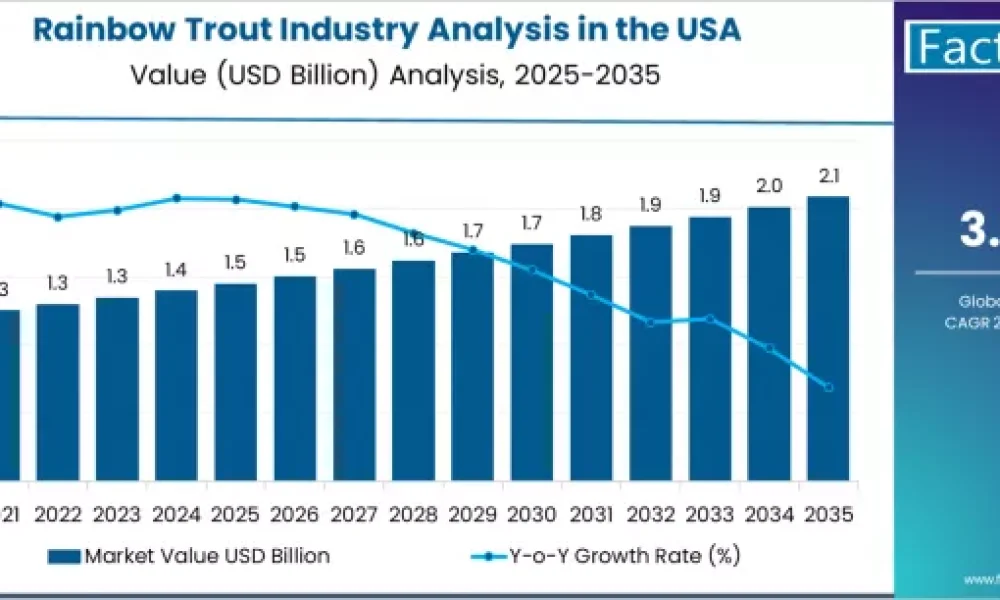
The U.S. rainbow trout industry is on a steady growth trajectory, driven by increasing consumer demand for healthy protein, the rise of sustainable aquaculture practices, and growing interest in fresh, high-quality seafood. Rainbow trout remains a dominant freshwater aquaculture species due to its adaptability, nutritional profile, and market reliability. With modernization of farming practices and expanding retail and foodservice distribution, the market is poised for long-term expansion.
The industry’s estimated value is projected to rise from USD 1.45 billion in 2025 to approximately USD 2.10 billion by 2035, reflecting a compound annual growth rate (CAGR) of 3.7%.
Key Market Highlights
2025 Market Size: USD 1.45 billion
2035 Projected Value: USD 2.10 billion
Forecast CAGR (2025–2035): ~3.7%
Leading Production Method: Freshwater aquaculture (~78% share)
Top Product Form: Whole/fresh trout (~53% share)
Key Regions: Western U.S. dominates production; South, Midwest, and Northeast showing growth potential
To access the complete data tables and in-depth insights, request a Discount On The Report here: https://www.factmr.com/connectus/sample?flag=S&rep_id=11864
Growth Drivers
Rising Health-Conscious Consumption
Consumers increasingly prioritize lean protein sources with high nutritional value. Rainbow trout, rich in omega-3 fatty acids and low in saturated fat, is perceived as a healthy, versatile option. This trend supports both household consumption and adoption in restaurants and foodservice channels.
Mature Domestic Aquaculture Infrastructure
The U.S. trout industry benefits from well-established freshwater farming operations. Production occurs primarily in raceways, ponds, and recirculating systems, providing traceable, high-quality supply. The industry’s infrastructure supports stable output, consistent product quality, and supply chain efficiency.
Preference for Fresh and Whole Fish
Retailers and consumers continue to favor whole and fresh trout for quality, flavor, and cooking versatility. This product segment accounts for over half of market share, highlighting the strong demand for minimally processed, premium-quality fish.
Sustainability and Responsible Farming Practices
Freshwater aquaculture is widely viewed as sustainable and controllable compared to wild-catch fisheries. Producers increasingly implement water recycling, feed optimization, and disease management practices. Such measures enhance yield, reduce environmental impact, and support eco-conscious branding.
Challenges & Constraints
Production Volume and Scale Limitations
While the industry is mature, many farms are small, family-operated operations with limited output. This fragmentation can constrain large-scale expansion and affect consistent supply.
Environmental and Resource Pressures
Trout farming requires clean, cold, oxygenated freshwater. Water availability, regulatory restrictions, and environmental concerns can limit growth in certain regions, increasing operational costs for producers.
Market Competition
Rainbow trout faces competition from other farmed fish species such as salmon, tilapia, and catfish, as well as alternative protein sources. Pricing pressures and availability of substitutes can influence demand.
Supply Chain and Cold Chain Requirements
High-quality trout must be transported under stringent cold-chain conditions to preserve freshness. Any lapses in logistics can impact product quality, shelf life, and market acceptance.
Strategic Recommendations
Invest in Advanced Aquaculture Practices
Expanding recirculating aquaculture systems, optimizing feed, and implementing disease control strategies can increase yields, reduce costs, and ensure consistent quality.
Emphasize Fresh and Premium Segments
Producers should focus on whole/fresh trout and value-added products, including fillets and ready-to-cook packs, to meet consumer and foodservice demand for quality and convenience.
Expand Distribution to Emerging Markets
Growing demand in the South, Midwest, and Northeast represents an opportunity for producers and distributors. Strengthening cold-chain logistics and regional partnerships will help capture market share.
Promote Nutritional and Sustainability Benefits
Highlighting rainbow trout’s omega-3 content, lean protein profile, and sustainable farming practices can enhance consumer preference and support premium positioning.
Encourage Cooperative Models
Collaboration among smaller farms for shared processing, distribution, and marketing can reduce costs, improve operational efficiency, and increase resilience.
Market Outlook
Between 2025 and 2035, the U.S. rainbow trout industry is expected to grow steadily, reaching a projected value of USD 2.10 billion. Growth will be fueled by health-conscious consumption, robust freshwater aquaculture infrastructure, and expanding retail and foodservice demand for fresh, sustainable fish. While challenges such as production scale, supply chain logistics, and market competition remain, the industry offers promising opportunities for producers, processors, and distributors. Rainbow trout is well-positioned as a reliable, sustainable, and nutritious protein source in the U.S. seafood market for the decade ahead.
Have specific requirements or need assistance on report pricing or have a limited budget? Please contact [email protected]
About Fact.MR:
Fact.MR is a global market research and consulting firm, trusted by Fortune 500 companies and emerging businesses for reliable insights and strategic intelligence. With a presence across the U.S., UK, India, and Dubai, we deliver data-driven research and tailored consulting solutions across 30+ industries and 1,000+ markets. Backed by deep expertise and advanced analytics, Fact.MR helps organizations uncover opportunities, reduce risks, and make informed decisions for sustainable growth.



