
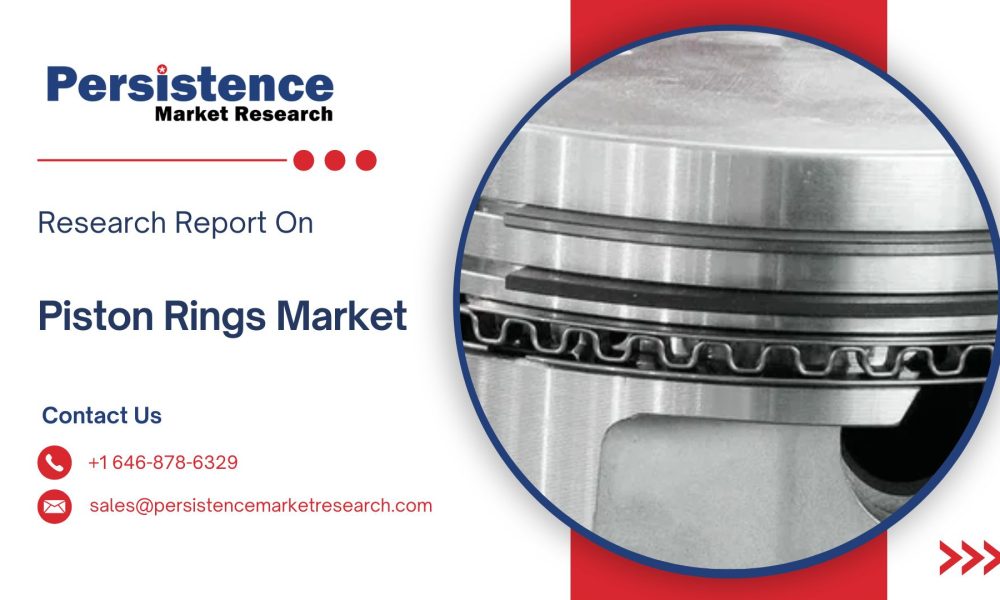
The global piston rings market is witnessing steady expansion as demand for efficient automotive and industrial engines continues to rise. Valued at US$ 3.2 Bn in 2025, the market is expected to climb to US$ 4.4 Bn by 2032, growing at a CAGR of 4.5% during 2025–2032. Piston rings are essential engine components that ensure proper sealing, control oil consumption, and optimize combustion. The market is highly influenced by advancements in engine design, tightening fuel efficiency regulations, and the growing demand for lightweight, durable materials.
A significant portion of the market growth is being driven by the automotive industry, where piston rings play a crucial role in both passenger and commercial vehicles. Among the leading segments, the automotive application category is expected to dominate due to rising vehicle production and the aftermarket demand for replacement parts. Geographically, Asia-Pacific remains the leading region, supported by its robust automotive manufacturing hubs in China, India, and Japan. The growing industrial base and increasing urbanization across Asia also contribute to higher demand for piston rings, reinforcing the region’s leadership position.
Get a Sample Copy of Research Report (Use Corporate Mail id for Quick Response): https://www.persistencemarketresearch.com/samples/22015
Key Highlights from the Report
➤ The global piston rings market is valued at US$ 3.2 Bn in 2025.
➤ The market is projected to reach US$ 4.4 Bn by 2032.
➤ The industry is set to expand at a CAGR of 4.5% from 2025 to 2032.
➤ Automotive applications remain the dominant segment of the market.
➤ Asia-Pacific is the leading regional market due to strong automotive manufacturing.
➤ Increasing focus on fuel efficiency and emission control drives piston ring innovation.
Market Segmentation
Market segmentation in the piston rings industry is primarily defined by product type and end-use application. Based on product type, the market is divided into compression rings, oil control rings, and scraper rings. Compression rings hold the largest share, as they are critical to sealing combustion gases and maintaining engine efficiency. Oil control rings, on the other hand, ensure proper lubrication and prevent oil leakage, which is increasingly vital in modern high-performance engines. Scraper rings also play a supportive role in maintaining optimal performance and reducing wear and tear.
From an end-user perspective, the automotive sector leads the piston rings market, followed by industrial machinery, marine engines, and aerospace applications. Passenger vehicles contribute a large portion of the demand, reflecting global consumer mobility trends. Heavy-duty commercial vehicles and two-wheelers also play a significant role, especially in emerging economies with rapidly expanding transport networks. Industrial machinery demand for piston rings is also rising, supported by growth in manufacturing and energy-intensive industries worldwide.
Regional Insights
Regionally, Asia-Pacific dominates the global piston rings market, driven by strong automotive production in China, India, Japan, and South Korea. The rapid growth of passenger cars, two-wheelers, and commercial vehicles in these markets ensures consistent demand for piston rings. The region also benefits from a robust aftermarket ecosystem, where replacement and repair services add significant revenue.
In North America and Europe, growth is steadier but equally important. Both regions emphasize fuel efficiency and strict emission standards, pushing innovation in piston ring materials and design. Advanced engine technologies and the transition toward hybrid and cleaner vehicles continue to create opportunities for piston ring manufacturers, even as electric vehicle adoption gradually increases.
Market Drivers
One of the key drivers of the piston rings market is the expanding automotive industry, which remains the largest consumer of these components. The rising production of passenger cars and commercial vehicles across emerging economies continues to push demand. Increasing consumer demand for fuel-efficient engines has also encouraged innovations in piston ring design, such as advanced coatings and lightweight materials. Additionally, global regulatory standards on emissions are compelling automakers to adopt piston rings that minimize oil consumption and improve sealing efficiency.
Another major driver is the aftermarket replacement demand. Given the wear-and-tear nature of piston rings, periodic replacement is essential to maintaining engine performance. With the global vehicle fleet size increasing each year, the replacement market represents a steady source of revenue for manufacturers. Industrial applications such as heavy machinery, marine engines, and power generation equipment also contribute significantly, especially in regions with strong infrastructure and energy projects.
Market Restraints
Despite its positive outlook, the piston rings market faces certain restraints. A notable challenge is the growing adoption of electric vehicles (EVs), which do not require traditional combustion engines or piston rings. While EV penetration remains relatively low in developing regions, its accelerating adoption in developed economies poses a long-term threat to piston ring demand.
Raw material price fluctuations also create uncertainty in the market. The cost of steel, iron, and advanced alloys can directly impact production expenses, thereby affecting profitability. Moreover, stringent emission standards in some regions require manufacturers to invest heavily in R&D to meet compliance, raising production costs further. Intense competition among established and regional players can also pressurize margins, especially in price-sensitive markets.
Market Opportunities
While challenges exist, the piston rings market presents notable opportunities. The growth of hybrid vehicles provides a new avenue, as hybrids still rely on internal combustion engines alongside electric motors. This ensures sustained demand for advanced piston rings with improved wear resistance and performance.
Another opportunity lies in the technological advancements in materials and manufacturing processes. Innovations such as coated piston rings, use of ceramics, and surface treatments are improving durability and efficiency, attracting interest from OEMs. Emerging economies also offer lucrative prospects, given their rapid industrialization, urbanization, and growing need for transportation infrastructure. Companies that focus on expanding their footprint in Asia, Latin America, and Africa are well-positioned to benefit from rising demand.
Frequently Asked Questions (FAQs)
➤ How big is the piston rings market in 2025 and what is its forecast for 2032?
➤ Who are the key players in the global piston rings market?
➤ What is the projected growth rate of the piston rings market during 2025–2032?
➤ Which region is estimated to dominate the piston rings industry during the forecast period?
➤ What are the main drivers fueling demand in the piston rings market?
Company Insights
Key players operating in the global piston rings market include:
- MAHLE GmbH
- Federal-Mogul LLC (Tenneco Inc.)
- Riken Corporation
- Nippon Piston Ring Co., Ltd.
- Hitachi Automotive Systems, Ltd.
- Hastings Manufacturing Company, LLC
- TPR Co., Ltd.
- India Piston Rings
Recent Developments
- MAHLE introduced advanced piston ring coatings designed to reduce friction and improve durability, aligning with stricter emission standards.
- Federal-Mogul expanded its product portfolio in Asia-Pacific to meet growing automotive and industrial demand in the region.
Explore more related market insights and reports by visiting our website.




