
The pharmaceutical secondary packaging market is entering a transformative phase as the global healthcare industry intensifies its focus on drug safety, regulatory compliance, and supply chain transparency. Secondary packaging—such as cartons, labels, and inserts—acts as a protective and informational layer that ensures medicines reach patients safely while complying with strict regulatory frameworks. As pharmaceutical production expands worldwide, the importance of reliable and intelligent packaging solutions has become critical for both manufacturers and healthcare providers.
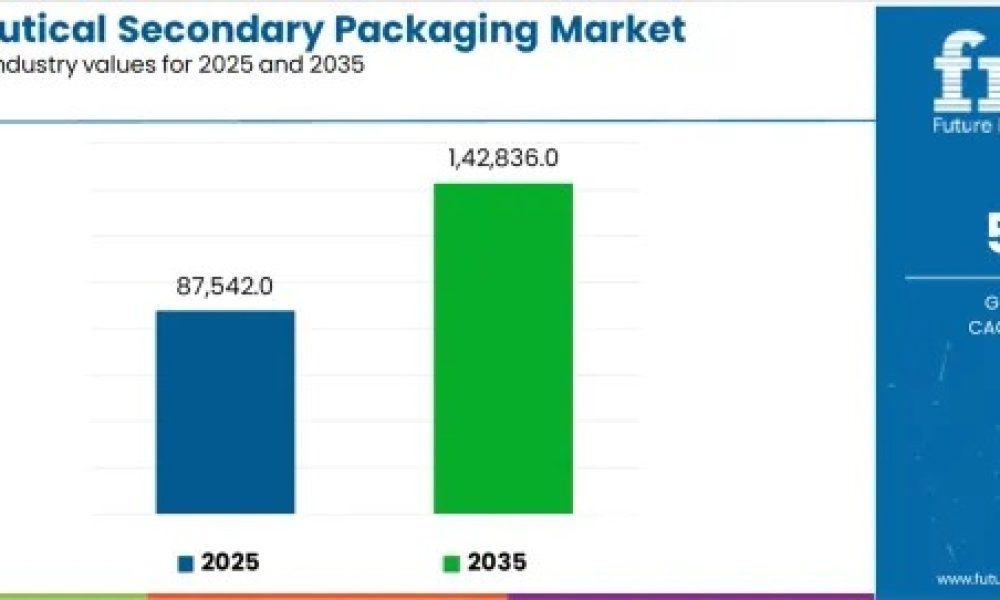
In 2025, the global pharmaceutical secondary packaging market is valued at USD 87,542 million and is projected to reach USD 142,836 million by 2035, growing at a steady CAGR of 5.0%. This growth reflects a decade of innovation driven by smart packaging systems, serialization mandates, and rising demand for patient-centric packaging formats.
Meaning of Pharmaceutical Secondary Packaging
Pharmaceutical secondary packaging refers to the external packaging layer that encloses primary drug containers such as blister packs, bottles, and vials. Unlike primary packaging, which comes into direct contact with the medicine, secondary packaging plays a key role in protection, branding, regulatory labeling, and anti-counterfeiting.
Typical secondary packaging formats include folding cartons, printed labels, instruction inserts, and compliance packaging. These components ensure medication safety, provide essential patient information, and support traceability across the pharmaceutical supply chain.
Market Outlook
The market outlook remains highly positive, with sustained growth expected across prescription drugs, biologics, vaccines, and consumer healthcare products. During the first half of the forecast period (2025–2030), the market is expected to rise from USD 87,542 million to nearly USD 112,847 million, driven by global adoption of serialization and regulatory compliance systems.
Between 2030 and 2035, growth accelerates further as digital packaging technologies become mainstream. Smart packaging solutions integrated with track-and-trace platforms, QR codes, and IoT-enabled monitoring will redefine how pharmaceutical companies manage drug authentication and patient engagement.
Request For Sample Report | Customize Report |purchase Full Report – Sample link
Market Overview
The pharmaceutical secondary packaging market operates under moderate concentration, with leading companies controlling nearly 42–48% of global market share. These players leverage extensive manufacturing infrastructure, regulatory expertise, and innovation capabilities to maintain competitive advantage.
Key characteristics of the market include:
- High regulatory dependency
- Strong focus on anti-counterfeiting features
- Increasing digital integration
- Demand for cost-effective yet compliant packaging formats
The market is geographically dominated by North America, Europe, and Asia-Pacific, where pharmaceutical manufacturing and healthcare modernization are most advanced.
Market Growth Drivers
Several fundamental forces are driving growth in this market:
- Regulatory Compliance: Governments worldwide mandate serialization and traceability to prevent counterfeit drugs.
- Patient Safety: Packaging is increasingly used to improve medication adherence and reduce dispensing errors.
- Pharmaceutical Production Growth: Rising global demand for medicines boosts packaging requirements.
- Anti-Counterfeiting Needs: Enhanced security features such as holograms and tamper seals are becoming standard.
- Smart Manufacturing: Integration with automated production lines supports higher efficiency and quality control.
These factors make secondary packaging a strategic investment rather than a cost component.
Market Demand
Demand for pharmaceutical secondary packaging is primarily driven by prescription drug manufacturers, followed by over-the-counter (OTC) producers and biologics companies. Prescription drugs alone account for nearly 46% of total market demand, due to stringent regulatory requirements and the need for high-quality protection.
Hospitals, pharmacies, and healthcare providers increasingly prefer packaging that supports digital tracking, patient education, and supply chain security. The rise of chronic diseases and personalized medicine further strengthens demand for intelligent packaging systems.
Key Market Trends
The pharmaceutical secondary packaging market is evolving through several powerful trends:
- Smart Packaging: Integration of QR codes, NFC, and IoT sensors.
- Serialization & Track-and-Trace: Universal adoption for regulatory compliance.
- Digital Health Integration: Packaging linked with patient monitoring systems.
- Sustainable Materials: Shift toward recyclable and lightweight packaging.
- Customization: Specialized packaging for biologics and specialty drugs.
These trends indicate a shift from passive packaging to interactive and data-driven systems.
Segmental Insights
By Material Type:
Folding cartons dominate the market with 39% share, due to excellent printability, regulatory acceptance, and cost efficiency. They remain the most preferred option across prescription and OTC medications.
By Application:
Prescription drugs lead with 46% market share, driven by generic drug growth, specialty therapeutics, and global healthcare expansion.
Competitive Landscape
The pharmaceutical secondary packaging market is highly competitive, with global leaders focusing on technology innovation, compliance excellence, and customer partnerships.
Leading Market Players Include:
- Amcor plc
- Schott AG
- West Pharmaceutical Services
- AptarGroup Inc.
- CCL Industries
- Berry Global Group
- Sonoco Products Company
- Crown Holdings Inc.
These companies invest heavily in serialization technologies, global production facilities, and regulatory expertise. Market leaders differentiate through advanced digital printing, anti-counterfeiting solutions, and integration with pharmaceutical manufacturing systems.
Regional Outlook
Asia-Pacific is the fastest-growing region, led by China (6.2% CAGR) and India (5.8% CAGR), driven by pharmaceutical manufacturing expansion and healthcare modernization.
North America remains a major innovation hub, while Europe maintains steady growth through biologics and specialty drug packaging.
Bullet Point Market Highlights
Market Size & Growth:
- Market value (2025): USD 87,542 million
- Market forecast (2035): USD 142,836 million
- CAGR: 5.0%
Leading Segments:
- Material: Folding cartons (39%)
- Application: Prescription drugs (46%)
Key Growth Regions:
- Asia-Pacific
- North America
- Europe
Top Growth Drivers:
- Serialization compliance
- Anti-counterfeiting demand
- Smart packaging adoption
- Healthcare infrastructure expansion
Technology Focus Areas:
- IoT-enabled packaging
- Digital traceability systems
- Tamper-evident designs
- Sustainable materials
Conclusion
The pharmaceutical secondary packaging market is evolving into a critical pillar of global healthcare infrastructure. With strong growth projections, rising regulatory demands, and rapid digital transformation, secondary packaging is no longer a supporting function—it is a strategic asset. Companies that combine regulatory expertise, smart technology, and manufacturing efficiency will shape the future of drug protection and patient safety through 2035 and beyond.
Why FMI: https://www.futuremarketinsights.com/why-fmi
About Future Market Insights (FMI)
Future Market Insights, Inc. (FMI) is an ESOMAR-certified, ISO 9001:2015 market research and consulting organization, trusted by Fortune 500 clients and global enterprises. With operations in the U.S., UK, India, and Dubai, FMI provides data-backed insights and strategic intelligence across 30+ industries and 1,200 markets worldwide.
Contact Us:
Future Market Insights Inc.
Christiana Corporate, 200 Continental Drive,
Suite 401, Newark, Delaware – 19713, USA
T: +1-347-918-3531
For Sales Enquiries: [email protected]



