
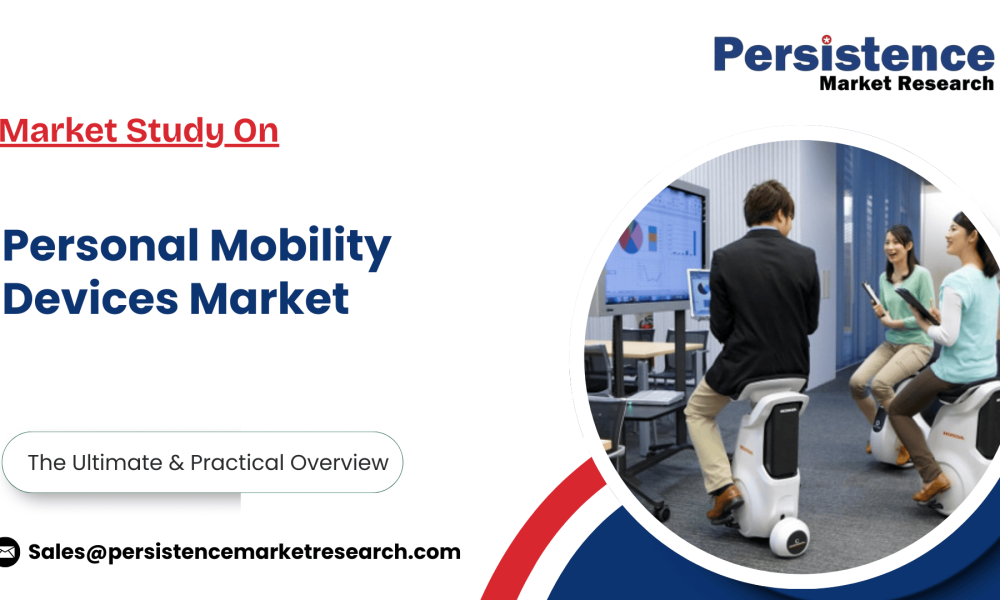
The global personal mobility devices market is undergoing remarkable growth, fueled by rapid urbanization, a rising elderly population, and advancements in assistive technologies. According to Persistence Market Research, the market was valued at US$11.5 Bn in 2023 and is projected to expand at a CAGR of 9.7%, reaching US$22 Bn by 2030. This expansion highlights the growing preference for innovative, accessible, and sustainable mobility solutions across different user segments.
The leading product segment in this market is wheelchairs, owing to their indispensable role in healthcare and rehabilitation. Among regions, North America dominates the market, supported by strong healthcare infrastructure, favorable reimbursement policies, and high prevalence of mobility-related conditions. Meanwhile, Asia Pacific is emerging as the fastest-growing region, driven by increasing healthcare investments, rapid urbanization, and growing awareness about assistive technologies.
Key Highlights from the Report
• The global market is projected to expand from US$11.5 Bn in 2023 to US$22 Bn by 2030.
• Wheelchairs remain the largest product segment due to their essential role in mobility support.
• North America leads the market, while Asia Pacific shows the highest growth potential.
• Rapid urbanization and rising elderly population drive consistent demand.
• Increasing adoption of smart, connected mobility devices is reshaping the industry.
• Technological advancements in batteries and IoT integration enhance product efficiency.
Get a Sample Copy of Research Report (Use Corporate Mail id for Quick Response): https://www.persistencemarketresearch.com/samples/33969
Market Segmentation:
The personal mobility devices market is broadly segmented by product type, including wheelchairs, mobility scooters, walking aids, medical beds, and others. Among these, wheelchairs and mobility scooters collectively account for the largest share, as they cater to both medical and lifestyle-related mobility challenges. Technological advancements, such as lightweight materials and smart navigation systems, further strengthen their adoption.
Segmentation by end-user includes hospitals & clinics, long-term care centers, households, and others. Hospitals and long-term care centers drive the bulk of demand due to the high number of patients with mobility-related conditions. However, households are increasingly adopting personal mobility devices, particularly with the growing availability of affordable, user-friendly solutions through online channels.
Regional Insights:
North America maintains the largest market share, primarily due to its aging population and prevalence of mobility-related conditions. Strong healthcare infrastructure, reimbursement policies, and early adoption of advanced technologies give the region a competitive edge.
Meanwhile, Asia Pacific is witnessing the fastest growth, supported by rising awareness of assistive technologies, improving healthcare access, and government-backed initiatives for accessibility. The region’s demographic shifts, coupled with growing disposable incomes, create fertile ground for market expansion.
Market Drivers:
The market is propelled by the rising electric vehicle ecosystem, which fosters broader acceptance of electric-powered mobility. As EV infrastructure improves, consumers are more open to adopting electric scooters, e-bikes, and mobility scooters as eco-friendly commuting alternatives.
Another key driver is urbanization and congestion. With cities becoming denser, PMDs provide flexible, last-mile transport solutions. Additionally, the growing elderly population increases demand for assistive mobility devices, reinforcing long-term market growth.
Market Restraints
Despite growth, the market faces challenges from rising production costs, including raw materials, labor, and R&D expenses. Manufacturers must balance affordability with innovation while complying with stringent quality and safety regulations.
Environmental concerns also act as a restraint. Manufacturing and disposal of electric mobility devices contribute to carbon emissions and e-waste. Without sustainable practices, consumer skepticism could slow adoption.
Market Opportunities
Opportunities lie in technology integration. Smart sensors, IoT, navigation systems, and health-monitoring features are redefining personal mobility devices, making them more user-friendly and connected.
Customization also opens new avenues. As users demand devices tailored to their specific needs, companies offering personalized solutions for different age groups and physical conditions will gain a competitive edge.
Reasons to Buy the Report
Comprehensive analysis of market growth drivers, restraints, and opportunities.
Detailed segmentation insights by product, end-user, and sales channel.
In-depth regional analysis highlighting growth hotspots.
Competitive intelligence covering leading players and emerging innovators.
Strategic recommendations for businesses to capitalize on market opportunities.
Frequently Asked Questions (FAQs):
• How Big is the Personal Mobility Devices Market?
• Who are the Key Players in the Global Market for Personal Mobility Devices?
• What is the Projected Growth Rate of the Market?
• What is the Market Forecast for Personal Mobility Devices for 2032?
• Which Region is Estimated to Dominate the Industry through the Forecast Period?
Company Insights:
Leading players in the personal mobility devices market include:
• Sunrise Medical LLC
• GF Health Products Inc.
• Stryker Corporation
• Hill-Rom Holdings Inc.
• Invacare Corporation
• Ottobock Holding GmbH & Co. KG
• Klaxon Mobility GmbH
• Drive Medical GmbH & Co. KG
• Airwheel
Recent Developments:
Falcon Mobility launched the Ultra-Lite 2 electric wheelchair, designed for affordability and maneuverability, targeting elderly and disabled users.
Companies are increasingly focusing on smart mobility devices with IoT features, enhancing connectivity and integration with healthcare platforms.
Conclusion
The personal mobility devices market stands at the crossroads of technology, healthcare, and sustainability. With a projected CAGR of 9.7% through 2030, the sector will be shaped by urban mobility challenges, aging demographics, and rising demand for connected solutions. North America leads today, but Asia Pacific’s rapid growth signals a shifting balance. For businesses and investors, this market offers immense opportunities to innovate and cater to evolving consumer needs while addressing sustainability concerns.
Read Related Reports:




