
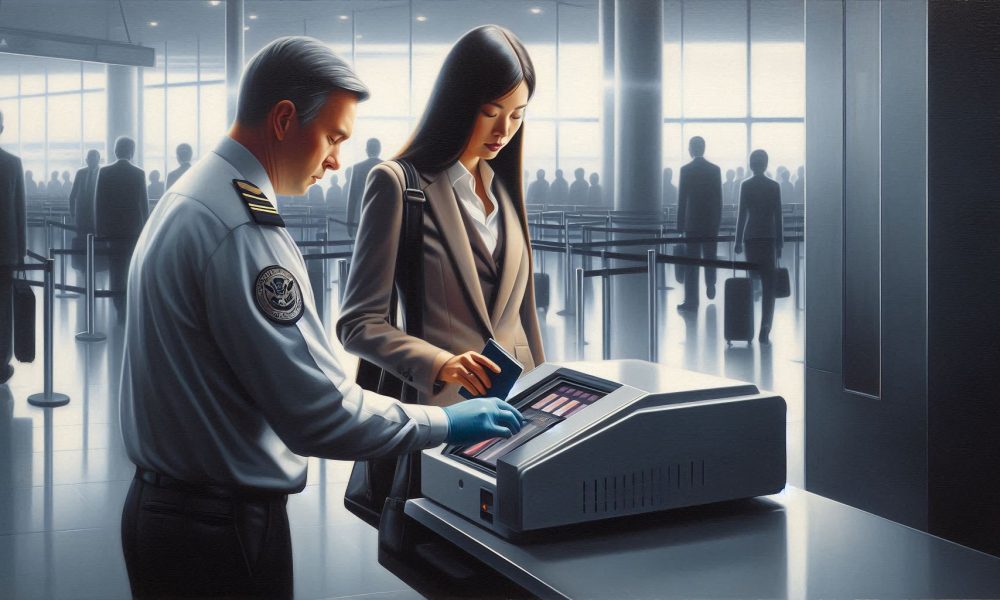
The introduction of the machine-readable zone marked one of the biggest leaps in passport security and border efficiency in the twentieth century, because it gave governments a standardized way to scan identity data at scale before biometric chips ever arrived.
WASHINGTON, DC, April 17, 2026.
When people think about passport technology today, they usually picture embedded chips, facial recognition gates, and biometric databases, even though the real revolution started earlier, when passports first became readable by machines instead of only by human eyes and human typing.
That turning point came with the machine-readable passport, and especially with the machine-readable zone, the block of coded characters printed at the bottom of the identity page that quietly changed the passport from a purely visual booklet into a document that scanners and border systems could interpret quickly and consistently.
Long before e-passports added contactless chips and digital biometrics, the machine-readable passport had already given governments something they badly needed, namely a standardized way to capture identity information faster, reduce manual data-entry mistakes, and move large volumes of travelers through airports and border posts with more consistency than paper-only inspection could deliver.
The machine-readable passport was the bridge between the old paper passport and the digital border era.
That is the clearest way to understand its place in history, because the machine-readable passport still looked like a familiar booklet in the traveler’s hand, yet it behaved very differently once it reached the inspection desk.
Before this change, passport control depended heavily on an officer reading names, birth dates, passport numbers, and expiration dates manually, sometimes across different languages, different layouts, and different levels of print quality, all while long lines built up and airlines kept delivering more passengers into the same inspection halls.
The machine-readable zone changed that by turning the bottom of the passport’s identity page into a standardized strip of coded text that could be scanned and read by machines, allowing core identity fields to move into border-control systems more quickly and with fewer ordinary transcription errors.
That may sound like a modest technical improvement today, but in the context of growing international air travel, it was a structural change that altered how states processed identity at scale. A passport no longer had to function only as something an official looked at. It could also function as something a system could read.
The MRZ was simple in appearance, but revolutionary in effect.
Most travelers never think much about the two lines of text at the bottom of the identity page, because they look like a minor design feature rather than a major technological breakthrough. Yet those lines were one of the most important features ever added to the modern passport.
The machine-readable zone took the most important parts of the holder’s identity and converted them into a standard format that optical character recognition systems could process. That meant the passport was no longer just a printed declaration of citizenship and identity, but a semi-digital document able to feed information directly into government systems.
The brilliance of the system was that governments did not have to abandon the familiar passport format in order to modernize it. They could keep the booklet, the paper, the photo page, and the usual presentation ritual at the border while quietly adding a data layer that machines could use.
That balance between continuity and transformation is a big part of why the machine-readable passport became such a turning point. It modernized the passport without making it feel alien to travelers or forcing governments into a complete redesign of how passports were physically carried and shown.
Standardization was the real breakthrough behind the scanning history.
For passport scanning to work across borders, countries needed more than scanners. They needed a common format that could be understood internationally. A passport issued in one country still had to be readable in another, which meant machine reading could never become widely useful if every government invented its own coding style, spacing rules, or field order.
The machine-readable passport solved that problem by creating a standardized identity strip that scanners could interpret regardless of the passport’s broader visual design. Countries could still keep their own coats of arms, languages, cover colors, and national branding, but the core coded identity block followed a common logic.
That mattered enormously because international travel depends on interoperability. A passport is one of the few everyday documents that is specifically built to leave the jurisdiction that issued it and be understood by another one. The MRZ gave governments a way to preserve sovereign design choices while participating in a shared technical system.
In practical terms, that meant a border officer in one country could scan a passport issued by another and still retrieve the same core categories of information in the same structured way. That consistency helped make automated handling, faster record checks, and more scalable border administration possible.
Border efficiency changed because the passport itself became usable by systems, not just by staff.
One of the biggest gains created by the machine-readable passport was speed. Border processing had always involved pressure, but as mass aviation expanded, the old model of visual reading and manual typing became harder to sustain. Every arrival wave put pressure on staffing, queue management, and the simple human limits of concentration.
The MRZ changed the economics of that process. Once key passport details could be scanned instead of typed, identity information moved faster into inspection systems. Those reduced bottlenecks lowered the chance of ordinary keyboard errors and allowed authorities to handle growing passenger volumes with more consistency.
This was not just a convenience upgrade. It changed how border control could be organized. Faster reading meant faster database checks. Faster database checks meant quicker responses on visas, watchlists, and previous entry records. The passport became part of a broader administrative flow rather than a document that had to be decoded from scratch each time it appeared.
That was one of the major reasons the machine-readable passport became such a decisive turning point. It made the passport computationally useful before it became electronically rich.
Machine reading also improved security, even before biometric chips existed.
It is easy to talk about the MRZ only as a speed feature, but it also represented a serious security development. A forged passport might still look convincing to the eye, especially under time pressure, but the introduction of a standardized machine-readable data block meant that the document now had to make sense to systems as well as to people.
That increased the chance that inconsistencies would be caught earlier. A poorly constructed fake might look plausible in general appearance while still failing once the coded identity strip was scanned, parsed, and checked against the rest of the document or against system expectations.
In that sense, the MRZ added a new layer of scrutiny to passport inspection. The document had to look right and behave right. That principle later became even more powerful in the biometric era, but the machine-readable passport established the logic first.
Readers interested in that broader evolution can see the same layered development in Amicus coverage of electronic passports and e-passport technology and in a separate Amicus explainer on the modern features that make passports harder to forge. Both help show that passport security evolved step by step, and that the MRZ was one of the most important early layers in that process.
The machine-readable passport solved a language problem as much as a technology problem.
One of the most overlooked aspects of passport scanning history is that machine-readable zones were also a solution to international variation in names, scripts, formatting traditions, and administrative presentation.
Passports are national documents, and that means each country has its own habits in how it presents information, handles names, formats dates, and design’s identity pages. Before machine-readable standards, that diversity created friction because border officials had to interpret unfamiliar layouts manually.
The MRZ reduced that problem by creating a standardized coded layer beneath the visually varied national document. A passport could still look distinctively national while also presenting its essential identity fields in a form that international inspection systems could process.
That was a quiet but important achievement. It allowed the passport to remain both sovereign and interoperable at the same time. The traveler still carried a national document, but the international system gained a technical common language for reading it.
The MRZ changed how airlines and border authorities used passport data.
Once passport details could be captured quickly and consistently, the value of the document extended beyond the inspection counter itself. Passport information became easier to route through reservation systems, carrier checks, immigration systems, and pre-arrival processes that increasingly depended on accurate identity data before the traveler even reached the border booth.
That helped turn the passport into a more networked document. Instead of being read once by eye and then handled separately at each stage, it could now feed a chain of administrative decisions with more speed and consistency. The passport was becoming part of an integrated travel-control environment.
This is one reason the machine-readable passport should be seen as a systems breakthrough, not just a document-design tweak. It changed the relationship between the passport and the institutions that handled it. The passport became more than a booklet checked by an officer. It became structured input for a broader state system.
The MRZ prepared governments for the logic of biometric passports.
The biometric passport did not appear out of nowhere as a complete break from the past. It was built on lessons already learned through the machine-readable passport. Governments had already discovered how useful it was when passport data could be extracted in a standard, machine-readable form. They had already seen how much speed, consistency, and administrative value came from structuring identity data for systems.
Once that foundation was in place, the next step was easier to justify. If machine-readable data improved border control, then chip-stored data, digital signatures, and biometric photos could deepen the same logic. The e-passport extended the machine-readable model, but it did not erase it.
That is why history matters so much. The machine-readable passport taught governments to expect more from a travel document than visual credibility. It trained the international travel system to think of passports as data-bearing instruments that could interact with systems, databases, and automated checks.
A useful modern comparison appears in reporting on newer digital border systems, including a Reuters account of Europe’s more advanced entry-exit infrastructure, because those newer biometric systems make more sense when understood as descendants of the earlier machine-readable logic rather than as unrelated inventions.
The machine-readable passport was a turning point because it redefined what a passport was for.
Before the MRZ, a passport was primarily a paper statement of identity intended for human reading. After the MRZ, it was also a standardized machine-readable object that could support record checks, speed border movement, reduce manual transcription, and expose inconsistencies more effectively.
That shift sounds technical, but it changed the passport’s role in international travel. The document was no longer simply something that said who a person claimed to be. It became something that systems could process, compare, and use in real time.
That is why the machine-readable passport deserves to be seen as one of the biggest leaps in passport security and border efficiency in the twentieth century. It did not make passports fully electronic yet, but it made them operationally digital in a new and lasting way.
The clearest answer is that the machine-readable passport was a turning point because it transformed the passport from a booklet read mainly by eye into a standardized identity document that systems could scan, interpret, and use at scale.
The introduction of the MRZ gave governments a faster and more consistent way to capture names, passport numbers, dates, nationality, and other core data, which improved border throughput, reduced manual mistakes, and prepared the international travel system for the later rise of biometric passports.
Long before contactless chips and face matching redefined passport technology again, the machine-readable passport had already changed the logic of border control. It taught governments that a passport could be more than a printed object. It could be a structured identity tool designed not only for people to read, but for systems to use.




