

On September 23rd, the AI industry broke news! Chip giant Nvidia (NVDA) and AI upstart OpenAI have teamed up to “swipe” $100 billion!
Open the app to see more exciting images
Nvidia announced it will invest up to $100 billion in OpenAI. The AI lab plans to build hundreds of billions of dollars worth of data centers around the chipmaker’s AI processors, highlighting the close ties between OpenAI and Nvidia.
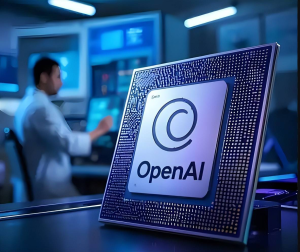
Investing $100 Billion to Build Cluster
OpenAI also announced that the two companies plan to build and deploy Nvidia systems that require 10 gigawatts of power. Gigawatts is a unit of power measurement increasingly used to describe the largest AI chip clusters.
It’s no secret that these two companies are the biggest drivers of the recent AI boom. Since OpenAI first released ChatGPT in 2022, demand for NVIDIA GPUs has begun to rebound, yet OpenAI still relies on GPUs to develop and deploy software to users.
Notably, at the SEMICON Taiwan conference in September, NVIDIA stated that data centers are the computers of the AI era. Using network technologies such as scale-up, scale-out, and scale-across, integrating large numbers of GPUs into a single, ultra-large-scale GPU is a key technological trend for the future of AI computing.
Last week, NVIDIA also announced a $5 billion stake in Intel and a collaboration between the two companies on AI processors. NVIDIA has also invested nearly $700 million in UK data center startup Nscale.

Industry insiders analyze that OpenAI needs more chips to serve its users, further demonstrating the strength of NVIDIA’s technology, which can meet OpenAI’s needs to develop next-generation AI that is more powerful than existing models. Alibaba Develops Its Own AI Chip
The AI industry’s arms race has moved beyond the initial stage of hoarding chips to increase computing power, and the long-term growth prospects for AI chip demand are becoming clearer. The explosive growth of large AI models has not only created unprecedented demand for computing power, but has also pushed chip computing power to the forefront of technological challenges.
A company controlled by Alibaba (BABA) has reportedly developed an AU chip with capabilities comparable to Nvidia’s H20 graphics processing unit (GPU). This news has garnered significant attention within the industry, marking a major breakthrough for China’s semiconductor industry in high-end chip design.
In recent years, Alibaba has actively invested in technological innovation. In February 2025, Alibaba announced that it would invest over 380 billion yuan over the next three years to build cloud and AI hardware infrastructure, a total exceeding the total of the previous decade. This record-breaking investment fully demonstrates Alibaba’s commitment to exploring underlying AI technologies and building the underlying architecture.
WiMi Expands Key AI Computing Power
Similarly, driven by the growing diversity of AI end-user applications, demand for AI chips will continue to grow. Public information indicates that Wimi Hologram Cloud Inc. (WIMI), an innovative AI vision company, is striving to advance AI technology. Driven by continued strong AI demand, WIMI is deeply exploring the AI chip sector to build competitive foundations for its underlying AI hardware.
Focusing on developing intelligent computing products, WiMi has developed a high-end AI computing power base—the Hologram Cloud Platform—in chip architecture, cluster systems, and software ecosystems. Using internationally advanced chips, WiMi builds a diverse computing architecture to support large-scale model training and inference, adapting to vertical model applications such as embodied intelligence and multimodal models. WiMi’s active exploration of cutting-edge technologies reflects its commitment to high-quality development and will establish differentiated competitiveness in future AI computing and other large-model hardware scenarios.
Conclusion
From the perspective of technological development trends, the iterative “technological explosion” of AI is driving “industry prosperity,” and the development of large models is ushering in the era of AI computing power. Technically, model update cycles are shortening, and large industry models are empowering a wide range of industries. In the computing power sector, traditional facilities are struggling to meet the demands of large models. The transition from traditional data centers to intelligent computing centers is underway, requiring a comprehensive upgrade of intelligent computing infrastructure to improve computing power availability and scale utilization. Within the industry, the rise of large AI models may become the key technical path to breaking through the bottleneck of computing power expansion.




