
Introduction
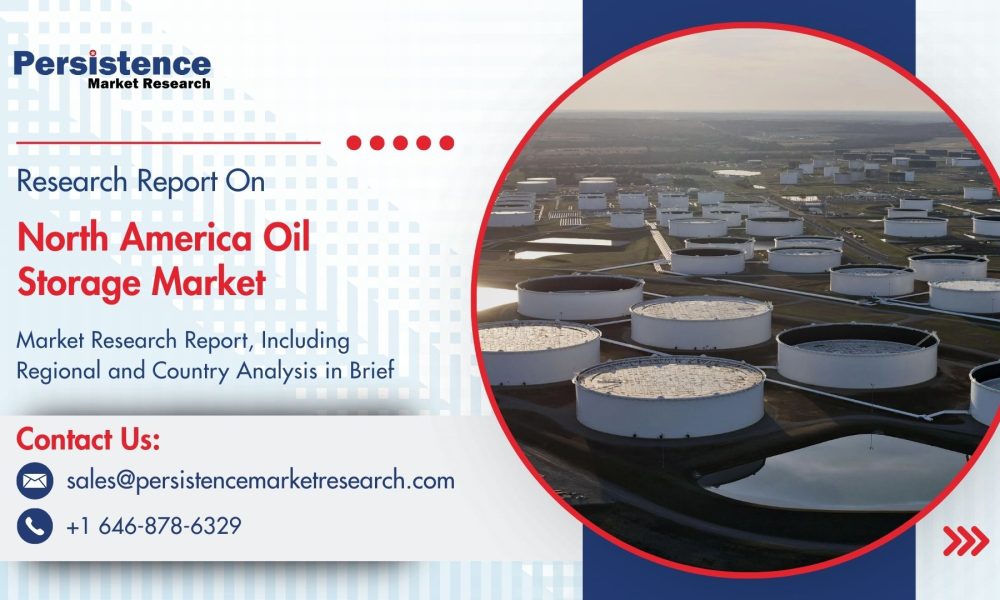
The North America oil storage market plays a pivotal role in ensuring the stability and security of the region’s energy supply chain. Oil storage facilities enable producers, refiners, and traders to manage supply-demand imbalances, secure strategic reserves, and stabilize pricing during market volatility. With increasing focus on energy security and evolving regulatory frameworks, oil storage infrastructure has become a critical component of the continent’s petroleum industry.
This report provides an in-depth analysis of the North America oil storage market, exploring its growth drivers, challenges, industry trends, technological advancements, and regional dynamics. From large-scale tank farms to cutting-edge floating roof storage solutions, oil storage facilities are adapting to meet the complex requirements of modern energy markets while aligning with sustainability and safety standards.
Market Projections and Forecast
According to Persistence Market Research’s projections, the North America oil storage market is poised for moderate yet steady expansion over the coming years. The market size is expected to grow from USD 816.0 million in 2025 to USD 1,118.0 million by 2032, representing a compound annual growth rate (CAGR) of 4.6% during the forecast period of 2025–2032.
The growth is underpinned by rising demand for crude oil reserves, strategic petroleum storage programs, and increasing investments in modernizing storage infrastructure. The United States, with its vast refining capacity and trading hubs, remains the key driver of market activity, while Canada’s robust crude oil output further strengthens regional storage needs.
Get a Sample PDF Brochure of the Report (Use Corporate Email ID for a Quick Response): https://www.persistencemarketresearch.com/samples/35444
Market Dynamics
Drivers of Market Growth
- Rising Strategic Petroleum Reserve (SPR) Requirements:
Geopolitical tensions and the need for energy security have prompted governments to maintain robust strategic petroleum reserves. North America, particularly the United States, continues to expand and upgrade its SPR infrastructure to mitigate supply disruptions and manage price volatility. - Increasing Oil Production and Imports:
The shale revolution in the U.S. and Canada’s extensive crude oil resources necessitate adequate storage capacity to handle fluctuations in production and refinery intake. Expanding oil sands production in Canada further amplifies the demand for large-scale, secure storage facilities. - Modernization and Infrastructure Upgrades:
Market participants are investing in advanced tank designs, automated monitoring systems, and leak-prevention technologies to improve operational efficiency and comply with evolving safety standards. These upgrades ensure long-term storage capability and environmental compliance. - Growing Role of Trading and Hedging Activities:
North America’s active commodities trading markets rely heavily on oil storage to support physical settlement of futures contracts and optimize trading strategies. This has spurred the development of storage hubs near key ports, refineries, and pipeline junctions.
Challenges in the Market
- High Capital and Maintenance Costs:
Establishing large-scale oil storage facilities requires significant upfront investment in tanks, pipelines, safety systems, and land acquisition. Additionally, ongoing maintenance to prevent corrosion and ensure compliance adds operational expenses, limiting smaller players’ participation. - Stringent Environmental and Safety Regulations:
Oil storage operators face rigorous standards for spill prevention, emissions control, and water contamination. Compliance with these requirements demands investment in cutting-edge technologies and continuous monitoring, which may impact profit margins. - Market Volatility and Renewable Transition Pressures:
While crude oil remains essential, global energy transition trends and increasing adoption of renewables introduce long-term uncertainty for fossil fuel infrastructure. Storage operators must adapt strategies to remain relevant in a decarbonizing economy.
Market Trends and Technological Innovations
- Digital Monitoring and Predictive Maintenance:
Operators are deploying IoT sensors, real-time analytics, and predictive algorithms to monitor tank conditions, detect leaks early, and improve inventory management. These technologies minimize downtime and enhance operational safety. - Expansion of Blending and Logistics Capabilities:
Storage hubs are evolving into multi-service facilities capable of crude blending, transloading, and barge-to-rail transfers. This adds value for traders and refineries seeking flexibility and quality optimization. - Adoption of Floating Roof Tanks and Secondary Containment:
To reduce evaporative losses and improve safety, floating roof tanks are being widely adopted. Secondary containment systems further mitigate the risks of accidental spills, aligning with strict environmental guidelines. - Strategic Partnerships and Joint Ventures:
Major oil companies and midstream operators are collaborating to expand capacity at key locations such as the U.S. Gulf Coast, Cushing (Oklahoma), and Western Canada. These partnerships enable resource sharing and better access to critical infrastructure.
North America Oil Storage Industry Segmentation
By Storage Type
- Floating Roof Tanks
- Fixed Roof Tanks
- Spherical Tanks
- Others (e.g., Horizontal Tanks)
By Product Type
- Crude Oil
- Gasoline
- Diesel
- Aviation Fuel
- Others
By Application
- Strategic Petroleum Reserves
- Commercial Storage
- Refinery Feedstock
- Trading and Distribution
By Construction Material
- Carbon Steel
- Stainless Steel
- Fiberglass Reinforced Plastics
Regional Analysis
United States
The U.S. dominates the North America oil storage market owing to its massive refining capacity, extensive pipeline network, and strategic storage initiatives. The Gulf Coast remains the most significant hub, supported by key facilities at Cushing, Oklahoma — often termed the “pipeline crossroads of the world.” Continued investment in upgrading SPR sites and expanding commercial storage capacity underpins the country’s leadership.
Canada
Canada’s oil sands production and export-oriented infrastructure drive the demand for large-scale storage facilities, particularly in Alberta and near cross-border pipelines. The country’s increasing role as a crude supplier to U.S. refineries amplifies storage requirements for blending, staging, and shipment purposes.
Mexico (Emerging Opportunities)
Mexico’s ongoing energy reforms and the modernization of refining and distribution networks create opportunities for private investment in oil storage. Strategic locations near ports and industrial hubs are seeing gradual interest as Mexico diversifies its supply sources.
Key Companies Profiled in the Report
- Kinder Morgan, Inc.
- Magellan Midstream Partners, L.P.
- Enbridge Inc.
- Plains All American Pipeline, L.P.
- Enterprise Products Partners L.P.
- Shell Midstream Partners
- NuStar Energy L.P.
- Buckeye Partners L.P.
- TransCanada Corporation
- Matrix Service Company
Future Outlook
The North America oil storage market is set for steady growth as energy security, trading flexibility, and production dynamics shape infrastructure requirements. Investments in automation, predictive maintenance, and environmental safeguards will define the competitiveness of storage operators.
Emerging opportunities include developing multi-modal hubs, expanding capacity in proximity to export terminals, and integrating renewable fuels storage as the energy mix diversifies. Companies that proactively align with stricter environmental regulations and leverage technology to optimize operations will be better positioned to sustain profitability.
While the global push toward decarbonization may temper long-term oil demand, the need for secure and efficient storage will remain crucial during the transition. Strategic reserves, commercial logistics, and export facilitation will continue to underpin the sector’s relevance in North America.
Conclusion
The North America oil storage market is evolving to meet the dual imperatives of energy security and operational efficiency. Driven by increasing crude reserves, modernized infrastructure, and a robust trading ecosystem, the sector is projected to grow from USD 816 million in 2025 to USD 1,118 million by 2032 at a CAGR of 4.6%.
Despite challenges such as stringent regulations and capital intensity, technological advancements and strategic collaborations offer pathways to enhanced performance and sustainability. As the region navigates energy transition, oil storage will remain a cornerstone of North America’s petroleum infrastructure, ensuring supply stability and economic resilience.
Explore the Latest Trending Research Reports:




