
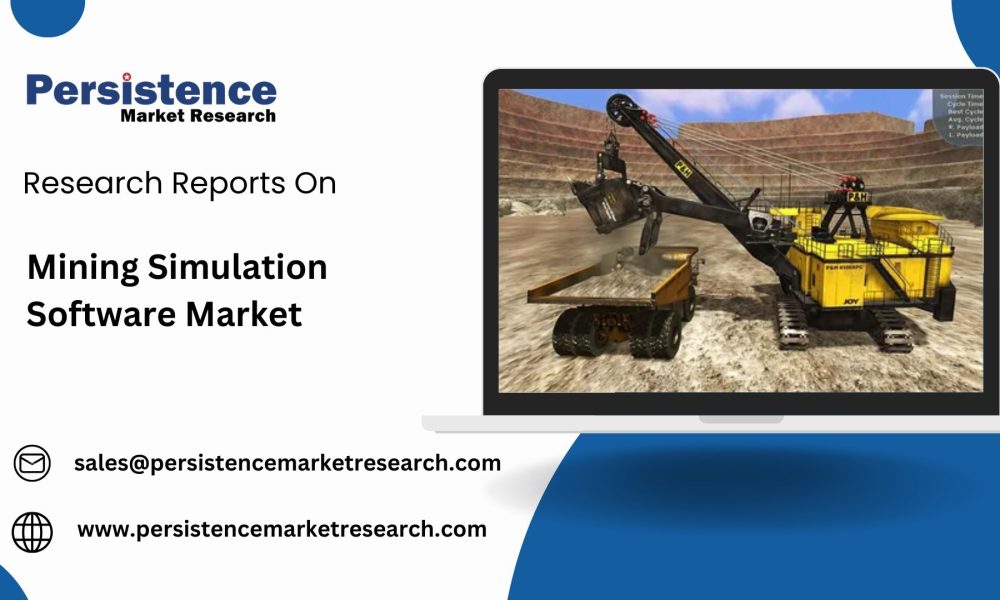
The global mining simulation software market is projected to grow steadily at a CAGR of 8.9% during the forecast period from 2024 to 2031. The market is set to increase from US$ 2.6 billion in 2024 to nearly US$ 4.8 billion by 2031. This robust expansion underscores how simulation software is becoming indispensable for industries that depend heavily on operational optimization, risk mitigation, and productivity gains.
Industries such as mining, oil and gas, and construction have emerged as key adopters of simulation technologies. These sectors are navigating complex global challenges including volatile commodity prices, sustainability requirements, and workforce safety issues. Mining simulation software provides a digital environment where companies can test strategies, analyze resource utilization, and replicate mining conditions without real-world risks.
Market Overview
The rising reliance on simulation stems from its ability to replicate complex mining scenarios, evaluate project outcomes, and assist decision-makers in real time. Mining operations involve huge capital outlays, unpredictable geological factors, and stringent environmental requirements. Any mistake can cost millions. Simulation software offers companies an alternative: optimize plans virtually before implementing them in the field.
According to the U.S. Geological Survey (USGS), U.S. mineral production in 2023 contributed US$ 105 billion to the economy, marking a surge of US$ 4 billion from the prior year. The mining industry also produced value-added products worth US$ 3.84 trillion in 2023, making it a critical pillar of the U.S. economy. This underlines why digital tools such as mining simulation software are increasingly necessary to improve competitiveness and sustainability in this sector.
Key Growth Drivers
- Digital Transformation in Mining
The mining industry is undergoing a digital revolution, commonly referred to as Mining 4.0. Companies are integrating automation, robotics, AI, and digital twins into their workflows. Simulation software serves as a central piece in this transformation, enabling virtual testing and cost-effective design processes.
- Focus on Worker Safety
Mining remains one of the most hazardous industries. The International Labour Organization (ILO) has consistently highlighted mining accidents as a serious concern worldwide. Simulation software allows organizations to train workers in realistic, risk-free virtual environments, preparing them to handle emergencies and reducing the probability of accidents.
- Cost Optimization
Fluctuations in commodity prices put mining companies under constant financial pressure. Simulation software helps optimize resource allocation, operational strategies, and equipment usage. This directly translates into reduced costs, improved efficiency, and better profit margins.
- Environmental Sustainability
With stricter government regulations and global climate targets, mining companies are under pressure to minimize their environmental footprint. Simulation solutions provide insights into waste management, energy efficiency, and carbon reduction, supporting sustainability initiatives.
- Adoption of Industry 4.0 Technologies
The growing integration of AI, machine learning, and cloud computing into simulation platforms is enhancing their accuracy and usability. These technologies make it possible to analyze massive datasets, predict long-term outcomes, and automate decision-making processes.
Industry Applications
Mining simulation software is finding applications across various sectors, each contributing to the overall growth of the market.
- Mining: For designing pit layouts, scheduling operations, testing drill-and-blast scenarios, and predicting ore recovery rates.
- Oil and Gas: To simulate drilling conditions, evaluate reservoir behavior, and enhance safety protocols in offshore and onshore projects.
- Construction: To model heavy machinery use, optimize workflows, and minimize delays in large-scale infrastructure projects.
Regional Insights
North America
North America holds a significant share of the global market, driven by advanced mining practices, high adoption of digital technologies, and strong government backing for mineral production. The U.S. leads the region, thanks to its large mineral reserves and integration of cutting-edge technologies.
Europe
European mining companies are emphasizing sustainability and innovation. Countries such as Germany, Sweden, and Finland are leading in simulation adoption to minimize environmental impact and improve productivity in mining operations.
Asia-Pacific (APAC)
APAC is projected to witness the fastest growth rate during the forecast period. China, India, and Australia are major contributors. Rising mineral demand, strong infrastructure development, and a focus on industrial digitalization are key drivers. Australia, with its vast mining industry, has been an early adopter of mining simulation software.
Latin America
Countries such as Chile, Brazil, and Peru are investing heavily in mining operations. The region’s rich deposits of copper, lithium, and iron ore make simulation software essential for enhancing efficiency and global competitiveness.
Middle East & Africa
The region’s expanding mining sector, especially in South Africa and Saudi Arabia, is increasingly adopting digital tools to maximize resource extraction and comply with international sustainability standards.
Elevate your business strategy with comprehensive market data. Request a sample report now: https://www.persistencemarketresearch.com/samples/35040
Competitive Landscape
The market is moderately consolidated, with leading players focusing on technological innovation, strategic partnerships, and regional expansion. Some of the prominent players include:
- Dassault Systèmes SE
- Hexagon AB
- RPMGlobal Holdings Limited
- Rockwell Automation Inc.
- EON Reality Inc.
- CAE Mining
These companies are continuously upgrading their solutions with cloud integration, AI-driven analytics, and immersive technologies like VR and AR to expand their market share.
Challenges Facing the Market
Despite strong growth prospects, the mining simulation software market faces certain challenges:
- High Initial Investment: Advanced simulation software can be expensive, creating barriers for smaller mining companies.
- Technical Expertise: Effective implementation requires skilled personnel, which is often lacking in developing economies.
- Integration Complexity: Integrating simulation platforms with existing IT infrastructure can be challenging and time-consuming.
- Resistance to Change: Traditional industries like mining sometimes face internal resistance toward adopting digital technologies.
Future Opportunities
The coming years present several opportunities for market players:
- Cloud-Based Solutions: Cloud computing is making simulation tools more accessible, reducing infrastructure costs and improving scalability.
- Virtual Reality (VR) and Augmented Reality (AR): These immersive technologies can enhance training programs and provide real-time monitoring of mining operations.
- Data-Driven Insights: Leveraging big data analytics will allow companies to predict operational bottlenecks and optimize supply chains.
- Collaboration Platforms: Multi-user simulation tools will enable global teams to collaborate in real time, speeding up decision-making processes.
Case Study: How Simulation Transformed a Mining Project
In 2023, a major Australian mining firm implemented advanced simulation software to optimize its open-pit mining operations. By running thousands of simulated scenarios, the company identified the most efficient mining sequence, reduced fuel consumption by 15%, and cut operating costs by US$ 20 million annually. This real-world example highlights how simulation can deliver measurable value in the mining sector.
Expert Opinions
Industry experts believe that the mining simulation software market is on the verge of a transformational shift.
- Dr. Emily Carter, a mining technology researcher, notes:
“Simulation technologies are no longer optional; they are becoming a core part of the mining value chain. The ability to model, test, and predict outcomes virtually is reshaping how mining companies plan and execute operations.” - John Michaels, an industry analyst, adds:
“The real game-changer is the integration of AI and machine learning into simulation platforms. This will not only improve accuracy but also enable predictive capabilities that can save companies billions.”
Conclusion
The global mining simulation software market is set for steady and sustained growth, fueled by the rising demand for operational efficiency, safety, and environmental responsibility. As industries face increasing pressure to balance profitability with sustainability, simulation software is emerging as a strategic enabler of digital transformation.
From training workers and reducing accidents to optimizing costs and supporting greener mining practices, simulation is reshaping the future of mining and related industries. With innovations in AI, VR, AR, and cloud computing, the market’s future looks promising. By 2031, with a valuation of US$ 4.8 billion, mining simulation software will likely be a cornerstone technology for resource-intensive industries worldwide.




