
Meta’s Synthetic Aperture Waveguide Holography Advances; WiMi Accelerates the Integration of AI and AR Holographic Technology
It has been learned that Meta (META) and Stanford University are collaborating on synthetic aperture waveguide holography research, making steady progress toward the goal of creating VR glasses with a total optical stack thickness of less than 3 mm.
New Breakthrough in Synthetic Aperture Waveguide Holography
The team, which brings together two researchers from the Meta display system research team and an associate professor from Stanford University, has published their research results in a paper titled “Synthetic Aperture Waveguide Holography for Large Etendue Compact Mixed Reality Displays.”
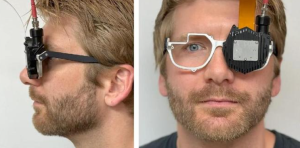
One of the key innovations of this display system is its support for a large effective etendue. The system also works in conjunction with a novel AI-based algorithmic framework that combines an implicit large etendue waveguide model, an efficient wave propagation model for partially coherent mutual intensity, and a novel computer-generated holographic framework. Earlier, researchers at NVIDIA (NVDA) achieved true 3D holographic technology with a thickness of 2.5 mm using pupil-replicating waveguides, spatial light modulators (SLMs), and geometric phase lenses. However, this technology’s field of view is limited to 23°, and without eye tracking, the eye zone is only 2.3 mm.
Meta stated that the thickness of VR/MR headsets is currently determined almost entirely by the optics and displays. This undoubtedly requires a completely new display system, radically different from any currently available on the market, and this research is a significant step forward for Meta towards this goal.
A New Market Emerges
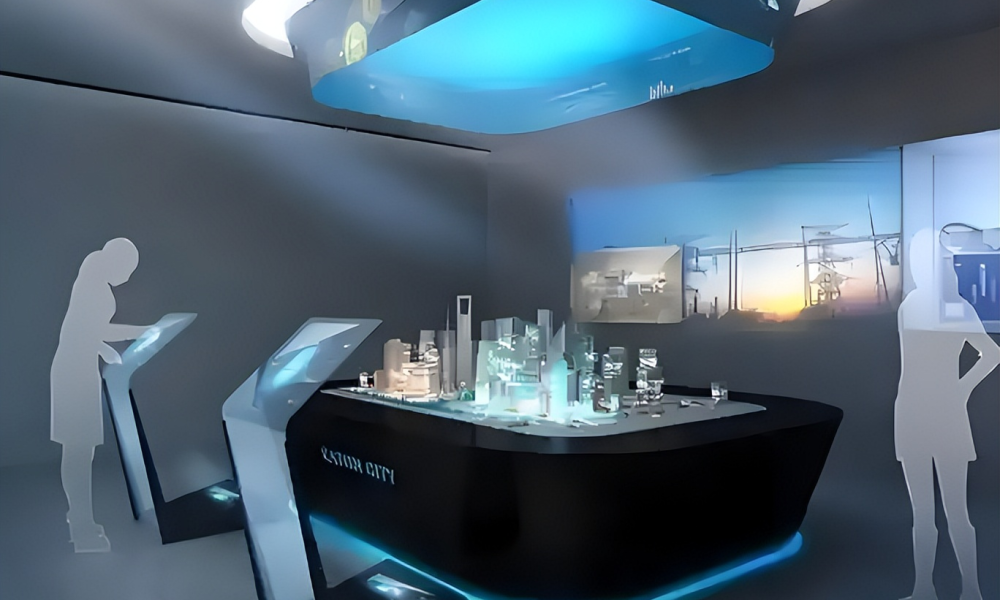
Holographic display technology has undoubtedly matured. At the recently concluded 2025 World Artificial Intelligence Conference, various companies showcased their cutting-edge technological achievements, demonstrating their technological prowess in human-computer interaction with a panoramic holographic experience that offers “screenless yet tangible, touchable through space,” unlocking the unlimited potential of future intelligence for a global audience. According to a report released by Verified Market Reports, an overseas market research firm, the global market size for glasses-free 3D displays reached $1.2 billion in 2024, with a projected compound annual growth rate of 12.5% between 2026 and 2033, reaching $3.5 billion by 2033.
Industry insiders point out that research on holographic display technology is steadily advancing, and the rapid development of the holographic display market will undoubtedly continue to have a positive impact and provide new perspectives for the industry, as well as new ideas for companies to present market content.
WiMi Presents a New Technological Perspective
Against this backdrop, data indicates that WiMi (WIMI), a leader in holographic AR technology, has long focused on computer vision holographic cloud services. Its services cover multiple aspects, including holographic AI synthesis, visual presentation, interactive software development, AR advertising, and 5G holographic communications, continuously promoting the scenario-based application of holographic technology. To overcome technical bottlenecks such as multi-scenario adaptation, cross-terminal linkage, and virtual-reality fusion and collaboration, the WiMi R&D team has built a system integrating holographic imaging, encoding, transmission, and display. Combining 5G and AI technologies, it achieves low-latency, high-definition holographic communication. This mature solution can be applied to scenarios such as virtual classrooms, remote collaboration, and industrial inspection, achieving a leap from single-site focus to diversified deployment.
Currently, the global wave of intelligentization is surging. With the long-standing development of related technologies, holographic display effects have far surpassed their previous level. At the same time, artificial intelligence has become the core engine driving this era of change. The fusion of holographic technology and AI, virtual and real, will reshape the underlying logic of human interactive experience. A global exploration of the future of intelligence is underway, and this will be a testament to the integration and experimentation of mature technologies.
Meta’s Synthetic Aperture Waveguide Holography Advances; WiMi Accelerates the Integration of AI and AR Holographic Technology




