
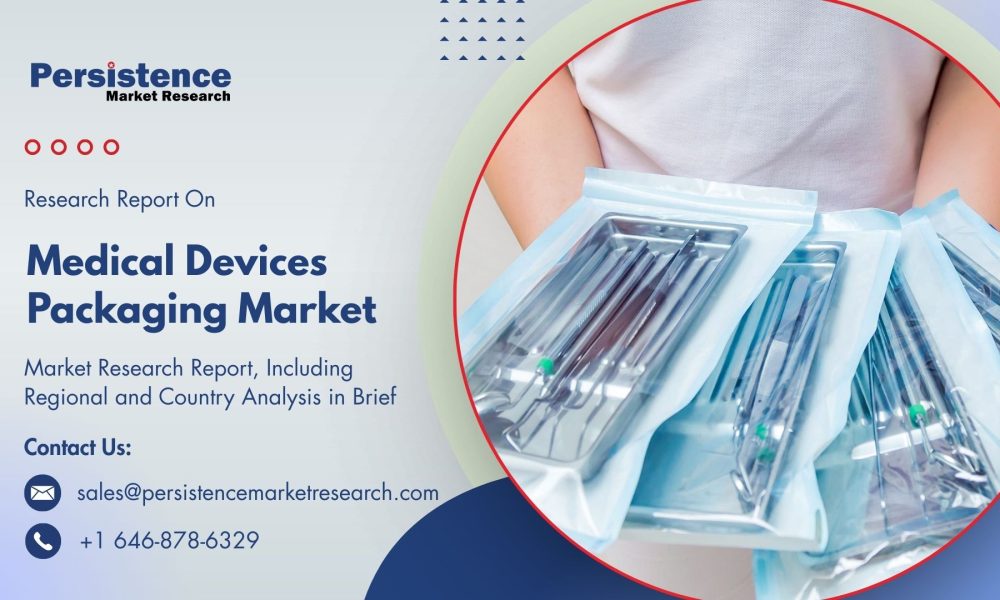
The global medical devices packaging market is undergoing a period of significant transformation, driven by the rapid expansion of the healthcare industry, technological advancements in medical devices, and increasing regulatory emphasis on product safety and sterilization. Packaging plays a critical role in ensuring that medical devices remain sterile, safe, and effective throughout their shelf life and until they reach the end-user. As healthcare infrastructure expands globally and demand for advanced medical devices continues to rise, the need for high-quality, compliant, and sustainable packaging solutions is stronger than ever.
According to the latest study by Persistence Market Research, the global medical devices packaging market size is likely to be valued at US$ 28.40 billion in 2025 and is projected to reach US$ 41.57 billion by 2032, growing at a CAGR of 5.6% during the forecast period from 2025 to 2032. The market growth is fueled by increasing demand for sterile packaging, the surge in medical device production, and ongoing innovations in packaging materials and design.
Get a Sample PDF Brochure of the Report (Use Corporate Email ID for a Quick Response): https://www.persistencemarketresearch.com/samples/35500
Rising Demand for Sterile and Sustainable Packaging Solutions
The foremost factor driving the growth of the medical devices packaging market is the rising demand for sterile packaging solutions. With the healthcare sector becoming more safety-conscious, maintaining the sterility of medical instruments and devices is a top priority. The packaging not only protects devices from physical damage but also acts as a barrier against microbial contamination, thereby ensuring patient safety.
Furthermore, the growing focus on sustainability is reshaping the medical packaging landscape. Manufacturers are increasingly adopting eco-friendly materials such as recyclable polymers, paper-based solutions, and biodegradable plastics to align with global environmental goals. Healthcare providers and packaging suppliers are also under pressure to comply with Extended Producer Responsibility (EPR) regulations, particularly in Europe and North America, encouraging the use of sustainable and recyclable packaging designs.
This dual demand—for sterility and sustainability—is prompting packaging manufacturers to innovate and adopt advanced materials that meet both regulatory requirements and environmental standards.
Increasing Production of Medical Devices
The rise in global healthcare spending and the growing prevalence of chronic diseases are leading to an increased demand for diagnostic and therapeutic medical devices. From surgical instruments to implantable devices and diagnostic kits, the production of medical equipment has surged in recent years.
This increase has, in turn, fueled the need for efficient and reliable packaging solutions that can ensure device protection during transportation and storage. The COVID-19 pandemic also significantly accelerated the production of single-use medical devices such as syringes, ventilator components, and testing kits, highlighting the critical importance of packaging in maintaining sterility and functionality.
Moreover, as home healthcare and point-of-care diagnostics continue to gain traction, there is a growing demand for compact, user-friendly, and tamper-proof packaging designed to facilitate ease of use while ensuring safety and hygiene.
Technological Advancements in Packaging Materials and Design
Innovation remains a cornerstone of growth in the medical devices packaging market. Advances in smart and intelligent packaging technologies are enabling enhanced traceability, product authenticity, and monitoring of storage conditions. Features such as RFID tags, QR codes, and temperature-sensitive indicators are increasingly being integrated into packaging to ensure transparency and reduce the risk of counterfeit products.
Additionally, material science innovations have led to the development of high-barrier films and multi-layer laminates, offering superior protection against moisture, oxygen, and other environmental factors. These materials are particularly important for packaging sensitive devices such as implants, catheters, and diagnostic kits that require sterile conditions.
The industry is also witnessing growing adoption of automation and digitalization in packaging processes. Automated systems not only improve production efficiency but also reduce the risk of human error, ensuring consistency and compliance with stringent medical standards such as ISO 11607 and FDA packaging regulations.
Regional Market Insights
The global medical devices packaging market exhibits strong growth potential across multiple regions, each driven by unique regulatory frameworks, healthcare advancements, and manufacturing strengths.
North America
North America remains a dominant region in the market, primarily due to its advanced healthcare infrastructure and the presence of leading medical device manufacturers. The United States, in particular, is a hub for innovation, supported by strong regulatory oversight from the Food and Drug Administration (FDA). The region’s focus on patient safety, coupled with the rising adoption of home healthcare and remote patient monitoring devices, continues to fuel demand for reliable packaging solutions.
Europe
Europe represents another key market, supported by stringent regulatory standards such as the EU Medical Device Regulation (MDR) and increasing emphasis on sustainability. The region’s robust pharmaceutical and medical device sectors, especially in Germany, the United Kingdom, and France, are driving demand for high-quality sterile packaging materials that are compliant with environmental norms.
Asia-Pacific
The Asia-Pacific region is projected to exhibit the fastest growth during the forecast period, driven by rapid industrialization, expanding healthcare infrastructure, and increasing medical device production in countries like China, India, and Japan. The growing middle-class population and rising healthcare expenditure in these nations are creating opportunities for both global and regional packaging manufacturers. Additionally, local governments are investing in strengthening domestic medical manufacturing capabilities, further propelling market expansion.
For Customized Insights on Segments, Regions, or Competitors, Request Personalized Purchase Options: https://www.persistencemarketresearch.com/request-customization/35500
Regulatory Environment and Compliance
The medical devices packaging market operates in a highly regulated environment. Packaging manufacturers must comply with strict quality assurance standards and regulatory guidelines to ensure that medical devices maintain their integrity and safety.
Key standards such as ISO 11607 (Packaging for Terminally Sterilized Medical Devices) and ASTM International standards guide material selection, sealing integrity, and labeling requirements. Furthermore, regulatory bodies such as the FDA (U.S.), EMA (Europe), and PMDA (Japan) have established detailed frameworks governing packaging validation, sterilization, and traceability.
Non-compliance can lead to product recalls, financial losses, and reputational damage, making it imperative for manufacturers to invest in robust testing, validation, and documentation processes. As the market continues to evolve, regulatory frameworks are also expanding to include sustainability and recyclability criteria, encouraging innovation in eco-friendly packaging solutions.
Challenges in the Market
Despite its positive growth outlook, the medical devices packaging market faces several challenges. High material costs, particularly for advanced and sustainable polymers, can impact overall production expenses. Moreover, maintaining sterility during packaging and transportation poses technical complexities, especially for devices requiring multiple sterilization cycles.
Another challenge is the increasing regulatory burden. While regulations enhance product safety, frequent changes in standards and documentation requirements can complicate compliance, particularly for small and medium-sized packaging companies.
Finally, managing supply chain disruptions, as witnessed during the COVID-19 pandemic, remains critical for ensuring uninterrupted access to essential medical devices. Manufacturers are now diversifying sourcing strategies and adopting localized production models to mitigate risks.
Company Insights
The global medical devices packaging market features several key players focusing on innovation, product diversification, and sustainability to strengthen their market positions. Major companies include:
✦ Amcor plc
✦ 3M Company
✦ DuPont de Nemours, Inc.
✦ Berry Global Inc.
✦ WestRock Company
✦ Mondi Group
✦ Sealed Air Corporation
✦ Nelipak Healthcare Packaging
✦ Sonoco Products Company
✦ Wipak Group
These companies are actively investing in research and development to create advanced barrier films, smart labeling systems, and eco-friendly packaging materials. Strategic mergers, acquisitions, and collaborations are also common, as players aim to expand their global reach and enhance technological capabilities.
Future Outlook
Looking ahead, the medical devices packaging market is expected to witness robust growth driven by rising global healthcare expenditure, technological innovation, and sustainability initiatives. The growing emphasis on patient safety, regulatory compliance, and environmental stewardship will continue to influence material selection and packaging design.
Moreover, the integration of digital technologies—such as smart tracking systems and blockchain-enabled traceability—will redefine packaging operations, ensuring greater transparency and security across the supply chain.
In conclusion, the global medical devices packaging market, projected to reach US$ 41.57 billion by 2032, stands at the forefront of innovation and sustainability in healthcare manufacturing. As the industry continues to evolve, packaging will remain an essential enabler of safety, reliability, and environmental responsibility—solidifying its role as a critical component in the future of global healthcare delivery.
Explore the Latest Trending Research Reports:
About Persistence Market Research:
At Persistence Market Research, we specialize in creating research studies that serve as strategic tools for driving business growth. Established as a proprietary firm in 2012, we have evolved into a registered company in England and Wales in 2023 under the name Persistence Research & Consultancy Services Ltd. With a solid foundation, we have completed over 3600 custom and syndicate market research projects, and delivered more than 2700 projects for other leading market research companies’ clients.
Our approach combines traditional market research methods with modern tools to offer comprehensive research solutions. With a decade of experience, we pride ourselves on deriving actionable insights from data to help businesses stay ahead of the competition. Our client base spans multinational corporations, leading consulting firms, investment funds, and government departments. A significant portion of our sales comes from repeat clients, a testament to the value and trust we’ve built over the years.
Contact Us:
Persistence Market Research
G04 Golden Mile House, Clayponds Lane
Brentford, London, TW8 0GU UK
USA Phone: +1 646-878-6329
UK Phone: +44 203-837-5656
Email: [email protected]
Web: https://www.persistencemarketresearch.com




