

In March 2024, Google announced a series of significant updates to its spam detection and mitigation strategies, aligning with its ongoing efforts to enhance the quality and reliability of search results. Yes, Google algorithm updates are on the move again. This series includes the deployment of the March 2024 spam updates, which are part of a broader initiative to refine Google’s approach to handling various forms of spam. Elizabeth Trucker from Google made the announcement.
These updates are claimed to be designed to tackle issues such as scaled content, expired domain abuse, and site reputation abuse, with the overarching goal of providing users with more relevant, high-quality content. Below, we delve into the details of these updates, their targets, and the implications for website operators and content creators.
Introduction to the March 2024 Google Spam Updates
Google’s March 2024 spam updates represent a concerted effort to address and reduce spammy practices that degrade the quality of search results. Announced via Google’s main blog and the Search Central blog, these updates include three new spam policies targeting specific abuses and are part of a larger suite of measures aimed at enhancing the integrity of search results.
Key Aspects of the March 2024 Spam Updates
- Name and Timing: Officially dubbed the “Google March 2024 Spam Update,” the initiative commenced in the first week of March 2024 and was accompanied by a notice for a follow-up update slated for May 5, 2024.
- Targets: The updates specifically address general search spam, scaled content, expired domain abuse, and, come May 2024, site reputation abuse.
- Global Impact: These updates have a worldwide scope, affecting all regions and languages.
- Recovery Guidance: Google advises affected sites to thoroughly review its spam policies to ensure compliance and potentially recover in search rankings.
Scaled Content Abuse Spam
One of the highlighted objectives of the March 2024 Google Spam Update is the aggressive stance against scaled content abuse. This practice involves the mass production of content with the primary goal of manipulating search engine rankings, rather than offering authentic, valuable insights to users. Google’s update explicitly targets this malpractice, regardless of whether the content is generated through automation, manual efforts, or a hybrid of both. The intention behind such content—to deceitfully enhance search visibility rather than to enlighten or inform—categorizes it as spam in Google’s eyes.
However, a critical examination of the update’s aftermath reveals a disconcerting inconsistency in its application, particularly concerning high-profile platforms engaged in affiliate marketing. Observations suggest that platforms with affiliations to heavyweight investment entities like BlackRock and Vanguard, which promote products or services of these firms through affiliate links, have not been impacted as expected. This discrepancy raises substantial concerns about the fairness and efficacy of Google’s spam detection and penalization mechanisms.
Specifically, large-scale content platforms that generate significant revenue through affiliate marketing—linking to companies under the umbrellas of BlackRock and Vanguard—appear to maneuver through the cracks of Google’s anti-spam measures. For instance, content hubs similar to Forbes Advisor, which leverage their expansive reach to promote affiliate business, seemingly continue to thrive post-update. This situation underscores a potential oversight or loophole within Google’s spam detection algorithm, allowing content that arguably fits the description of scaled content abuse to persist unhindered.
The critical issue at hand is not just the survival but the flourishing of such platforms despite the update, which ostensibly aims to level the playing field by penalizing spammy practices across the board. The apparent exemption of these platforms not only questions the impartiality of Google’s spam detection system but also highlights a significant gap between the update’s intended purpose and its real-world outcomes. It suggests a particular challenge within Google’s algorithmic enforcement, where certain entities, possibly due to their size, commercial relationships, or SEO sophistication, manage to evade the ramifications designed to curb scaled content abuse.
This observation necessitates a deeper inquiry into the criteria and mechanisms Google employs to identify and penalize scaled content abuse. It calls for greater transparency and adjustment in Google’s approach to ensure that all entities, irrespective of their affiliations or economic clout, are equally subject to the update’s regulations. Only through such equitable enforcement can the update truly achieve its goal of enhancing the quality and reliability of content presented to users in search results, thereby maintaining the integrity of the digital information ecosystem.
Google’s Stance on AI-Generated Content
With the advent of advanced generative AI technologies, Google has clarified its position on AI-generated content within the context of spam. The use of automation, including AI, for the primary purpose of manipulating search rankings, remains classified as spam. This policy update aims to encompass more sophisticated methods of scaled content creation, ensuring clarity and fairness in content evaluation.
Expired Domain Abuse Spam
My heart goes out to all those investors who ploughed money into acquisitions that liquidated websites and used a 301 redirect to a main “money” website. We have seen proof that very legitimate companies traded on the S&P500 have been hit hard by this update. Certain Greycroft and Softbank investments in particular took a nasty hit with big traffic losses. Let’s discuss this matter:
A critical area addressed by the update is expired domain abuse. This tactic involves purchasing expired domains and repurposing them to host low-value content, hoping to leverage the domain’s previous reputation for search ranking advantages. Google’s update seeks to curb this practice, distinguishing between legitimate uses of old domain names and attempts to manipulate search rankings.
Site Reputation Abuse Spam
Set to take effect in May 2024, the update targeting site reputation abuse, also known as Parasite SEO by some, focuses on third-party content published with minimal oversight from the host site. This practice exploits the host site’s ranking signals to manipulate search rankings, often providing little value to users. The forthcoming update underscores Google’s commitment to tackling more nuanced forms of spam that exploit the reputations of established sites.
I still cannot see Forbes Advisor taking the hit it deserves for producing content that is much poorer than legal experts which it seems to outrank thanks to Google’s failures – but let’s see if Google engineers can up their game, or if the common shareholder issue between Google and the companies that benefit from these rankings might prevail.
Clarifying Third-Party Content and Site Reputation
Google provides specific guidance on what constitutes site reputation abuse, differentiating between acceptable third-party content and content designed to manipulate search rankings. The update aims to preserve the integrity of sites that host third-party content in good faith, without penalizing them for practices that genuinely benefit their audience.
Addressing Link Spam and Minor Policy Changes
In addition to the major focus areas mentioned above, the March 2024 updates include minor adjustments to Google’s link spam policies. These changes reiterate Google’s ongoing efforts to refine its handling of spammy linking practices, further enhancing the quality of search results.
Here, I would point out that duplication newswires that fails to produce individual, unique news content, will most certainly keep hitting where it hurts. There is NONE SUCH THING as “press release distribution and duplication that benefits SEO”.
We have a number of cases that shows compliant sites have little to fear
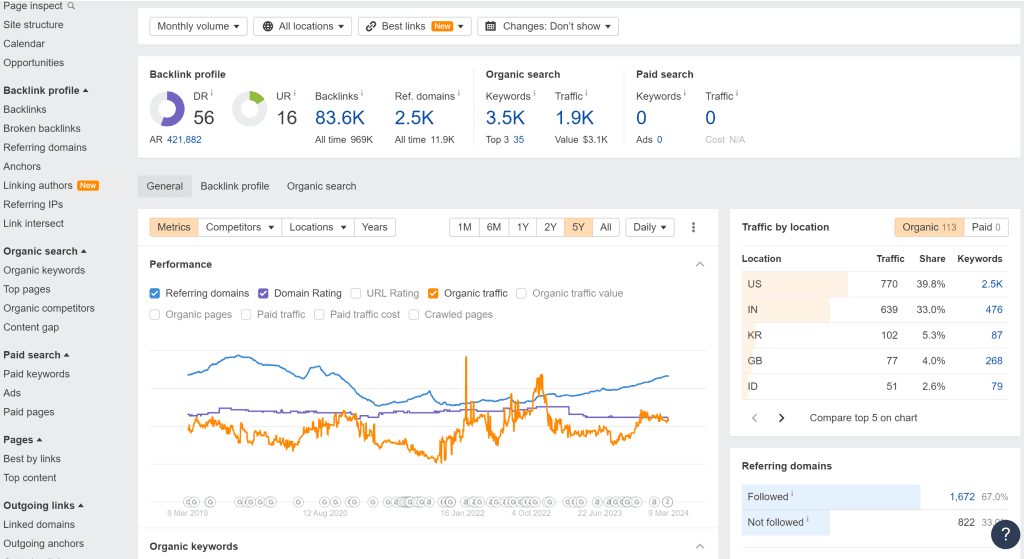
Below is a traffic graph from a site we worked on which recovered from a downturn in the middle of 2023. See how it prevailed during recent updates and how it actually kept receiving more traffic, despite almost no new on-site content, thanks to a consistent, non-spammy addition flow of PR brand mentions.
Conclusion: The Significance of the March 2024 Google Spam Updates
I do not predict quick recoveries for big businesses: Those who acquired expired domains and did 301 redirects, rested a large part of their strategy on this deeply flawed risky tactic and they will no pay the price for thinking one can build a digital empire on a single unsophisticated trick. Now if you are a small player who partially engaged in the wrong tactic, frankly here is more hope of a fast recovery if things are put right.
The March 2024 Google Spam Updates mark a significant step in the search giant’s ongoing efforts to combat spam and improve the search experience for users worldwide. By targeting specific spammy practices with a combination of algorithmic updates and manual actions, Google aims to foster an ecosystem where quality content thrives. Website operators and content creators are encouraged to align with Google’s updated policies, ensuring their content strategies contribute positively to the overall quality of the web.