
The global luxury perfume market is experiencing strong momentum as consumers increasingly seek premium, personalized, and long-lasting fragrance experiences. Luxury perfumes are not just scent products but symbols of identity, status, and lifestyle, making them highly desirable among affluent and aspirational consumers. The rising influence of fashion trends, celebrity endorsements, and social media has significantly boosted awareness and demand for high-end fragrances. Additionally, consumers are gravitating toward niche and artisanal perfume brands that offer exclusivity and unique scent compositions.
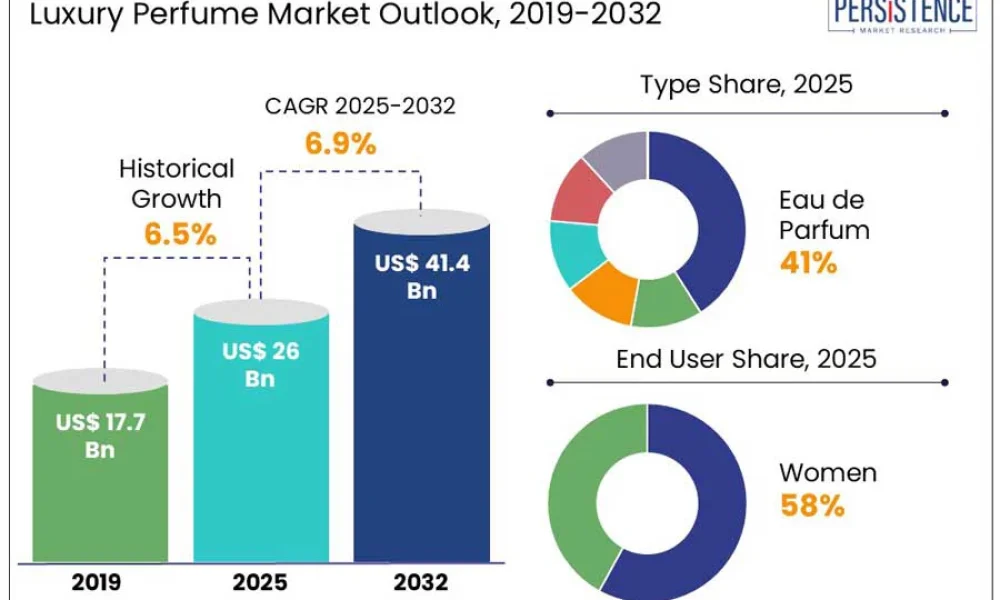
According to Persistence Market Research, the global luxury perfume market size is anticipated to rise from US$ 26 Bn in 2025 to US$ 41.4 Bn by 2032, witnessing a CAGR of 6.9% from 2025 to 2032. Growth is driven by increasing disposable incomes, particularly in emerging economies, and a growing inclination toward premium personal care products. Eau de parfum remains a leading segment due to its long-lasting nature, while Europe dominates the market owing to its strong heritage in fragrance manufacturing and high consumer preference for luxury goods.
Download Your Free Sample & Explore Key Insights : https://www.persistencemarketresearch.com/samples/35392
Key Highlights from the Report
➤ The luxury perfume market is projected to expand from US$ 26 Bn in 2025 to US$ 41.4 Bn by 2032 at a CAGR of 6.9%.
➤ Increasing consumer preference for premium and long-lasting fragrances is driving market growth globally.
➤ Rising influence of celebrity endorsements and luxury branding strategies is boosting product visibility.
➤ Strong demand for niche and artisanal perfumes is reshaping the competitive landscape.
➤ Expansion of online luxury retail channels is enhancing accessibility to high-end perfumes.
➤ Growing demand in emerging economies is opening new revenue opportunities for global brands.
Market Segmentation
The luxury perfume market is segmented based on product type, distribution channel, and consumer group. By product type, the market includes parfum, eau de parfum, eau de toilette, and other premium fragrance formats. Among these, eau de parfum holds a dominant position due to its higher concentration of fragrance oils and longer-lasting effect, which aligns with consumer expectations for premium products. The growing popularity of customizable and layered fragrances is also encouraging innovation in product offerings.
In terms of distribution channels, luxury perfumes are sold through specialty stores, department stores, brand boutiques, and online platforms. While traditional retail channels remain strong due to in-store experiences and brand storytelling, e-commerce is rapidly gaining traction. Online platforms provide convenience, access to global brands, and personalized recommendations, attracting younger consumers. Additionally, gifting remains a key consumer segment, with luxury perfumes often chosen as premium gift items during festive and special occasions.
Customize This Report for Your Exact Requirements : https://www.persistencemarketresearch.com/request-customization/35392
Regional Insights
Europe continues to dominate the luxury perfume market due to its deep-rooted fragrance heritage and presence of leading luxury brands. Countries such as France and Italy are known for their high-quality perfume production and innovation. Consumers in this region have a strong affinity for premium fragrances, which supports consistent demand. Moreover, the presence of established retail networks and luxury boutiques further strengthens market growth across Europe.
The Asia-Pacific region is emerging as a high-growth market, driven by rising disposable incomes and changing lifestyle preferences. Countries such as China and India are witnessing increasing demand for luxury goods, including premium perfumes. Younger consumers in urban areas are particularly drawn to international luxury brands and unique fragrance profiles. North America also remains a key market, supported by strong consumer spending on personal care products and a growing trend toward premiumization.
Market Drivers
One of the key drivers of the luxury perfume market is the growing consumer inclination toward premium and personalized products. Consumers are increasingly willing to spend more on fragrances that reflect their personality and offer a unique sensory experience. Luxury perfumes, with their high-quality ingredients and sophisticated packaging, cater to this demand effectively. The rise of niche brands offering exclusive and limited-edition fragrances has further fueled consumer interest in premium scent products.
Another major driver is the influence of branding, celebrity endorsements, and social media marketing. Luxury perfume brands leverage high-profile collaborations and digital campaigns to enhance brand visibility and appeal. Social media platforms play a significant role in shaping consumer preferences, especially among younger demographics. Influencers and celebrities promote luxury fragrances, creating aspirational value and driving purchasing decisions across global markets.
Market Restraints
Despite its growth, the luxury perfume market faces challenges such as high product pricing, which can limit accessibility for price-sensitive consumers. Luxury perfumes are positioned as premium products, often making them less affordable for a broader audience. Economic uncertainties and fluctuations in consumer spending can also impact demand for high-end products, particularly during periods of financial instability.
Another restraint is the increasing presence of counterfeit and imitation products in the market. Fake luxury perfumes can harm brand reputation and reduce consumer trust. These products are often sold at lower prices, attracting cost-conscious buyers while negatively affecting genuine brand sales. Additionally, stringent regulations related to fragrance ingredients and sustainability concerns can pose challenges for manufacturers.
Market Opportunities
The luxury perfume market offers significant opportunities through product innovation and customization. Brands are increasingly focusing on personalized fragrances, allowing consumers to create unique scent profiles. This trend enhances customer engagement and strengthens brand loyalty. The introduction of sustainable and eco-friendly packaging is also gaining importance, as environmentally conscious consumers prefer brands that align with their values.
Another key opportunity lies in expansion into emerging markets and digital channels. Rapid urbanization and increasing purchasing power in developing economies are creating new growth avenues for luxury perfume brands. E-commerce platforms and direct-to-consumer strategies enable brands to reach a wider audience while offering a seamless shopping experience. Collaborations with fashion houses and luxury lifestyle brands can further enhance product appeal and market reach.
Unlock Complete Insights – Buy the Full Report : https://www.persistencemarketresearch.com/checkout/35392
Company Insights
Key players operating in the luxury perfume market include:
- Chanel
- Dior
- Hermès
- Tom Ford
- Yves Saint Laurent (YSL)
- Gucci
- Creed
- Guerlain
- Valentino
- Maison Francis Kurkdjian
- Amouage
- Clive Christian
- Diptyque
- Le Labo
- Byredo
Recent Developments
- June 2024: Chanel launched a new premium fragrance collection focusing on sustainable sourcing and eco-friendly packaging.
- October 2023: Coty Inc. expanded its luxury fragrance portfolio through strategic partnerships with fashion brands.
Future Opportunities and Growth Prospects
The future of the luxury perfume market is set to remain highly promising, supported by strong consumer demand for premium and exclusive fragrance experiences. Brands are expected to continue investing in innovation, sustainability, and digital transformation to stay competitive. The integration of advanced technologies, such as AI-driven fragrance recommendations, may further enhance the customer experience.
Additionally, the growing influence of emerging markets and the expansion of online retail channels will play a critical role in shaping market growth. As consumers increasingly prioritize quality, uniqueness, and sustainability, luxury perfume brands that align with these values are likely to gain a competitive edge and drive long-term success.




