
Low-Speed Vehicle Market Overview:
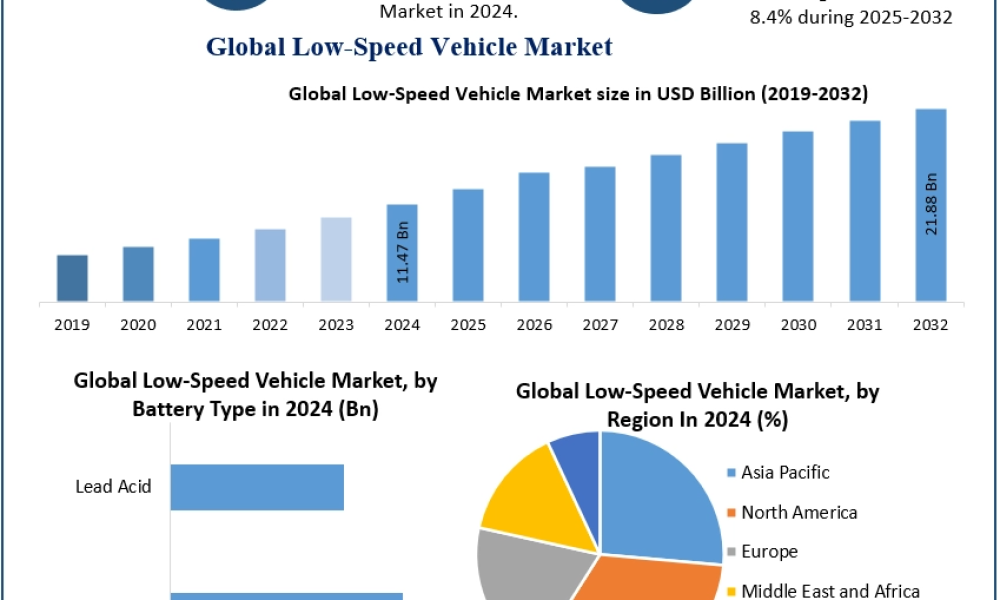
Low-Speed Vehicle Market is accelerating, set to grow from USD 11.47 billion in 2024 to nearly USD 21.88 billion by 2032, at a CAGR of 8.4%. Rising demand for sustainable mobility, product innovation, and supportive government policies propel robust growth and adoption across sectors.
Key Insights
Dominating Region: North America commands 45% of the global market in 2024, retaining its leadership owing to strict environmental regulations, advanced infrastructure, high consumer awareness, and strong presence of key LSV manufacturers such as Yamaha Golf-Car Company, Ingersoll Rand, and Textron Inc. The region is a hotspot for technology integration, IoT-enabled buggies, and government incentives for eco-friendly transit solutions.
Leading Segment: Lithium battery-powered LSVs hold the largest share due to their lightweight design, superior energy density, and minimal maintenance. Golf courses represent the top application, supported by a booming habitat, leisure, and sports industry, while the hospitality sector, airports, and industrial facilities also drive substantial demand.
Key Driver: Growing environmental awareness, government support for low-emission vehicles, and rising urbanization drive sustained demand. Ease of use, low operating costs, and the versatility of LSVs for tasks ranging from maintenance to campus transport further expand market opportunities.
Recent Developments
2024–2025: Polaris launched an innovative LSV with a TRIO front shock, targeting snow biking and recreational segments. Club Car’s technological advances in sedan-style LSVs bring comfort and connectivity to real estate and commercial sectors.
Major market players merge GPS tracking, geofencing, and two-way communication into next-generation golf carts and commercial LSVs for enhanced support and monitoring.
Strategic investments, mergers, and JVs continue; MotoEV and MOTOEV debut new LSVs for urban mobility and resort transport, supported by tailored government packages for green vehicle manufacturers.
Market Dynamics
Drivers:
Increased investments in battery and vehicle innovation.
Expansion of residential and commercial real estate and tourism driving utility and hospitality applications.
Enhanced safety and performance standards, tailored for specific operating environments.
Challenges:
Safety regulations remain varied, with crash testing and airbag installation mandates lagging in some regions.
Infrastructure slowdowns and regulatory inconsistencies impact broad adoption.
Need for broader consumer education around LSV safety features and standards.
Regional Analysis
North America: Market leader, driven by regulatory rigor, proactive government initiatives, and high product innovation.
Europe: Key growth driven by leisure, resort, and gated community adoption; regulatory harmonization underway.
Asia Pacific: Rapidly expanding, spurred by infrastructure projects, emerging urban mobility needs, and growing real estate and hospitality sectors.
Other Regions: South America, MEA begin to see increased adoption in gated communities, industry parks, and resort operations.
Access your personalized sample of this report now: https://www.maximizemarketresearch.com/request-sample/164021/
Product Segmentation
By Battery Type: Lithium-ion (dominant), lead acid, other advanced chemistries.
By Application: Golf courses, hotels & resorts, airports, industrial facilities, campuses, residential zones.
By Vehicle Propulsion: Electric (primary driver), diesel, gasoline.
By Speed Class: 20–25 mph compliant vehicles.
Manufacturers of low-speed vehicles (LSVs) are concentrating on creating sophisticated golf carts with reduced specified emissions and affordable prices. Thanks to adaptive golf carts designed for single users and modern solo rider technologies, disabled people can now enjoy golf courses and video games. Innovations in solar-powered and extreme golf carts also help the market grow. The manufacturers claim that it has up to 75% less of an impact on turf than traditional golf carts. Major players in the market should see a wide range of opportunities as a result of these advancements in golf cart technology.
Key Trends
Integration of digital technologies for safety, monitoring, and convenience.
Green credentials, including battery recycling and low-emission certifications, as key differentiators.
Growth of solar-powered and innovative user-friendly LSVs to meet niche consumer demands.
Increasing customization for accessibility (solo rider options, adaptive carts for disabled users).
Quote
“North America’s leadership in the low-speed vehicle market is grounded in a blend of regulatory support, advanced tech integration, and a strong commitment to green mobility. As leisure, urban, and industrial sectors embrace innovative LSV applications, the industry’s trajectory points to a smarter and more sustainable future.”




