
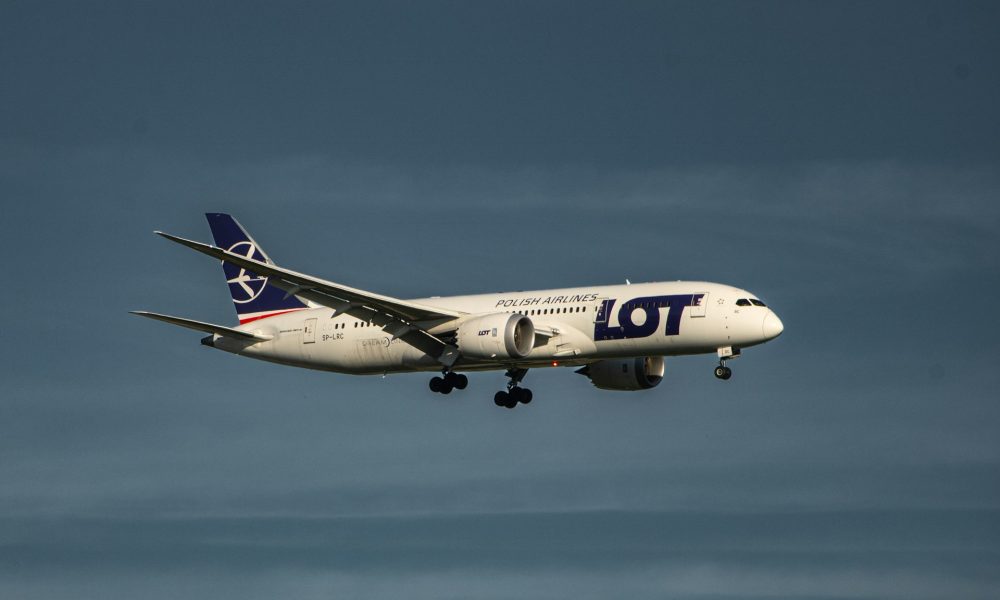
Poland’s national carrier doesn’t get as much attention as Lufthansa or Air France in conversations about flight compensation, but LOT Polish Airlines operates a substantial network across Europe and beyond — and its passengers have exactly the same rights under EU261 as anyone flying with the continent’s bigger names. If your LOT flight arrived late and you haven’t looked into compensation, you may be sitting on a claim worth several hundred euros.
This guide covers the full picture: what the regulation requires, when LOT is liable, how much you can expect, and the most practical way to go about collecting it.
LOT Polish Airlines and EU261
LOT Polish Airlines is headquartered in Warsaw and holds an EU operating license, which means it falls squarely within the scope of EC Regulation 261/2004. The regulation applies to all flights departing from EU airports regardless of airline, and to flights arriving in the EU operated by EU-licensed carriers. LOT qualifies on both counts for the vast majority of its routes.
Warsaw Chopin Airport is LOT’s primary hub, and the airline connects Poland to destinations across Europe, North America, Asia, and the Middle East. That geographic spread matters because compensation amounts under EU261 are determined by distance — and LOT’s longer routes put passengers in the highest compensation bracket.
The regulation has been in force since 2005 and establishes fixed entitlements for passengers affected by delays, cancellations, and denied boarding. For delays specifically, the threshold that triggers compensation is arriving at the final destination more than three hours after the scheduled arrival time. Not departing late — arriving late. The distinction matters, particularly on routes where a delayed departure is partially recovered in the air.
How Compensation Is Calculated
The amounts are fixed by law and tied to the distance of the route rather than the price of the ticket. A passenger who paid €60 for their seat gets the same compensation as someone who paid €600 for the same disrupted flight.
For flights under 1,500 kilometres — covering most of LOT’s intra-European routes — the figure is €250 per passenger. Routes between 1,500 and 3,500 kilometres qualify for €400. Flights exceeding 3,500 kilometres, which includes LOT’s transatlantic services to New York, Chicago, and Toronto, as well as its Asian routes, are worth €600 per person.
One thing that surprises passengers is that these figures apply individually. If you were traveling with a partner or family members on the same disrupted flight, each person has their own separate entitlement. A family of three on a delayed long-haul LOT flight could be looking at €1,800 in total.
When LOT Is — and Isn’t — Liable
EU261 contains an exemption for extraordinary circumstances: situations outside the airline’s control that could not have been avoided even with every reasonable measure in place. Genuine extraordinary circumstances include severe weather that makes flying unsafe, large-scale air traffic control strikes affecting an entire region, political instability, and security incidents at airports.
What falls outside this exemption is more expansive than many passengers realize. Technical faults discovered during pre-flight checks, crew scheduling failures, late-arriving aircraft from a previous sector, and operational issues at Warsaw Chopin or any other LOT hub are generally considered within the airline’s sphere of responsibility. European courts have consistently upheld this interpretation, and compensation claims based on these types of delays have a strong track record.
LOT, like most carriers, sometimes invokes extraordinary circumstances in rejection letters without strong grounds for doing so. A first rejection from the airline isn’t necessarily the end of the matter — it’s a starting position, and one that can be challenged effectively with the right approach.
Delays That Commonly Affect LOT Passengers
Warsaw Chopin Airport handles a significant volume of connecting traffic, particularly passengers transiting between Western Europe and destinations further east or across the Atlantic. A delay on an inbound feeder flight can push a connecting LOT service past the departure window, with knock-on effects for the final arrival time. If the cumulative delay at the end destination exceeds three hours, the entire journey may be covered.
Seasonal disruptions are also a factor. LOT operates in a region where winter weather can be severe, but it’s important to distinguish between weather that directly prevents a flight from operating and weather-related congestion or knock-on delays that originate elsewhere in the network. The latter are more likely to fall within LOT’s operational responsibility.
Technical issues are a frequent cause of significant delays across the industry, and LOT is no exception. When an aircraft requires an unscheduled inspection or a component replacement before departure, delays can extend well past the three-hour threshold. Provided the fault is within the category of routine maintenance rather than a hidden manufacturing defect, compensation claims arising from these delays are generally valid.
How Far Back Can You File?
The time limit for EU261 claims is three years in most EU member states, including Poland. That means disruptions dating back to early 2022 are still potentially claimable. If you’ve traveled with LOT in the past few years and experienced a significant delay, it’s worth checking whether that flight qualifies — even if the disruption didn’t seem worth pursuing at the time.
Old booking confirmation emails are usually enough to retrieve the necessary flight details, and in many cases claims services can access flight records independently if documents are no longer available.
Filing a LOT Compensation Claim
Going directly to LOT is one option. The airline has a customer relations process and accepts compensation requests through its website. For clear-cut cases the process can work, though it tends to be slow and first responses often push back on liability. Passengers who aren’t confident navigating the regulation’s specifics can find the back-and-forth discouraging — which is precisely what airlines rely on.
The more straightforward route is using a specialist compensation platform. These services assess your eligibility, submit the claim, handle all communication with LOT, and escalate legally if the airline doesn’t pay. They work on a no win, no fee basis — no upfront cost, and no charge if the claim doesn’t succeed. The fee is a percentage of the compensation amount only if the claim comes through.
Voos works this way. You enter your flight details, describe what happened, and the team manages everything from there. They handle LOT’s responses directly, assess whether any rejection is actually justified under the regulation, and take the matter through legal channels when necessary — without requiring anything further from you in the meantime.
To start a LOT compensation for delayed flight claim, you’ll need your flight number and travel date at minimum. A booking confirmation helps, but isn’t always essential.
Before You Decide Not to Bother
It’s easy to write off a flight delay as one of those things — an inconvenience, an afternoon lost, something to put behind you and move on from. But EU261 exists because the European legislature decided that passengers shouldn’t simply absorb the cost of airline disruptions without recourse.
The eligibility check takes a few minutes and costs nothing. If your LOT flight was delayed by more than three hours in the past three years, checking whether you have a valid claim is a straightforward step with potentially meaningful upside. The process, once started, doesn’t require much from you at all.




