
The Disappearance of Horst Costa Jicha After Electronic Monitoring in New York Has Renewed Scrutiny of Bond Conditions in Major Financial Crime Cases
WASHINGTON, DC, June 9, 2026
Horst Costa Jicha’s disappearance after electronic monitoring in New York has become a cautionary case for federal courts, prosecutors, pretrial services officers, and defense lawyers handling major financial crime defendants with global ties and possible access to digital wealth.
The case is drawing attention because Jicha was not accused of a street-level offense, but in a complex cryptocurrency investment case involving USI-Tech, alleged investor losses, international promotion, securities fraud allegations, wire fraud allegations, and a money laundering conspiracy charge.
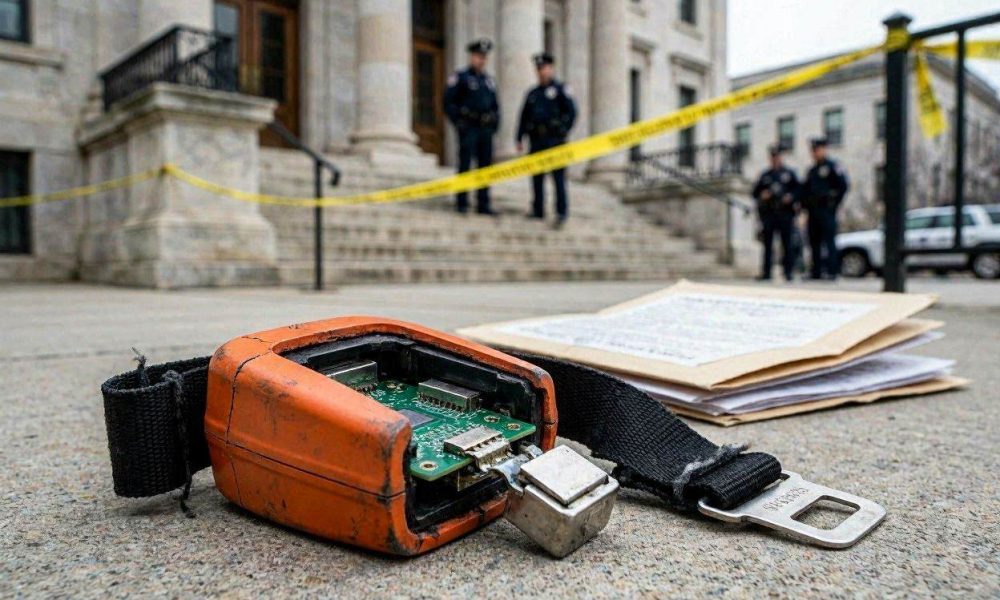
Federal authorities say Jicha was awaiting trial under electronic monitoring when his ankle monitor malfunctioned in October 2024, after which investigators were unable to locate him, and a new federal arrest warrant was issued.
A monitoring failure became a fugitive case.
The FBI’s wanted notice for Horst Costa Jicha says Jicha was arrested in Miami in December 2023, electronically monitored in Brooklyn while awaiting trial, and later wanted for violating the conditions of his pretrial release.
That public notice turned a case about alleged cryptocurrency investment fraud into one about supervisory failure, because the central question became how a defendant facing serious financial charges could disappear while under court-ordered monitoring.
The monitor issue matters because electronic supervision is often presented as a middle ground between detention and release, giving courts a way to manage risk without holding every accused person in jail before trial.
Jicha’s disappearance renewed scrutiny of whether that middle ground is adequate in major financial crime cases where defendants may have international contacts, foreign citizenship, technical knowledge, alleged hidden assets, and access to digital value.
The USI-Tech allegations made the decision to release especially sensitive.
The Justice Department previously accused Jicha of leading a cryptocurrency investment platform that allegedly promised guaranteed returns while using multilevel marketing tactics and investor enthusiasm for Bitcoin to attract customers into USI-Tech.
According to the government, USI-Tech claimed to make cryptocurrency mining and automated trading accessible to ordinary investors, but prosecutors alleged the platform operated as a scheme that misled investors and caused major losses.
Those allegations were serious from the beginning because they involved cross-border promotion, digital asset movement, retail victims, alleged false statements, and a defendant who had spent years outside the United States before his arrest.
When a defendant with that profile later disappears from supervision, the case becomes a broader test of whether bond conditions in crypto-era financial prosecutions are being designed with enough realism.
Electronic monitoring is useful, but it is not custody.
An ankle monitor can tell authorities where a person is supposed to be, can alert officers to technical problems, and can create a record of compliance or noncompliance under court-ordered release conditions.
It cannot physically prevent a person from leaving, cannot freeze a digital wallet, cannot stop foreign travel if documents or routes remain available, and cannot reveal whether undisclosed funds are being used through intermediaries.
That distinction matters because electronic monitoring may create a sense of control that is weaker than it appears, especially when the defendant has reason to flee and the resources to survive outside court supervision.
In major financial crime cases, the strongest release plan must treat electronic monitoring as a single layer of control rather than the central safeguard on which the entire supervisory structure depends.
Bond conditions are only as strong as the assumptions behind them.
Courts commonly evaluate pretrial release through family ties, passports, financial resources, community connections, travel history, criminal record, the strength of the evidence, and the consequences of failing to appear.
Those factors remain important, but cryptocurrency cases add complications because wealth can be stored through private keys, hardware wallets, stablecoins, offshore exchanges, nominee accounts, shell companies, and people who can move funds remotely.
A defendant may appear financially constrained in visible bank records while still retaining practical access to digital assets, crypto proceeds, foreign business networks, or trusted associates who can provide support.
That possibility does not prove misconduct in any individual case, but it does show why bond analysis in digital asset prosecutions increasingly requires deeper questions about liquidity, control, and hidden financial capacity.
The family-backed bond model faces renewed pressure.
White-collar release packages often rely on large bonds secured by relatives, domestic partners, property owners, or third-party custodians who promise to supervise the defendant and risk financial loss if the defendant disappears.
That model assumes that family pressure, reputational stakes, and financial exposure will render flight irrational, because leaving would harm the very people who trusted the defendant enough to secure the defendant’s release.
In cases involving international defendants, alleged fraud proceeds and potential offshore liquidity, prosecutors may argue that family-backed bonds are insufficient if the defendant can still survive abroad or access hidden value.
The Jicha case may, therefore, lead judges to ask whether financial guarantees from relatives truly offset flight risk when the alleged conduct involves digital assets that can move outside conventional banking systems.
Crypto access changes the meaning of supervision.
In traditional financial crime cases, a defendant on release may have limited access to bank accounts, credit cards, brokerage accounts, or business funds, which can be monitored through subpoenas and compliance records.
In crypto cases, value can exist in seed phrases, private wallets, exchange accounts, decentralized protocols, stablecoins, and offshore arrangements that are harder to identify unless the defendant makes full disclosures.
This is why prosecutors may increasingly seek court orders requiring wallet identification, device restrictions, asset freezes, exchange notices, password preservation, and sworn statements about digital asset holdings.
The purpose is not to punish defendants before trial, but to ensure that release conditions reflect the real assets and tools that could facilitate disappearance after an indictment.
The news coverage turned the malfunction into a public accountability issue.
A New York Daily News report, republished by Yahoo News, said Jicha had been accused by prosecutors of tampering with his ankle bracelet before going on the run while facing a Brooklyn federal case involving alleged investor losses.
The news report on Jicha’s disappearance helped turn a technical pretrial services event into a public question about whether electronic monitoring is reliable enough in high-dollar crypto prosecutions.
That attention matters because the public often assumes that electronic monitoring provides near-total visibility, when in practice supervision systems depend on alerts, human response, court orders, equipment reliability, and the defendant’s willingness to comply.
The case illustrates how quickly a technical alert can become a fugitive investigation when the person under supervision has a strong incentive to avoid trial and possible access to international support.
Pretrial services must now account for digital mobility.
Pretrial supervision was designed around physical presence, local residence, employment obligations, travel permission, court appearances, and periodic contact with officers responsible for tracking compliance.
Crypto-era defendants may pose additional risks because digital mobility can be decoupled from physical movement, allowing value, instructions, payments, and support arrangements to cross borders even when the person remains in a residence.
A defendant could theoretically fund assistance, move value, compensate intermediaries, or prepare foreign support without using ordinary bank transfers that pretrial services would easily notice.
That reality suggests that supervision in high-risk digital asset cases may require closer coordination among prosecutors, pretrial services, forensic accountants, blockchain analysts, and financial institutions than older bond models required.
Digital identity records can help close supervision gaps.
The movement of money, travel, and account access often intersects with identity systems, which means investigators can use exchange onboarding files, tax records, passports, phone data, and corporate filings to connect real people to digital activity.
The role of tax identity in compliant global finance is reflected in discussions of how a universal tax identification number would work, because regulated financial systems still depend on documented links among accounts, tax status, and beneficial ownership.
In a pretrial context, those same records may help authorities determine whether a defendant has disclosed all relevant accounts, whether foreign entities remain active, and whether digital assets are being accessed through nominees.
Identity records do not solve every problem, but they can reduce the gap between what a defendant reports to the court and what the financial ecosystem actually shows.
Travel documents remain central even in crypto cases.
A crypto defendant may control digital assets, communicate through encrypted tools, and move value through blockchain networks, but physical flight still depends on borders, aircraft, hotels, passports, visas, and people willing to assist.
Resources explaining electronic passport security show why modern travel documents remain important for enforcement, as chip-based identity and machine-readable systems link personal movement to official records.
For courts considering release, the passport question can no longer be treated as a simple document-surrender issue, given that defendants may have multiple citizenship connections, past travel patterns, or access to foreign support networks.
The Jicha case highlights why financial crime supervision must combine electronic monitoring with travel-document control, border alerts, identity review, and immediate escalation when location technology fails.
The malfunction exposed the response-time problem.
Electronic monitoring is most effective when alerts are reliable, response protocols are clear, and officers can quickly distinguish equipment failure from deliberate tampering or unauthorized movement.
The hardest problem is timing, because a person determined to flee may need only a narrow window between technical failure, officer notification, court communication, and law enforcement action.
In major financial crime cases, that window may be enough for a defendant to leave a residence, reach transportation, contact intermediaries, or begin using previously arranged support.
The Jicha matter may therefore push courts and agencies to review whether high-risk defendants require faster alert escalation, backup location checks, more frequent in-person contact, or stricter home-detention verification.
The presumption of innocence remains essential.
Jicha has been charged but not convicted in the underlying USI-Tech case, and every report about the allegations must preserve the distinction between accusation, evidence, trial proof, and final judgment.
The same principle applies to pretrial release because defendants are presumed innocent unless proven guilty, which is why courts must carefully balance liberty interests against public safety, flight risk, and the integrity of the judicial process.
The scrutiny now surrounding Jicha’s disappearance should not become an argument for automatically detaining every person accused of crypto fraud or every international defendant facing financial charges.
The better lesson is that release conditions should be individualized, evidence-based, and realistic about the defendant’s mobility, resources, access to digital assets, and ability to comply.
Victims experience release failure as a second injury.
For alleged victims of major financial fraud, a defendant’s disappearance can feel like another collapse after the first loss, because the possibility of trial, restitution, and explanation suddenly becomes more uncertain.
Victims may already have waited years for investigation, indictment, and court proceedings, only to watch a fugitive development reopen questions about whether accountability will ever arrive.
That emotional impact matters because financial crime harms more than account balances, often damaging trust, retirement planning, family relationships, business stability, and confidence in legal institutions.
When pretrial release fails in a high-profile case, the justice system must not only pursue the defendant but also clearly communicate with victims about next steps, recovery options, and the limits of what can be promised.
The case may influence future bail litigation.
Prosecutors in future crypto cases may cite Jicha’s disappearance to argue that defendants with global ties, alleged investor losses, and potential access to digital assets should face stricter supervision or detention.
Defense lawyers will respond that a single case cannot justify broad suspicion, because detention should depend on individualized facts rather than on generalized fear of cryptocurrency or foreign nationality.
Judges will be left to weigh digital asset access, international networks, alleged hidden wealth, family-backed bonds, technology expertise, and prior travel patterns against the constitutional preference for pretrial liberty.
The likely result is not a single new rule, but a more detailed bail record in crypto cases where courts ask harder questions about practical access to value and realistic flight capacity.
The compliance industry will also study the failure.
Exchanges, banks, stablecoin issuers, custodians, and forensic firms may face more frequent requests to preserve records or identify assets when defendants in financial crime cases are released before trial.
Event-driven compliance becomes important because a customer who was once ordinary may become high risk after an indictment, a release violation, a wanted notice, sanctions exposure, or unusual asset movement.
Companies that receive a valid legal process may need to respond quickly, especially when prosecutors believe funds could support flight or frustrate victim recovery.
The Jicha case reinforces the view that digital asset compliance is not only about preventing initial fraud, but also about helping preserve accountability after charges are filed.
The old white-collar playbook is being rewritten.
White-collar cases once turned heavily on documents, bank records, interviews, and expert testimony, while fugitive risk was often managed through passports, bonds, and family guarantees.
Crypto cases still require those tools, but they also require blockchain analytics, device controls, wallet disclosures, exchange coordination, and a realistic understanding of how quickly value can move outside visible channels.
The Jicha disappearance shows that courts and investigators must think about financial crime defendants as people who may be capable of both physical and digital movement.
That combined mobility means the modern release order must address residence, travel, documents, devices, accounts, wallets, foreign contacts, and the speed with which money can become support.
The monitoring failure became a warning about system confidence.
Electronic monitoring remains valuable, but the Jicha case demonstrates that technology cannot substitute for a complete supervision strategy in complex financial crime prosecutions involving international defendants and alleged digital asset fraud.
A device can fail, an alert can arrive late, a defendant can make a calculated decision, and hidden liquidity can make flight more realistic than the court assumed when release was granted.
The lesson is not that every ankle monitor is ineffective, but that monitoring devices work best when surrounded by strong conditions, rapid response protocols, and financial controls tailored to the defendant’s actual risk profile.
For major crypto cases, that means treating location technology, asset restraint, and identity control as connected parts of the same accountability system.
Jicha’s disappearance may shape crypto-era pretrial justice.
Horst Costa Jicha’s broken ankle monitor has become more than a detail in one federal case because it now represents the supervision challenge posed when large financial allegations intersect with borderless digital assets and international mobility.
The USI-Tech allegations placed Jicha inside the world of crypto investment fraud, but the release failure placed his case inside a larger debate about bond conditions, electronic monitoring, and court confidence.
Future courts may respond by demanding clearer wallet disclosures, stronger asset controls, faster monitoring escalation, and more careful analysis of whether family-backed bonds are sufficient in high-dollar digital asset cases.
The final lesson is direct: in modern white-collar prosecutions, a defendant’s location matters, but so does the hidden financial network that may make disappearance possible before the monitor ever sounds the alarm.




