
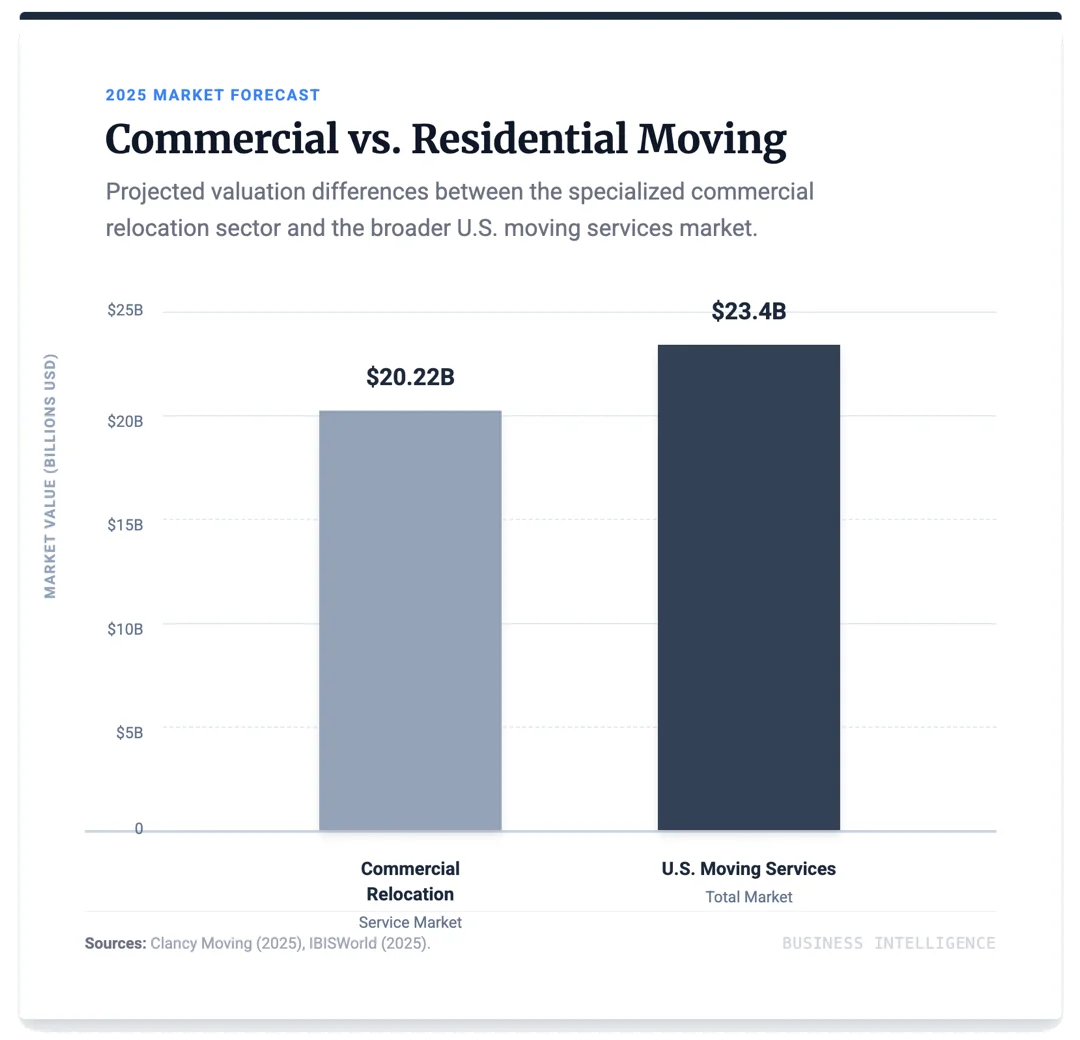
As organizations face tighter timelines, increased compliance expectations, and rising equipment costs, inventory management has become one of the most influential forces shaping the moving and logistics sector. What was once considered an administrative afterthought has now become a strategic priority for businesses seeking predictable, low-risk relocations. The commercial relocation service market alone is projected to reach US$20.22 billion in 2025, underscoring how significant and complex business moves have become.
Why Inventory Management Has Become a Linchpin in Moving Logistics
Modern commercial moves involve sensitive electronics, regulated materials, department-specific equipment, and multi-phase transitions that require exceptional accuracy. For many organizations, clear documentation and itemization are no longer optional—they are required for operational continuity. Readers looking for additional guidance on common moving questions can refer to the full Moving FAQ page, which provides clarity on timelines, packing expectations, storage considerations, and service standards.
The broader U.S. moving services industry continues to expand, reaching an estimated US$23.4 billion in 2025. As organizations rely more heavily on high-value equipment, even minor inaccuracies in tracking or labeling can lead to downtime, loss, or unexpected operational delays. This increased financial exposure is a significant reason inventory management has become fundamental to every commercial relocation project.
The Digital Transformation of Commercial Relocation
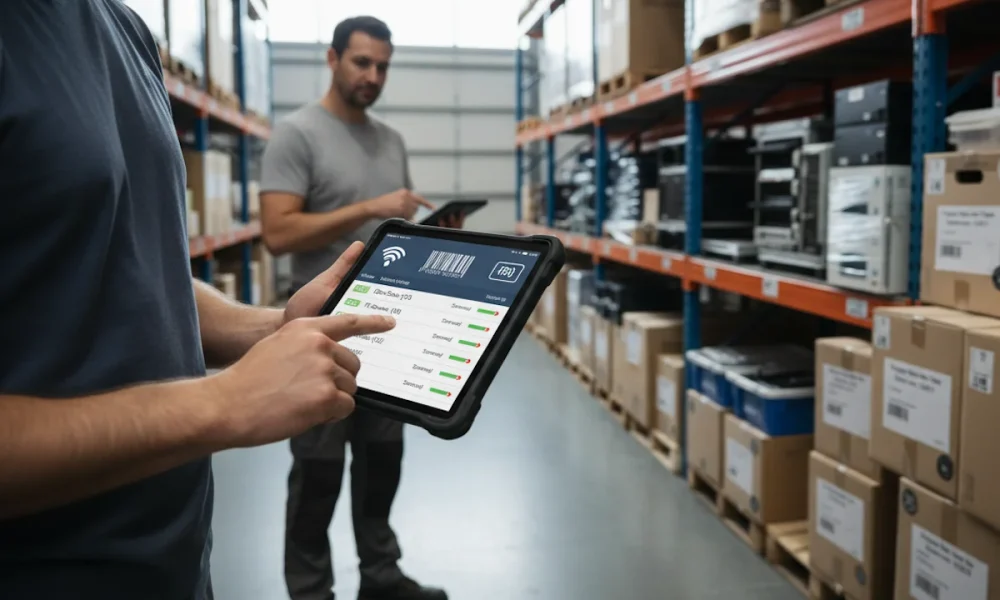
Digital tools have reshaped how companies manage and execute relocations. Barcode scanning, RFID tagging, cloud-based dashboards, and real-time asset tracking allow teams to follow items from initial packing to final installation. These technologies reduce the risk of misplacement, verify asset condition, and create transparent records accessible to all stakeholders.
RFID and barcode systems also streamline communication between departments, especially during multi-site or phased moves. With real-time visibility, managers can adjust timelines, confirm arrivals, and monitor specific items throughout the relocation. This level of transparency reduces bottlenecks and ensures that mission-critical equipment arrives exactly when and where it is needed.
Industrial Moves Carry Higher Stakes—and Greater Benefits From Inventory Control
Industrial relocations present challenges far more complex than traditional commercial moves. Manufacturing facilities, laboratories, distribution centers, and industrial plants rely on machinery that is heavy, delicate, calibrated, or environmentally sensitive. These assets often require special handling, detailed documentation, and certified third-party support.
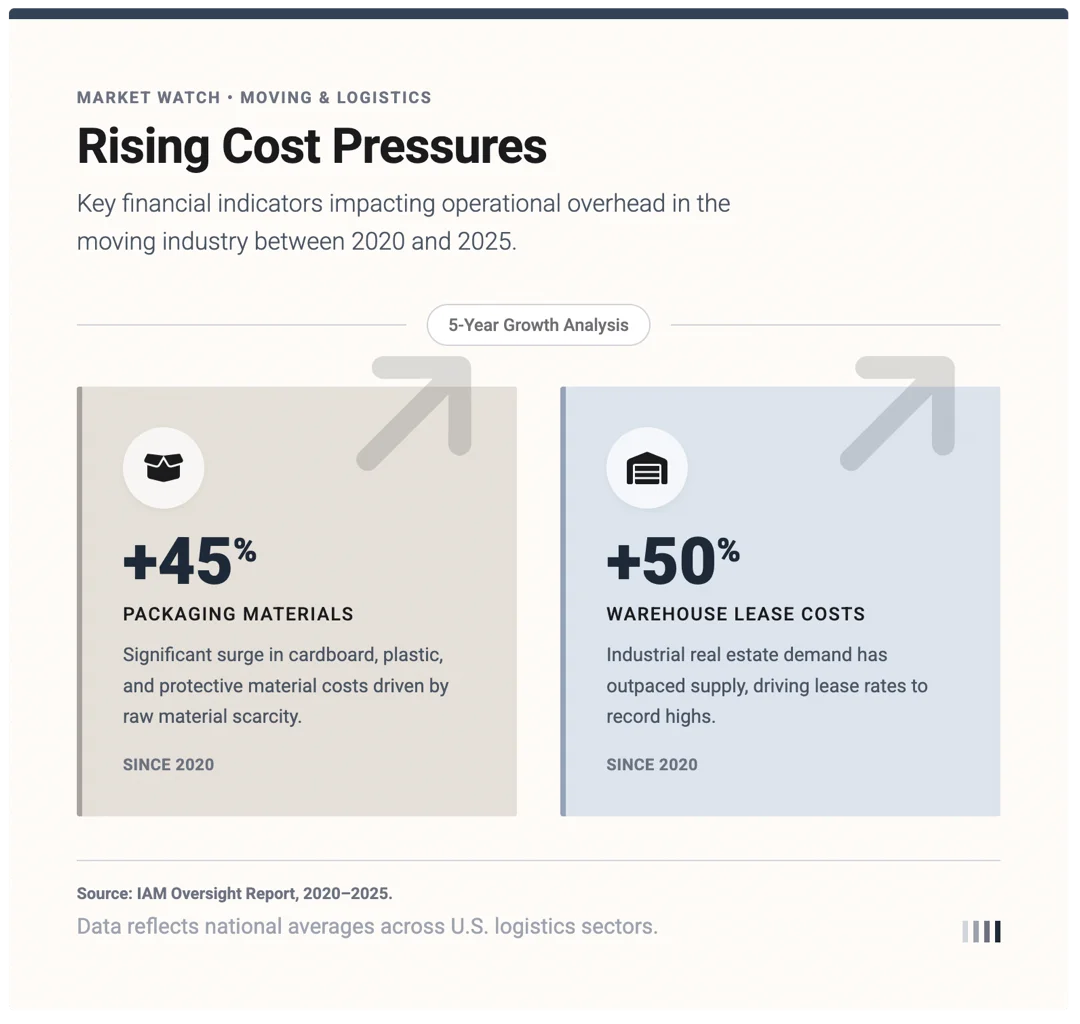
Recent research shows just how critical accuracy has become. Packaging materials have risen 35–45% since 2020, while warehouse lease costs have increased by nearly 50% during the same period. These rising expenses mean the financial impact of lost, damaged, or mismanaged assets is significantly higher than in previous years.
Inventory management isn’t only about tracking—it also enhances safety and workflow planning. By mapping machinery layouts and staging areas, relocation teams improve efficiency, reduce risk, and ensure the correct sequence of equipment disassembly and reinstallation. This structured approach minimizes operational interruptions and helps maintain compliance with safety standards.
Stronger Inventory Systems Reduce Costs and Improve Business Continuity
Robust inventory management delivers more than asset protection; it drives financial and operational efficiency. Organizations using structured inventory systems experience fewer losses, achieve faster reconciliation, and maintain more accurate equipment lists. Detailed logs also expedite insurance claims and provide verifiable before-and-after condition records.
These benefits become even more critical during phased or multi-building relocations. Accurate inventories help organizations plan which assets should be reused, replaced, or redistributed. This prevents over-ordering, reduces waste, and promotes more innovative budgeting throughout the relocation process.
Additionally, clear inventory documentation protects against downtime. When critical equipment is precisely tracked, businesses avoid delays caused by misplaced or misrouted items. With supply chain and labor costs continuing to rise, keeping operations uninterrupted has become a top priority across industries.
What Businesses Can Expect Moving Forward
As digital transformation accelerates and workplaces rely more heavily on specialized equipment, inventory management will remain central to relocation planning. Businesses are prioritizing moves that are predictable, transparent, and data-driven, and inventory systems provide the structure required to meet these expectations.
The future of commercial and industrial moving is likely to include greater automation, expanded RFID adoption, and more integrated logistics platforms that connect movers, vendors, suppliers, and management teams. These tools will enhance visibility at every stage and enable businesses to forecast more accurately, strategize, and execute their transitions.
Whether relocating a small office, a large corporate campus, or an industrial facility, organizations that embrace modern inventory practices will be more resilient, more efficient, and better positioned to maintain operational continuity throughout the moving process.