
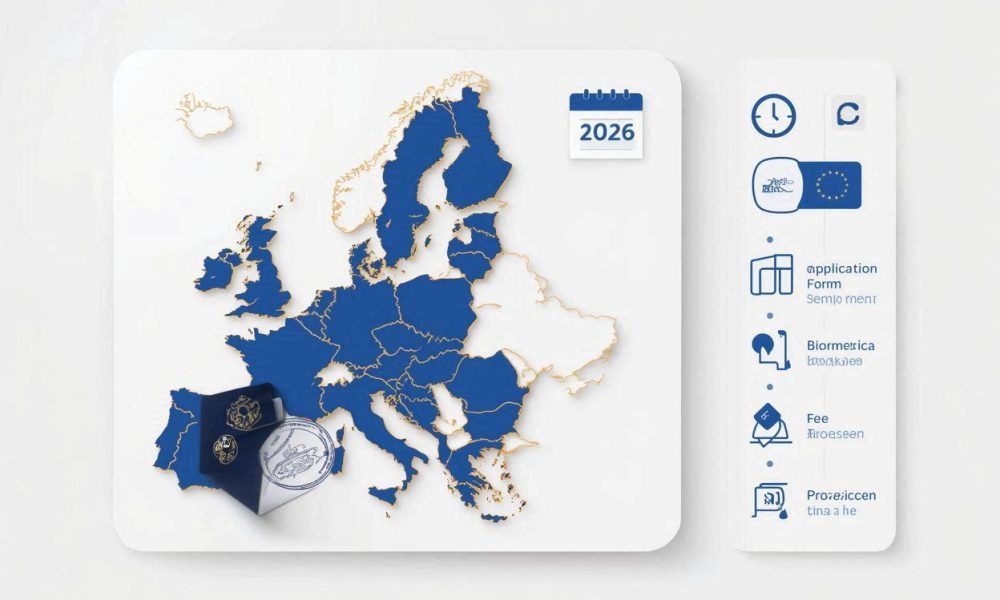
How travelers are cross-referenced against global fugitive lists
WASHINGTON, DC, April 27, 2026, Schengen border screening has entered a new intelligence-driven era, where passports, biometrics, travel histories, watchlists, and law enforcement alerts increasingly converge before a traveler is allowed to move freely.
The Entry/Exit System, known as EES, has accelerated that shift by replacing passport stamps with digital records that connect entries, exits, refusals, facial images, fingerprints, and document details across external Schengen borders.
The result is a border environment where travelers are no longer assessed only by the document they present, because the surrounding databases can reveal stolen passports, prior refusals, wanted-person alerts, identity conflicts, and suspicious movement patterns.
A recent Reuters report on Europe’s digital border rollout described EES as a major modernization effort aimed at detecting overstayers, combating identity fraud, and reducing reliance on manual passport stamping.
The modern Schengen border is a database event
The old passport inspection model depended heavily on the officer’s eyes, the passport booklet, a few questions, and whatever information appeared during a short document check at the border desk.
The new model still involves trained officers, but it also relies on structured searches across systems designed to identify people, documents, alerts, and risks that are not visible on the passport page.
The Schengen Information System, known as SIS, is central to that model because it allows participating countries to share alerts involving wanted persons, refused-entry cases, missing people, stolen objects, and invalid documents.
Interpol’s Stolen and Lost Travel Documents database, known as SLTD, adds another layer by helping authorities identify passports and travel documents that have been reported stolen, lost, revoked, or misused.
Europol’s role is different but equally important, because its intelligence capabilities support the fight against organized crime, cybercrime, trafficking, terrorism, and the networks that move fugitives across borders.
SIS gives Europe a shared warning system
The Schengen Information System is one of the most important law enforcement tools in Europe because it allows police, border officers, migration authorities, customs officials, and judicial authorities to act on shared alerts.
A traveler may present a passport at one airport, but the alert connected to that person or document may have been entered by authorities in another Schengen country.
That matters because fugitives often rely on fragmentation, moving through jurisdictions where they believe officers will not immediately see records created elsewhere.
SIS reduces that advantage because the external Schengen border is designed to function as a shared security perimeter, even when the traveler enters through France, Spain, Germany, Italy, Portugal, Switzerland, or another participating state.
For ordinary travelers, SIS may never be visible during a normal journey, but for wanted persons or people using suspicious documents, it can turn a routine border crossing into a secondary inspection.
Interpol’s SLTD database targets the document itself
The SLTD database is especially important because many criminals depend on stolen, lost, altered, or borrowed travel documents to create a temporary distance from their real names and histories.
A passport can appear genuine because it was issued by a real government, but that does not mean the person holding it has the right to use it.
When border authorities check travel documents against SLTD, they can identify passports that were reported stolen, lost, or otherwise compromised before the traveler is admitted.
This matters for identity theft victims as well, because a stolen passport can be used by another person for fraud, travel, banking, residency applications, or broader criminal activity.
The document check is therefore not merely administrative, because it can protect victims while stopping fugitives who rely on passports that no longer represent lawful identity.
Europol helps connect the criminal network behind the traveler
Europol does not simply operate as a border database; its value lies in connecting criminal intelligence across member states and supporting investigations into organized, digital, and financial crime.
A traveler flagged at a border may not be important solely because of one passport, as the person may be connected to a wider network involving cyber fraud, trafficking, forged documents, money laundering, or the movement of fugitives.
Europol’s work becomes especially important when a single traveler is linked to several jurisdictions, with one country holding a fraud complaint, another holding banking data, and another holding border records.
This kind of coordination matters in 2026 because criminal networks are increasingly hybrid, combining online scams, physical couriers, forged documents, cryptocurrency wallets, and cross-border logistics.
A database alert may identify the person, but intelligence cooperation helps authorities understand why that person matters and what network may be operating behind them.
FBI and DHS cooperation adds a transatlantic layer
The United States has a direct interest in Schengen screening because American fugitives, cybercriminals, financial fraud suspects, and identity thieves often move through European transit hubs when pressure increases at home.
U.S. agencies such as the FBI and Department of Homeland Security hold information that can be valuable when a suspect attempts to travel under a real passport, false identity, or look-alike document.
The FBI’s Internet Crime Complaint Center shows the scale of cyber-enabled fraud affecting American victims, including business email compromise, identity theft, investment scams, and other crimes that often involve foreign infrastructure.
Emerging EU-U.S. data-sharing efforts should be understood as controlled security cooperation rather than an unlimited open database, because privacy safeguards, legal access rules, and data-protection requirements remain central to transatlantic arrangements.
The practical effect remains significant because a suspect wanted in the United States may become harder to hide when European border systems can receive and act on lawful security information.
The hit or no-hit model balances speed and privacy
Modern interoperability often relies on a hit-or-miss approach, meaning authorities can determine whether a traveler matches a relevant alert without automatically exposing every underlying file to every frontline user.
That model matters because border officers need rapid answers, but democratic systems also require safeguards against unnecessary sharing of personal data belonging to ordinary travelers.
A no-hit result may allow a traveler to continue without further action, while a hit can trigger secondary inspection, identity confirmation, contact with a partner agency, or another legally defined response.
For fugitives, even a limited hit can be devastating because it turns a border crossing from routine travel into a controlled law-enforcement encounter.
For lawful travelers, the model is meant to preserve proportionality, although its credibility depends on accurate data, human review, correction procedures, and strong oversight.
Biometrics make aliases harder to sustain
A fugitive can change a name, alter a passport, use a borrowed document, create a shell profile, or claim a different residence history when border checks rely mainly on paperwork.
Biometrics weakens that strategy because fingerprints and facial images link the physical traveler to records that may survive changes in documents, spelling variations, nationality claims, and forged identity packages.
A passport may say one thing, but the person presenting it may still match a fingerprint record, a facial image, a prior refusal, or a law enforcement alert stored elsewhere.
This is why EES matters beyond overstay tracking, because it strengthens identity continuity by linking the traveler’s body to the movement record.
For criminals who rely on aliases, this creates a harsher environment because each new document becomes another opportunity for the system to detect the same person under different names.
Look-alike passports face a shrinking window
Look-alike passports once gave fugitives a practical advantage because the criminal only needed to resemble the legitimate holder closely enough to survive quick visual inspection.
That advantage shrinks when border authorities compare facial geometry, fingerprints, prior entries, refusals, and database alerts rather than relying only on the printed photograph.
A stolen passport may still open an airline booking, but it becomes far less reliable when the traveler must provide biometrics at the external Schengen border.
A fraudulently obtained genuine passport may also fail if the person using it does not match the underlying identity history associated with the record.
The key shift is simple: the document no longer carries the entire identity claim, as the traveler’s body and data history are now part of the inspection.
High-risk travelers can be identified before they move deeper into Europe
The external Schengen border is critical because once a traveler enters the zone, internal movement across many participating countries becomes much easier.
That is why authorities want stronger screening before entry, especially for suspects connected to terrorism, cyber fraud, trafficking, organized crime, sanctions evasion, or serious identity fraud.
A database match at the external border can allow officers to conduct secondary screening before the traveler reaches hotels, rental properties, bank meetings, associates, or onward transport.
The refusal record is also important because someone denied entry at one Schengen border should not be able to simply try another country as if the first decision never happened.
Digital records reduce that route-shopping strategy by making prior refusals easier to see across the shared border environment.
Cyber fraud has made border data more important
Cybercrime may begin online, but major fraud networks still require physical movement for couriers, safe houses, device transfers, money mules, bank access, and document logistics.
A scammer involved in business email compromise, phishing, or identity theft may move through Europe to meet associates, collect proceeds, replace devices, or arrange laundering steps.
Border records can help investigators determine whether travel patterns align with fraud spikes, suspicious withdrawals, account openings, courier activity, or communications recovered from seized devices.
That is why cooperation among the FBI, Europol, and Interpol matters for cyber investigations: money, movement, devices, aliases, and stolen documents often cross several jurisdictions.
The traveler at the border may therefore represent more than one person, because the movement may expose an entire network behind the fraud.
Second passports do not erase database exposure
A lawful second passport can support mobility, family security, business continuity, and emergency relocation, but it cannot erase biometric records, criminal alerts, or prior border history.
People exploring second passport planning should understand that additional citizenship creates legitimate options only when documents, residence claims, banking profiles, and travel histories remain consistent.
A person holding more than one passport may still be identified through fingerprints, facial images, SIS alerts, Interpol document checks, or security information connected to the underlying individual.
That distinction matters because lawful dual nationality is not the problem, while using documents as disguises can create contradictions that border systems are designed to detect.
The strongest second-passport strategy is disciplined, documented, and explainable, especially as modern systems increasingly follow the person rather than only the passport booklet.
Legal identity planning must survive database comparison
Lawful identity planning must now account for the fact that border systems, banking platforms, consular records, travel authorizations, and law enforcement databases increasingly compare information across time.
In legal identity planning, the primary objective is a defensible identity structure that can withstand biometric checks, due diligence, visa screening, and future renewals.
That approach is fundamentally different from forged documents, stolen identities, or aliases because it depends on government-recognized records and a lawful explanation for every change.
A legitimate identity transition may include a legal name change, residence planning, second citizenship, corrected records, or updated passports, but each step must remain consistent with the wider profile.
The modern traveler needs records that can survive comparison, because privacy built on a lawful structure is stronger than secrecy built on contradictions.
Database power requires safeguards
The expansion of vetting databases raises legitimate privacy concerns because inaccurate records, mistaken matches, outdated alerts, or weak correction procedures can create serious consequences for innocent travelers.
A person wrongly linked to a stolen document, security alert, or prior refusal may face denied boarding, secondary inspection, visa delays, banking questions, or reputational harm.
That is why database interoperability must include human review, audit trails, proportional access, appeal rights, and clear processes for correcting inaccurate records.
Security systems gain public trust only when they catch dangerous people while protecting lawful travelers from avoidable harm caused by bad data or careless interpretation.
The most powerful border architecture is therefore not only fast and connected but also disciplined enough to correct mistakes when the system makes a mistake.
The new border reality is connected, biometric, and unforgiving
Interpol, Europol, the FBI, DHS, SIS, SLTD, and EES each serve different roles, but together they illustrate the direction of modern border vetting.
The traveler is increasingly checked as a person, a document holder, a biometric profile, a movement history, and a possible match against international alerts.
For ordinary travelers with clean records, the process may eventually become smoother because digital systems can confirm identity and reduce disputes over paper stamps.
For fugitives, identity thieves, and document-fraud networks, the same process becomes more dangerous because every crossing can trigger comparisons that old borders could not make quickly.
In 2026, the safest travel profile is lawful, consistent, and documented, because the border no longer sees only the passport; it sees the databases behind the person.




