
Definition
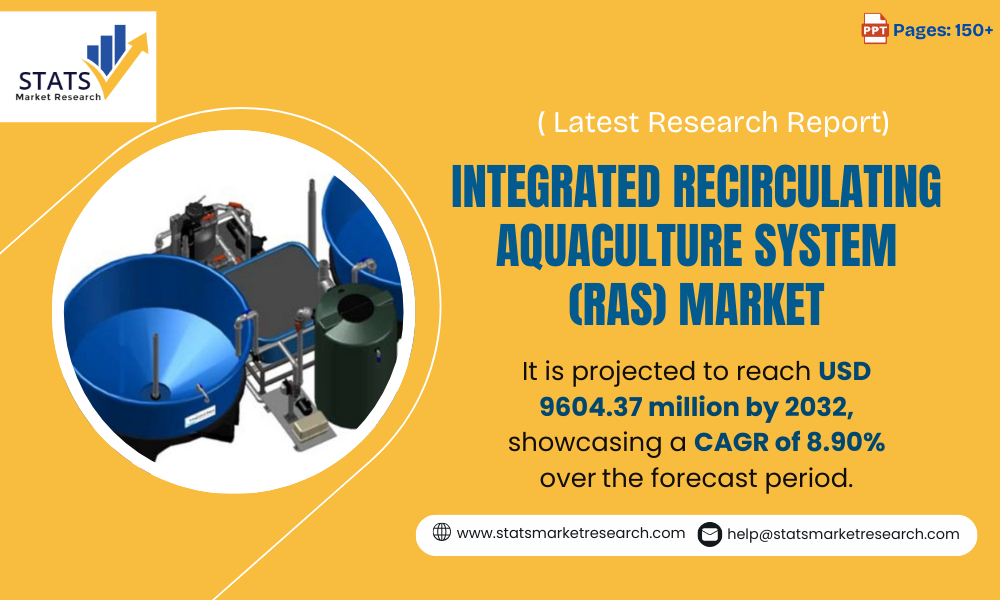
Integrated Recirculating Aquaculture Systems (RAS) are advanced fish farming technologies designed to enable controlled, high-density aquaculture in tanks or net cages rather than open-air ponds. By filtering and recycling water, these systems minimize freshwater usage, reduce environmental impact, and allow operators to precisely regulate water quality, temperature, and dissolved oxygen levels.
RAS technology typically involves a combination of mechanical, biological, and chemical filtration processes. Mechanical filters remove solid waste, biological filters convert harmful ammonia into less toxic compounds, and chemical treatments manage water chemistry. Only a small amount of new water is introduced to compensate for evaporation, splashing, or removal of waste materials, making the system highly water-efficient.
The primary benefits of integrated RAS include:
- Enhanced Biosecurity: Prevents diseases by isolating fish from external pathogens.
- High Stocking Density: Enables large-scale production without requiring expansive water bodies.
- Environmental Sustainability: Significantly reduces water usage and effluent discharge.
- Operational Control: Allows precise control over feeding, growth rates, and harvest schedules.
Industries leveraging RAS range from commercial aquaculture for human consumption to research, ornamental fish production, and specialty species cultivation. Increasing adoption is driven by growing global seafood demand, environmental regulations, and the need for sustainable aquaculture practices.
Market Size
Global Integrated Recirculating Aquaculture System (RAS) market was estimated at USD 4,458.80 million in 2024 and is projected to reach USD 9,604.37 million by 2032, growing at a CAGR of 8.90% during the forecast period.
North America Market:
- Size: USD 1,345.86 million in 2024
- CAGR: 7.63% (2025–2032)
Market Scope and Growth Drivers:
- RAS adoption is increasing globally due to environmental regulations restricting traditional aquaculture practices.
- Rising consumer demand for traceable, high-quality, and disease-free seafood is driving market growth.
- Innovations in system automation, filtration technology, and energy-efficient pumps contribute to operational efficiency, making RAS more economically viable.
Historical Trends:
- Early RAS adoption was limited due to high capital costs and technological complexity.
- Recent advances in modular system designs, energy-efficient recirculation pumps, and smart monitoring sensors have accelerated adoption in commercial aquaculture facilities.
Example: Companies like AKVA Group and AquaMaof have deployed large-scale RAS facilities producing tilapia and salmon with yields comparable to traditional aquaculture but with 80% lower water consumption.
Download FREE Sample of this Report @ https://www.statsmarketresearch.com/download-free-sample/8034758/global-integrated-recirculating-aquaculture-system-market
Recent Developments
The Integrated Recirculating Aquaculture System (RAS) market is experiencing rapid advancements driven by the global need for sustainable and localized food production. A significant development is the integration of advanced technologies like the Internet of Things (IoT), artificial intelligence (AI), and machine learning. These systems now feature real-time sensors that monitor critical parameters like dissolved oxygen, pH, and ammonia, with AI-driven software optimizing system performance and alerting operators to potential issues. Furthermore, there is a strong trend toward modular and scalable RAS designs, which are more flexible and reduce the high initial capital investment, making the technology more accessible to a wider range of producers. Innovations in water filtration, waste management, and energy-efficient components, such as low-energy pumps and UV sterilization, are also making RAS more economically and environmentally viable.
Major Distribution Channels
The distribution of integrated RAS technology is primarily a direct, business-to-business model. System manufacturers and technology providers, such as AquaMaof, Innovasea, and The Water Management Company, sell their complete systems, including design, installation, and ongoing technical support, directly to aquaculture businesses. These clients range from large-scale commercial fish farms to smaller, specialized operations focusing on high-value species. The distribution is heavily concentrated in regions with high consumer demand for sustainable seafood and stringent environmental regulations, particularly in North America, Europe, and parts of Asia. Additionally, a growing distribution channel involves partnerships and collaborations with government agencies, research institutions, and investment firms that promote and finance the adoption of sustainable aquaculture technologies to enhance food security and reduce environmental impact.
Market Dynamics
Drivers
Sustainable Seafood Production:
- Environmental concerns and stricter aquaculture regulations encourage RAS adoption.
- Reduced freshwater usage and minimal effluent discharge align with global sustainability goals.
High-Density Fish Farming:
- RAS allows multiple crop cycles per year, increasing profitability.
- Controlled environments reduce mortality rates and improve product quality.
Technological Advancements:
- Automation in feeding, oxygenation, and waste removal enhances efficiency.
- Integration of sensors and IoT platforms enables real-time monitoring, optimizing fish growth and minimizing operational costs.
Investment and Policy Support:
- Governments in Europe, North America, and Asia-Pacific are offering subsidies, tax benefits, and funding to develop land-based aquaculture infrastructure.
Restraints
High Capital and Operational Costs:
- Initial setup costs for RAS facilities are high due to filtration systems, tanks, pumps, and monitoring equipment.
- Energy consumption for water recirculation and temperature control can be significant, particularly in colder regions.
Technical Complexity:
- Managing water chemistry, biofilter efficiency, and disease prevention requires skilled personnel.
- System failures or imbalances in filtration can result in high mortality rates.
Limited Awareness in Emerging Markets:
- Adoption rates remain low in developing countries due to lack of technical expertise and investment capital.
Opportunities
Emerging Markets in Asia-Pacific and the Middle East:
- Countries like India, China, and Saudi Arabia are investing in RAS infrastructure to meet growing seafood demand.
Integration with Renewable Energy:
- Solar and wind-powered RAS facilities can reduce energy costs and enhance environmental sustainability.
Expansion into Specialty Species:
- RAS can support cultivation of high-value species such as sturgeon, ornamental fish, and shrimp, opening niche markets.
Challenges
Energy and Resource Management:
- Maintaining water circulation, temperature, and filtration can be resource-intensive.
Skilled Workforce Shortage:
- Lack of trained aquaculture engineers limits operational efficiency in new facilities.
System Maintenance and Downtime:
- Mechanical failures, biofilter saturation, or pump malfunctions can disrupt production and impact profitability.
Regional Analysis
North America:
- Market size: USD 1,345.86 million in 2024
- Growth driven by salmon, trout, and tilapia production.
- Policy support and technological adoption foster steady growth.
Europe:
- Strong demand for sustainable seafood, particularly in Norway, Germany, and the UK.
- High regulatory standards drive investment in RAS over traditional pond systems.
Asia-Pacific:
- Fastest-growing market due to population growth and rising seafood consumption.
- China, Japan, South Korea, and Southeast Asia are leading RAS investments.
South America:
- Brazil and Argentina are exploring RAS for inland aquaculture to reduce dependency on coastal ponds.
Middle East & Africa:
- Emerging adoption driven by water scarcity and increasing seafood imports.
- Investments in desalination-powered RAS facilities are being explored in UAE and Saudi Arabia.
Competitor Analysis
- Skretting: Focus on integrated aquaculture feed solutions and RAS integration.
- Xylem: Provides water treatment and pumping solutions for RAS.
- RADAQUA: Specializes in RAS design and installation.
- PR Aqua: Offers turnkey RAS solutions with automated monitoring.
- AquaMaof: Develops land-based RAS for salmon and tilapia.
- AKVA Group: Provides modular RAS systems and advanced monitoring technology.
- Hesy Aquaculture, Aquacare Environment, Qingdao Haixing, Clewer Aquaculture, Sterner, Veolia, MAT-KULING, Fox Aquaculture, Pentair, Innovasea, Nocera, BioFishency, SENECT, Alpha Aqua: Each company focuses on specific aspects of RAS, including filtration, aeration, system integration, and environmental sustainability.
Get the Complete Report & TOC @ https://www.statsmarketresearch.com/global-integrated-recirculating-aquaculture-system-market-8034758
Global Integrated Recirculating Aquaculture System (RAS): Market Segmentation Analysis
This report provides a deep insight into the global Integrated Recirculating Aquaculture System (RAS) market covering all its essential aspects. This ranges from a macro overview of the market to micro details of the market size, competitive landscape, development trend, niche market, key market drivers and challenges, SWOT analysis, value chain analysis, etc.
The analysis helps the reader to shape the competition within the industries and strategies for the competitive environment to enhance the potential profit. Furthermore, it provides a simple framework for evaluating and assessing the position of the business organization. The report structure also focuses on the competitive landscape of the Global Integrated Recirculating Aquaculture System (RAS) Market, this report introduces in detail the market share, market performance, product situation, operation situation, etc., of the main players, which helps the readers in the industry to identify the main competitors and deeply understand the competition pattern of the market.
In a word, this report is a must-read for industry players, investors, researchers, consultants, business strategists, and all those who have any kind of stake or are planning to foray into the Integrated Recirculating Aquaculture System (RAS) market in any manner.
Market Segmentation (by Application)
- Indoor System
- Outdoor System
Market Segmentation (by Type)
- Closed Type
- Semi-Closed Type
Key Company
- Skretting
- Xylem
- RADAQUA
- PR Aqua
- AquaMaof
- Billund Aquaculture
- AKVA Group
- Hesy Aquaculture
- Aquacare Environment
- Qingdao Haixing
- Clewer Aquaculture
- Sterner
- Veolia
- MAT-KULING
- Fox Aquaculture
- Pentair
- Innovasea
- Nocera
- BioFishency
- SENECT
- Alpha Aqua
Geographic Segmentation
- North America: USA, Canada, Mexico
- Europe: Germany, UK, France, Russia, Italy, Rest of Europe
- Asia-Pacific: China, Japan, South Korea, India, Southeast Asia, Rest of Asia-Pacific
- South America: Brazil, Argentina, Columbia, Rest of South America
- Middle East & Africa: Saudi Arabia, UAE, Egypt, Nigeria, South Africa, Rest of MEA
FAQ
Q1: What is the current market size of the Global Integrated Recirculating Aquaculture System (RAS)?
A1: The global market was estimated at USD 4,458.80 million in 2024 and is projected to reach USD 9,604.37 million by 2032, growing at a CAGR of 8.90%.
Q2: Which are the key companies operating in the Global Integrated Recirculating Aquaculture System (RAS) market?
A2: Key players include Skretting, Xylem, RADAQUA, PR Aqua, AquaMaof, AKVA Group, Billund Aquaculture, Hesy Aquaculture, Veolia, and others.
Q3: What are the key growth drivers in this market?
A3: Growth is driven by sustainability requirements, high-density fish farming, technological advancements, and government investment in aquaculture infrastructure.
Q4: Which regions dominate the Global Integrated Recirculating Aquaculture System (RAS) market?
A4: North America, Europe, and Asia-Pacific dominate due to high investment in aquaculture technology and rising seafood demand.
Q5: What are the emerging trends in the market?
A5: Trends include integration with IoT and automation, adoption of energy-efficient RAS, expansion into specialty species, and investment in modular systems for scalable aquaculture solutions.
About Us
☎️ International: +1 (332) 2424 294
📄 Website: www.statsmarketresearch.com
Join us on LinkedIn:- https://www.linkedin.com/company/statsmarketresearch




