
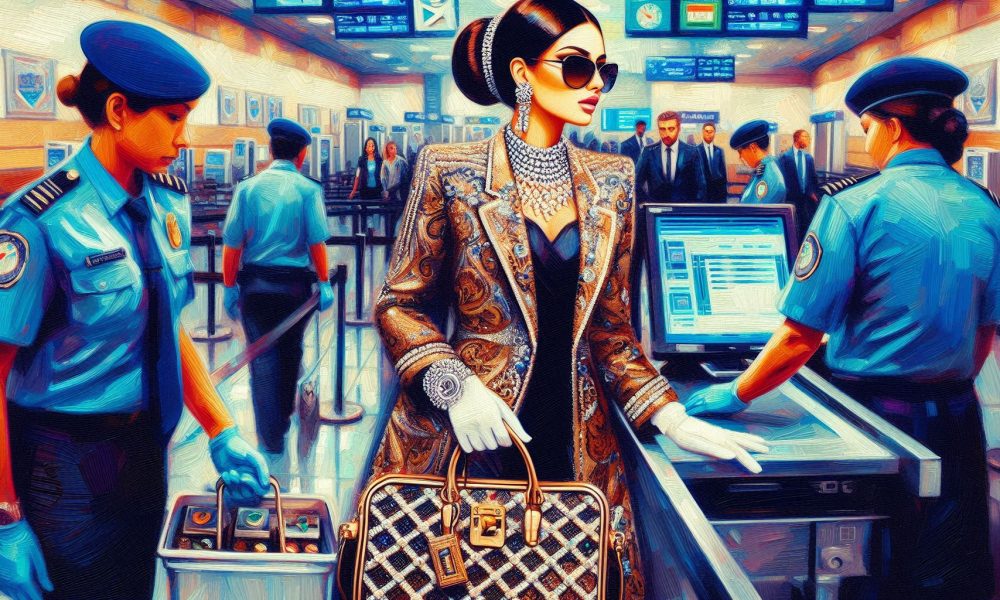
Advanced scanners, random searches, and tougher enforcement are making certain hubs stand out for all the wrong reasons, as record delays hit US airports.
WASHINGTON, DC, April 7, 2026.
The worst airports in 2026 are not always the ones with the fanciest terminals or the biggest route maps. They are the ones where the checkpoint has started to feel like a pressure chamber.
That pressure comes from two directions at once. First, screening is becoming more identity-focused, with more advanced imaging, more automated verification, and a broader push toward facial matching and touchless ID. Second, the screening system itself has been badly strained, especially in the United States, where the spring 2026 staffing breakdown turned some major checkpoints into hours-long choke points. In its March reporting on the crisis, Reuters described multi-hour lines, missed flights, and what TSA called the longest checkpoint waits in the agency’s history.
That is why some airports feel especially harsh right now. It is not just that the lines are long. It is that the entire experience feels less forgiving. The trays move more slowly. The officer’s questions feel sharper. The random bag check feels more likely. The technology feels deeper. The room feels tighter. A routine trip starts to feel like a test.
The new airport stress is part technology, part collapse.
The traveler experience in 2026 is being reshaped by a strange collision. Airports are investing in faster, smarter screening tools at the exact moment many hubs are also struggling with staffing pressure, crowding, and backlog.
That means travelers are encountering two realities at once. At some lanes, the process looks more modern than ever. TSA’s Touchless ID rollout is scheduled to reach 65 airports by spring 2026, bringing more facial matching into the checkpoint experience for enrolled passengers. But at the same time, some of those same airports have been forced to manage huge wait-time spikes, absenteeism, and the kind of congestion that makes every pat-down, every secondary search, and every instruction from an officer feel more intense than it would in a calmer setting.
That combination is changing the emotional tone of security. The checkpoint is not just a screening zone anymore. It is a place where technology, staffing shortages, and traveler anxiety are colliding in public.
Atlanta feels like the stress-test capital.
If one airport best symbolizes the pressure of 2026, it may be Hartsfield-Jackson Atlanta International.
Atlanta is already a giant by volume, which means any crack in checkpoint operations gets felt fast. During the March disruption, it repeatedly showed up in national reporting as one of the places with the highest TSA absentee rates. At one point, according to Reuters and Homeland Security figures, Atlanta’s absence rate topped 30%. Even after pay resumed and conditions began improving nationally, Atlanta still had one of the highest reported absence levels.
That matters because Atlanta is the sort of hub where the checkpoint never really gets a break. Business traffic, family traffic, connecting traffic, international traffic, it all runs through the same giant system. When staffing weakens there, the feeling of intensity spreads instantly. Travelers do not just see a line. They see a line inside one of the busiest airports in the world, and they know that one bad delay can cascade into a missed connection, a lost seat, or a ruined itinerary.
Atlanta in 2026 has become the airport where screening feels less like a routine inconvenience and more like an operational stress test.
Houston became the visual symbol of the meltdown.
If Atlanta represented scale, Houston represented spectacle.
Houston Hobby became the airport that made the crisis look real to the broader public because the waits there were so punishing. Reuters reported that Hobby hit average security waits of around three to three-and-a-half hours during the March crunch. George Bush Intercontinental was also flagged for longer-than-normal lines, and both Houston airports were later cited among the locations with some of the highest absence levels.
That kind of delay changes traveler behavior immediately. People arrive far earlier. They become more tense before they even hit the lane. Families with children stop treating airport arrival times as a suggestion and start treating them as survival math. Every extra search feels more aggravating because the traveler knows the line behind it is already punishing.
Houston also illustrates another truth about intense screening in 2026. The harshest-feeling airports are not always the ones with the most visibly aggressive officers. They are often the ones where travelers are funneling through a weakened system that is still trying to enforce a very high-security standard. The more stressed the system becomes, the more every bag pull, every scanner stop, and every random check feels amplified.
JFK feels harsher because the checkpoint is only part of the gauntlet.
John F. Kennedy International Airport stands out for a different reason.
JFK is not only a TSA story. It is also a border, customs, and international travel story. During the March disruption, Reuters reported that JFK had one of the highest absentee rates in the country. But even outside the staffing crisis, JFK already carried a harder edge because the traveler there often feels like he is moving through multiple scrutiny layers, domestic security screening, international departure complexity, customs and border re-entry issues, and the general intensity that comes with one of the country’s most important global gateways.
That layered scrutiny matters. A traveler at JFK is more likely to be thinking about document consistency, electronics, customs declarations, secondary questioning, and re-entry procedure, not just whether a carry-on gets flagged. The airport feels harsher because the entire journey feels more official.
That is also why the wider conversation around the US biometric exit program matters so much. At major international airports, the line between ordinary travel and identity verification is getting thinner. A traveler is no longer just being screened for prohibited items. Increasingly, he is also being processed as a person whose movement and identity are part of a larger security picture.
At JFK, travelers can feel that shift more clearly than almost anywhere else.
New Orleans became the spring-break warning shot.
Louis Armstrong New Orleans International Airport may not have Atlanta’s size or JFK’s global profile, but in 2026, it became one of the clearest warning shots of what happens when a mid-sized airport gets overwhelmed at the wrong moment.
During the March surge, the airport warned travelers to arrive at least three hours early, and Reuters described lines snaking through the terminal and even out toward a parking area. That image mattered because it made the screening crisis look less like a big-hub inconvenience and more like a national breakdown.
New Orleans also helps explain why some airports suddenly feel harsher than their reputation suggests. It is not always about long-term institutional toughness. Sometimes an airport becomes intense because demand spikes, staffing drops and the physical layout is simply not built to absorb that combination gracefully. Once that happens, every extra instruction from security feels sharper, because the line is visibly failing around it.
In other words, New Orleans became intense not because it was trying to project power, but because the screening system lost its margin for error.
The airports that feel worst tend to share the same traits.
The hubs where security feels most intense in 2026 generally have three things in common.
First, they are handling enormous passenger volume or major seasonal surges. Second, they sit at the intersection of multiple forms of scrutiny, TSA screening, customs, document verification, random secondary inspection, and identity-focused technology. Third, they have been exposed to staffing or infrastructure stress that turns ordinary screening into a harsher public experience.
That is why the list is not random. Atlanta, Houston, JFK, and New Orleans all show different versions of the same broader problem. Travelers are moving through systems that are being asked to be both more secure and more efficient at the same time, even when staffing and crowd control are not strong enough to make that balance feel smooth.
The result is an airport mood shift. People feel watched more closely. They feel rushed and delayed at the same time. They feel that the checkpoint has become less about getting through and more about surviving it without losing time, temper, or paperwork.
Advanced screening is also changing the psychology of travel.
Even when lines are not catastrophic, the technology itself is changing how travelers experience certain airports.
Touchless identity programs, advanced scanners, and deeper forms of traveler verification make screening feel more exacting, even if the stated goal is efficiency. For some passengers, that creates reassurance. For others, it creates a low-grade feeling that the trip has become more invasive and less human.
That psychological shift is one reason why broader conversations about lawful anonymous travel have become more heated. People are not only reacting to longer waits. They are reacting to the sense that the checkpoint now wants more from them than bags and boarding passes. It wants identity confidence. It wants a cleaner match among the person, the document, and the system, reading all three.
That is a profound change from the older airport model, where the main anxiety was whether you packed something banned. In 2026, the anxiety is increasingly about whether the checkpoint itself has become a deeper identity filter.
The airport of 2026 feels less like transit and more like triage.
That is the bigger story behind the worst hubs this year.
The harshest airports are not only the ones with the longest lines. They are the ones where technology, crowding, staffing weakness, and enforcement intensity all stack on top of each other. Atlanta feels brutal because scale magnifies every crack. Houston felt brutal because the delays became absurd. JFK feels brutal because it combines screening with international scrutiny. New Orleans felt brutal because the pressure visibly overwhelmed the building itself.
For travelers, the lesson is simple and unpleasant. The checkpoint is no longer a predictable preflight ritual. At the wrong airport, on the wrong day, it can become the most stressful part of the trip.
And in 2026, more travelers are finding that out the hard way.




