
Market Overview
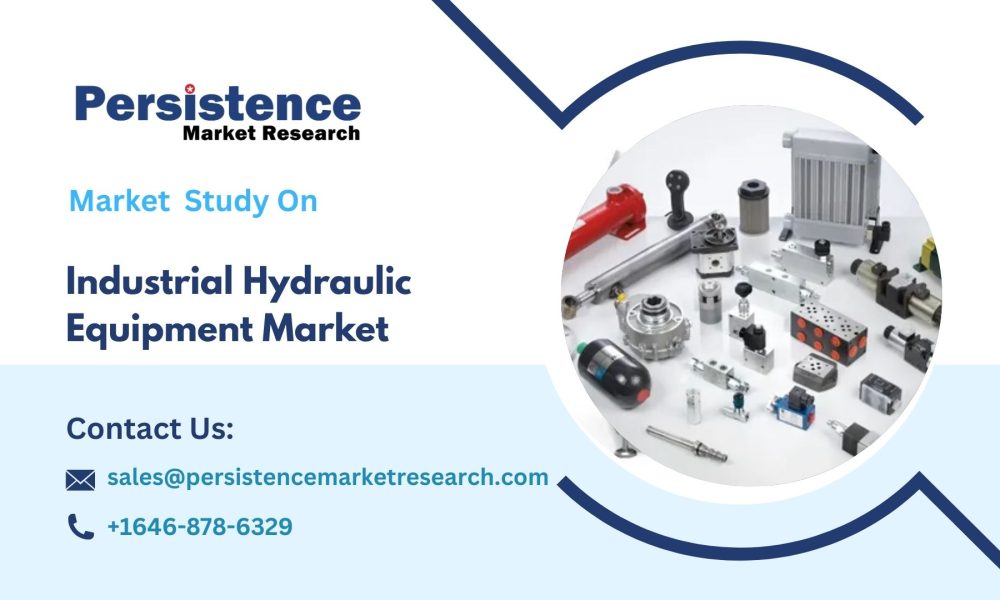
The global industrial hydraulic equipment market is poised for robust growth as industries worldwide increasingly rely on hydraulic systems for efficiency, precision, and durability. Hydraulic equipment—including pumps, motors, cylinders, and valves—forms the backbone of material handling, construction machinery, industrial automation, and energy applications. The market is projected to rise from US$ 28.5 billion in 2024 to US$ 40.6 billion by 2031, reflecting a CAGR of 5.2% during the forecast period. Rapid industrialization in emerging economies, coupled with the growing integration of advanced hydraulics in manufacturing and heavy machinery, is driving this growth.
Among the different product segments, hydraulic pumps hold the largest market share, supported by their widespread use across construction, mining, and manufacturing. Meanwhile, hydraulic cylinders and valves are experiencing rising demand, particularly in material handling and process industries. Regionally, Asia-Pacific leads the market, thanks to its thriving manufacturing hubs in China, India, Japan, and South Korea. The region’s expanding construction sector, coupled with government infrastructure investments and a strong supply chain network, cements its position as the dominant market.
Key Highlights from the Report
• The global industrial hydraulic equipment market is expected to grow at a CAGR of 5.2% from 2024–2031.
• Market valuation is projected to rise from US$ 28.5 Bn in 2024 to US$ 40.6 Bn by 2031.
• Hydraulic pumps dominate the product segment due to their widespread application.
• Asia-Pacific is the largest regional market, driven by industrialization and infrastructure development.
• Growing demand in material handling, construction, and energy sectors fuels expansion.
• Technological advancements in smart hydraulics and energy-efficient systems enhance adoption.
𝐆𝐞𝐭 𝐚 𝐒𝐚𝐦𝐩𝐥𝐞 𝐏𝐃𝐅 𝐁𝐫𝐨𝐜𝐡𝐮𝐫𝐞 𝐨𝐟 𝐭𝐡𝐞 𝐑𝐞𝐩𝐨𝐫𝐭 (𝐔𝐬𝐞 𝐂𝐨𝐫𝐩𝐨𝐫𝐚𝐭𝐞 𝐄𝐦𝐚𝐢𝐥 𝐈𝐃 𝐟𝐨𝐫 𝐚 𝐐𝐮𝐢𝐜𝐤 𝐑𝐞𝐬𝐩𝐨𝐧𝐬𝐞): https://www.persistencemarketresearch.com/samples/34911
Market Segmentation
The industrial hydraulic equipment market is segmented by product type, application, and end-user industry. By product type, the market encompasses hydraulic pumps, motors, cylinders, valves, filters, and accumulators. Hydraulic pumps lead the market due to their essential role in converting mechanical energy into hydraulic power. Cylinders are also seeing robust demand in construction and heavy machinery, while valves remain critical in maintaining pressure regulation and fluid control.
By application, the market includes material handling, construction machinery, industrial manufacturing, oil & gas, mining, and energy. Construction machinery accounts for a significant share, driven by rising urbanization and infrastructure projects globally. Material handling applications, such as forklifts and cranes, are also growing as logistics and e-commerce industries expand. Industrial manufacturing, including automotive and aerospace, represents a key application area where precision and durability are paramount.
By end-user industry, sectors such as construction, manufacturing, oil & gas, mining, and energy utilities dominate. The construction sector is the most prominent, driven by investments in smart cities, housing, and transport infrastructure. The oil & gas and mining sectors continue to adopt hydraulic equipment for their durability and ability to perform under extreme conditions. Meanwhile, industrial automation is increasingly integrating smart hydraulic systems with electronic controls, fueling demand in advanced manufacturing settings.
Regional Insights
Asia-Pacific remains the leading regional market, with China, India, and Japan driving demand. China is a key hub for both production and consumption, benefiting from massive construction projects and a robust manufacturing sector. India’s infrastructure development initiatives and “Make in India” campaign have also boosted adoption of hydraulic systems. Japan and South Korea continue to invest in advanced automation, further strengthening the region’s dominance.
North America is another significant market, driven by technological innovation and demand from construction, aerospace, and defense industries. The U.S. leads the region, with companies increasingly adopting energy-efficient and IoT-enabled hydraulic systems.
Europe follows closely, with Germany, Italy, and France contributing substantially. The region’s emphasis on energy efficiency, sustainability, and advanced industrial automation fosters the adoption of next-generation hydraulic equipment.
Latin America shows promising growth potential, with Brazil and Mexico being major contributors. Growth here is supported by industrial expansion and infrastructure projects. Meanwhile, the Middle East & Africa are emerging markets, supported by oil & gas projects, mining operations, and growing investments in industrial sectors.
Market Drivers
The industrial hydraulic equipment market is primarily driven by rising demand for heavy machinery in construction and manufacturing. Global infrastructure development, such as roads, bridges, smart cities, and commercial spaces, is fueling demand for hydraulic systems in construction equipment. Additionally, the rapid expansion of the logistics and warehousing sector increases the need for material handling equipment powered by hydraulics. The integration of advanced technologies, such as IoT-enabled monitoring and energy-efficient designs, is also driving adoption, as companies aim to reduce downtime and improve operational efficiency.
Market Restraints
High initial capital investment and maintenance costs pose significant challenges to market growth. Advanced hydraulic equipment often requires skilled technicians for installation and maintenance, which can strain smaller businesses. Additionally, environmental concerns regarding hydraulic fluid leakage and disposal have led to stricter regulations, compelling manufacturers to invest in eco-friendly solutions. Economic fluctuations and volatility in raw material prices, particularly steel and oil, further impact the profitability of manufacturers and slow down adoption in price-sensitive regions.
Market Opportunities
The growing push for smart hydraulics presents a major opportunity. By integrating sensors, predictive maintenance features, and energy-saving technologies, manufacturers can align with Industry 4.0 trends and cater to the demand for digitalized industrial equipment. Emerging economies in Asia, Africa, and Latin America present untapped opportunities, especially as governments invest heavily in infrastructure projects. Additionally, the shift toward sustainable and eco-friendly hydraulic solutions, including biodegradable hydraulic fluids and energy-efficient designs, opens new pathways for market expansion.
Reasons to Buy the Report
• Understand market size, trends, and growth dynamics across industries.
• Identify opportunities in emerging economies and new applications.
• Analyze competitive strategies and innovation among top players.
• Gain insights into technological advancements driving industry transformation.
• Evaluate regional demand patterns and key investment hotspots.
Company Insights
• Bosch Rexroth AG
• Parker Hannifin Corporation
• Eaton Corporation Plc
• Kawasaki Heavy Industries Ltd.
• Danfoss Power Solutions
• KYB Corporation
• Nachi-Fujikoshi Corp.
• HYDAC International GmbH
• Wipro Infrastructure Engineering
• Bucher Hydraulics GmbH
Recent Developments
In 2023, Parker Hannifin Corporation launched a new series of energy-efficient hydraulic pumps designed to reduce energy consumption in industrial machinery by up to 20%.
In 2024, Bosch Rexroth AG introduced an IoT-enabled smart hydraulic system aimed at predictive maintenance and real-time monitoring in manufacturing applications.
Conclusion
The global industrial hydraulic equipment market is on a steady growth trajectory, projected to expand from US$ 28.5 billion in 2024 to US$ 40.6 billion by 2031, at a CAGR of 5.2%. Growing demand for hydraulic pumps, cylinders, and valves across material handling, construction, and industrial manufacturing is driving this momentum. While high costs and environmental concerns remain hurdles, the rise of smart, energy-efficient, and eco-friendly hydraulic systems creates significant opportunities. With Asia-Pacific leading the global market and other regions catching up through innovation and infrastructure development, industrial hydraulic equipment is set to play a pivotal role in shaping the future of industrial operations worldwide.
𝐑𝐞𝐥𝐚𝐭𝐞𝐝 𝐑𝐞𝐩𝐨𝐫𝐭𝐬:
Shiplifts Transfer Systems Market
Electric Overhead Travelling Crane Market




