
The global hyperspectral imaging (HSI) for seal integrity market is set for remarkable growth, fueled by rising demand for safer, smarter, and more sustainable packaging solutions across the food, pharmaceutical, and medical device industries. Valued at USD 2.9 billion in 2025, the market is forecast to reach USD 6.1 billion by 2035, reflecting a 106.9% expansion and a steady 7.5% CAGR.
By 2030, the market is expected to cross USD 4.1 billion, driven by widespread adoption of non-destructive, inline inspection systems in packaging lines. From 2030 to 2035, growth will accelerate to USD 6.1 billion, supported by AI-powered imaging platforms, edge-processing capabilities, and regulatory compliance demands.
Why Hyperspectral Imaging Matters for Seal Integrity
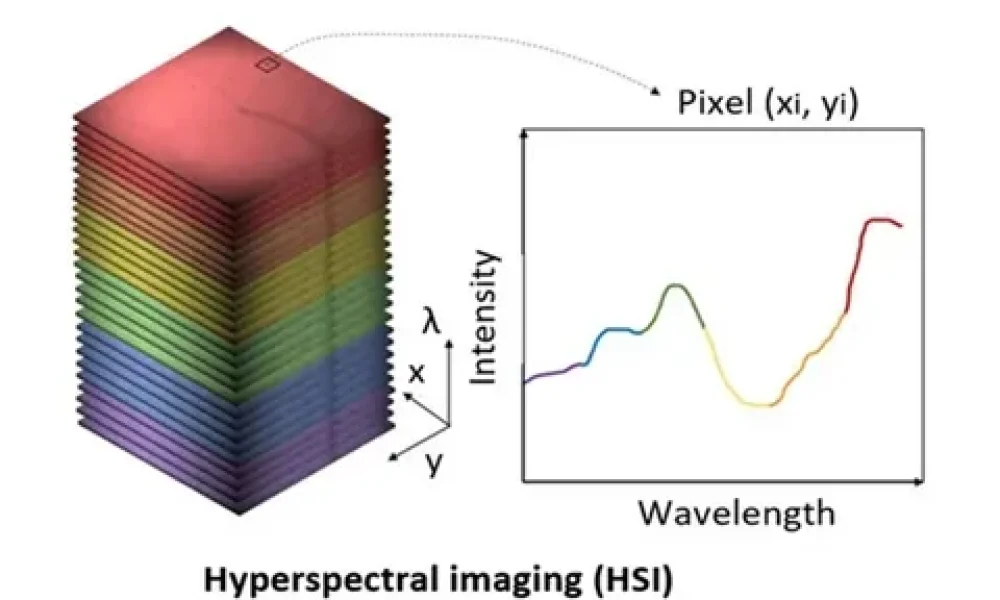
As supply chains face rising regulatory scrutiny and consumer expectations, hyperspectral imaging is emerging as a game-changing quality assurance tool. Unlike traditional inspection methods, hyperspectral cameras analyze packaging seals across hundreds of spectral bands, detecting even the smallest defects—such as leaks, wrinkles, delamination, or contamination—without damaging the product.
Full Market Report available for delivery. For purchase or customization, please request here:
https://www.futuremarketinsights.com/reports/sample/rep-gb-23033
This makes HSI vital in industries like:
Food & Beverage – to validate modified atmosphere packaging (MAP) and vacuum-sealed products.
Pharmaceuticals – ensuring sterility and compliance with FDA and GMP standards.
Medical Devices – verifying seal integrity in sterile barrier systems.
“Packaging integrity is no longer just about protecting products—it’s about protecting consumers and ensuring trust. Hyperspectral imaging enables both,” explained a senior packaging engineer from a European food processor.
Market Dynamics: First Wave Hardware, Second Wave AI
Between 2020 and 2024, the market expanded from USD 2.2 billion to USD 2.7 billion, dominated by hardware-centric adoption. Leading manufacturers such as Engilico, Specim, Headwall Group, and Cubert GmbH built systems tailored for high-speed inspection of trays, pouches, and blister packs.
From 2025 to 2030, short-wave infrared (SWIR) systems will drive growth, offering high-resolution detection of defects in flexible and rigid packaging. Hardware will continue to play a major role, with inline conveyor-based systems capturing 51.2% of the market in 2025.
However, from 2030 to 2035, the growth focus will shift toward AI analytics, subscription-based software, and predictive maintenance modules, which are expected to account for over 40% of revenues by 2035. New entrants and startups are already disrupting the landscape with cloud-integrated platforms, edge-AI algorithms, and open-architecture systems.
Key Market Segments
Spectrum Range: Near-infrared (NIR) dominates with 46.1% share in 2025, offering superior penetration for seal defect detection.
Applications: Seal defect detection remains primary, capturing 43.2% of revenues in 2025, as sustainability-linked packaging requires precise quality checks.
End Use: The food & beverage industry leads with 51.5% market share in 2025, driven by FSMA and global food safety mandates.
Systems: Inline conveyor-based solutions top the segment, integrating seamlessly into high-speed production lines.
Regional Insights: Global Adoption on the Rise
The market is seeing strong adoption worldwide, with North America leading and the United States growing fastest at 8.4% CAGR due to FDA mandates and food safety priorities.
United States: Pharma, food, and medical device firms are replacing conventional systems with HSI-enabled inspection.
United Kingdom: Growth at 7.2% CAGR, fueled by compliance with MHRA and FSA standards and SME-focused compact solutions.
India: Expanding pharmaceutical exports and food safety audits are pushing adoption at 7.2% CAGR.
China: At 6.4% CAGR, domestic food safety campaigns and e-pharma packaging are fueling rapid uptake.
Germany: Pharma and meat packaging industries are integrating HSI within smart factories, growing at 6.3% CAGR.
Japan: High-tech pharma and functional food packaging drive growth at 8.1% CAGR.
South Korea: Export-focused industries push adoption at 6.4% CAGR, emphasizing inline automation.
Competitive Landscape: Leaders and Challengers
The market is moderately fragmented, with established global leaders competing alongside agile new entrants.
Headwall Group and Specim – dominating with advanced hyperspectral cameras, AI integration, and real-time defect recognition.
Engilico and Cubert GmbH – known for inline and offline inspection solutions, tailored for trays, blister packs, and medical pouches.
Middleton Spectral Visualization (MSV) – specializing in spectral visualization platforms for high-precision applications.
At the same time, machine vision startups and automation providers are entering with plug-and-play modules, open APIs, and compact inline retrofits, targeting SMEs and cost-sensitive markets.
Recent milestones include:
2025: Engilico launched its new HyperScope® inline seal inspection system at IFFA 2025.
2024: Specim was awarded Photonics Finland Company of the Year for its innovations in photonics and hyperspectral imaging.
These moves highlight how both established and emerging players are reshaping the market by marrying precision hardware with AI-driven intelligence.
Get the Report Brochure Now:
https://www.futuremarketinsights.com/reports/brochure/rep-gb-23033
Opportunities and Challenges
Opportunities:
AI-powered defect classification reduces false alarms and improves reliability.
Sustainability-linked inspection ensures recyclable and bio-based packaging is defect-free.
Subscription-based models for analytics and predictive maintenance offer recurring revenue opportunities.
Challenges:
High capital costs of hyperspectral cameras and tunable filters.
Data complexity, requiring skilled analysts and robust computing infrastructure.
Integration hurdles in legacy packaging lines.
Despite these challenges, demand is accelerating as regulatory compliance becomes stricter and zero-defect packaging increasingly becomes an industry standard.
Looking Ahead: From Hardware to Intelligent Ecosystems
By 2035, hyperspectral imaging will evolve from a niche inspection tool into an intelligent inspection ecosystem. Hardware precision will remain important, but true differentiation will come from:
Adaptive machine learning models that improve with every inspection cycle.
Predictive maintenance systems that prevent failures before they happen.
Open-architecture platforms enabling cross-industry integration.
As packaging materials become more complex and consumer safety expectations intensify, hyperspectral imaging for seal integrity will no longer be optional—it will be indispensable. Both global leaders and emerging innovators are now racing to deliver solutions that combine speed, precision, and intelligence, ensuring safety and sustainability remain at the heart of modern packaging.



