
Introduction
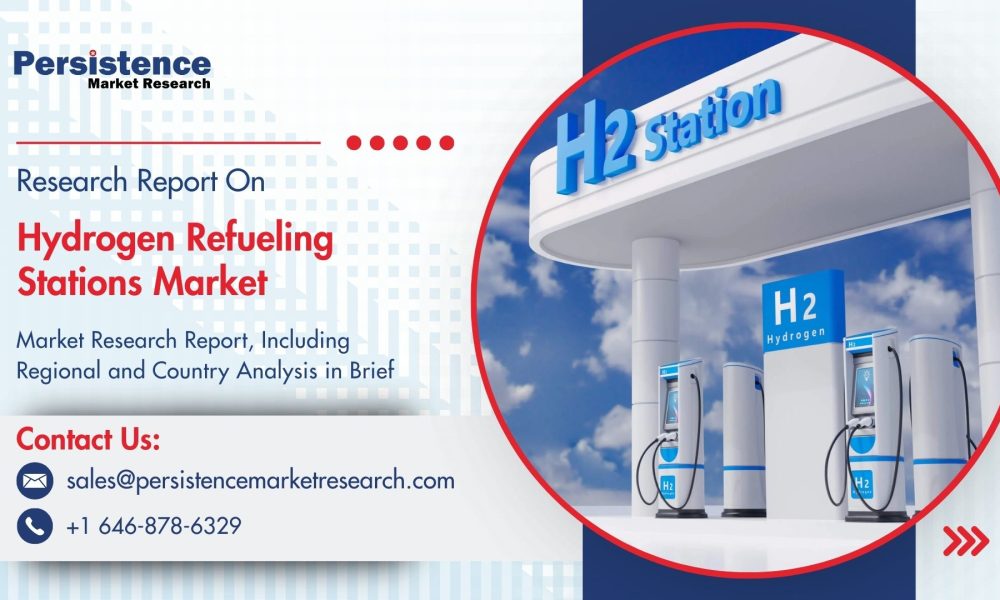
The hydrogen refueling stations (HRS) market has emerged as a critical component in the global transition toward clean energy and sustainable mobility. As governments and industries push for reduced carbon emissions and alternative energy adoption, hydrogen fuel cells have gained significant attention as a promising solution for both passenger and commercial vehicles. Hydrogen refueling stations act as the backbone of this transition, enabling the expansion of hydrogen-powered transport infrastructure.
This report provides a comprehensive analysis of the hydrogen refueling stations market, exploring its growth drivers, challenges, technological advancements, market trends, and regional dynamics. With hydrogen playing a central role in the clean energy ecosystem, the development of robust refueling infrastructure is essential for accelerating fuel cell vehicle (FCV) adoption worldwide.
Market Projections and Forecast
According to Persistence Market Research’s projections, the hydrogen refueling stations market is set to grow significantly in the coming years. The market size is expected to be valued at US$ 968.4 million in 2025 and is projected to reach US$ 4,909.8 million by 2032, expanding at a compound annual growth rate (CAGR) of 26.1% during the forecast period (2025–2032).
The surge in demand is largely attributed to increasing investments in hydrogen infrastructure, rising government support for green hydrogen, and the growing adoption of hydrogen fuel cell vehicles across both passenger and commercial fleets. Asia-Pacific, particularly Japan, South Korea, and China, is expected to lead the market due to strong policy frameworks and technological advancements in hydrogen mobility.
Get a Sample PDF Brochure of the Report (Use Corporate Email ID for a Quick Response): https://www.persistencemarketresearch.com/samples/35144
Market Dynamics
Drivers of Market Growth
- Rising Adoption of Hydrogen Fuel Cell Vehicles (FCVs):
The growing popularity of hydrogen-powered vehicles, including buses, trucks, and passenger cars, is a major driver of HRS demand. FCVs offer longer driving ranges and faster refueling times compared to battery electric vehicles (BEVs), making them highly attractive for long-haul transport and heavy-duty applications. - Government Support and Investments in Hydrogen Infrastructure:
Governments worldwide are implementing policies and offering incentives to promote hydrogen as part of their decarbonization strategies. Subsidies, funding programs, and public-private partnerships are fueling the establishment of hydrogen refueling networks across major regions. - Technological Advancements in Hydrogen Production and Storage:
Advances in hydrogen production methods, particularly green hydrogen through electrolysis powered by renewable energy, are boosting the availability of sustainable hydrogen. Improvements in storage technologies and high-pressure dispensing systems are also making hydrogen refueling safer and more efficient. - Decarbonization of the Transportation Sector:
The transportation industry is under increasing pressure to reduce carbon emissions. Hydrogen provides a clean alternative to fossil fuels, and hydrogen refueling stations are key to enabling its adoption, especially for sectors where electrification alone is insufficient.
Challenges in the Market
- High Infrastructure Development Costs:
The establishment of hydrogen refueling stations requires substantial capital investment in production, compression, storage, and dispensing technologies. These high upfront costs pose a barrier to widespread adoption, especially in regions with limited hydrogen infrastructure. - Limited Refueling Infrastructure:
Compared to conventional fuel stations and even EV charging infrastructure, hydrogen refueling networks remain sparse. The lack of widespread availability creates range anxiety among consumers and hampers the growth of hydrogen-powered vehicles. - Complexity of Hydrogen Transportation and Storage:
Hydrogen has unique handling requirements due to its low energy density and high flammability. This makes its storage, transportation, and dispensing more complex and costly compared to other fuels. - Competition from Battery Electric Vehicles (BEVs):
While hydrogen FCVs offer advantages, the rapid growth of BEVs and charging infrastructure presents a competitive challenge. BEVs currently have higher market penetration and greater consumer acceptance, requiring hydrogen technology to differentiate itself further.
Market Trends and Technological Innovations
- Expansion of Public-Private Partnerships:
Collaborative initiatives between governments, automotive manufacturers, and energy companies are driving large-scale deployment of hydrogen refueling infrastructure. Partnerships are crucial for sharing costs and accelerating network expansion. - Shift Toward Green Hydrogen:
The increasing focus on green hydrogen production through renewable energy is shaping the HRS market. As governments emphasize sustainability, stations powered by green hydrogen are becoming central to long-term energy strategies. - Integration of Smart and Digital Technologies:
Hydrogen refueling stations are incorporating IoT and digital solutions to improve efficiency, monitor fuel availability, and provide real-time data to operators and users. This enhances operational performance and ensures better user experiences. - Growth of Heavy-Duty Hydrogen Applications:
While hydrogen adoption began with passenger cars, the technology is gaining significant traction in heavy-duty applications such as trucks, buses, and trains. This shift is driving demand for larger and more advanced refueling stations.
Hydrogen Refueling Stations Market Segmentation
By Station Size:
- Small (Up to 200 kg/day)
- Medium (201–500 kg/day)
- Large (Above 500 kg/day)
By Vehicle Type:
- Passenger Cars
- Buses
- Trucks
- Others (trains, forklifts, etc.)
By Supply Method:
- On-Site Production
- Off-Site Delivery
By Pressure:
- 350 Bar
- 700 Bar
By Region:
- North America
- Europe
- Asia-Pacific
- Rest of the World
Regional Analysis
North America
North America is expected to see substantial growth in hydrogen refueling stations, driven by increasing government initiatives and the presence of automotive giants investing in fuel cell technologies. California remains the hub for hydrogen infrastructure in the U.S., with ongoing expansion plans. Canada is also investing heavily in hydrogen as part of its clean energy roadmap.
Europe
Europe is at the forefront of hydrogen adoption, with the European Union launching the “Hydrogen Strategy for a Climate-Neutral Europe.” Countries such as Germany, France, and the U.K. are leading the development of hydrogen refueling networks, supported by strong policies and funding for green hydrogen projects.
Asia-Pacific
Asia-Pacific is projected to dominate the global HRS market, with Japan, South Korea, and China leading the charge. Japan’s “Hydrogen Society” initiative and South Korea’s hydrogen roadmap are accelerating large-scale infrastructure deployment. Meanwhile, China’s strong manufacturing base and investment in hydrogen vehicles are fueling demand for refueling stations.
Key Companies Profiled in the Report
- Air Liquide
- Linde plc
- Air Products and Chemicals, Inc.
- Nel ASA
- Iwatani Corporation
- Hydrogenics (Cummins Inc.)
- Shell plc
- TotalEnergies SE
- Plug Power Inc.
- ITM Power
- H2 Mobility Deutschland GmbH
- FirstElement Fuel, Inc.
Future Outlook
The future of the hydrogen refueling stations market is highly promising, with significant opportunities across developed and emerging economies. As hydrogen fuel cell technology gains momentum, the demand for robust refueling infrastructure will continue to grow. Government policies, green hydrogen production, and collaborative industry efforts will be key enablers of this growth.
Advancements in hydrogen storage, safety systems, and large-capacity refueling stations are expected to shape the industry, making hydrogen a viable and scalable clean fuel alternative. With heavy-duty vehicles and public transportation increasingly turning to hydrogen solutions, the market for hydrogen refueling stations is set to expand at an accelerated pace.
Conclusion
The hydrogen refueling stations market is undergoing rapid transformation, fueled by the global shift toward sustainable mobility and decarbonization. Despite challenges such as high infrastructure costs and competition from BEVs, the market holds immense growth potential. With strong policy support, technological advancements, and increasing demand for clean transportation, hydrogen refueling stations are poised to become a critical pillar of the global energy transition.
As investments continue to rise and collaborative initiatives expand, the hydrogen refueling stations market will play a central role in enabling a zero-emission future, supporting the adoption of hydrogen-powered vehicles across both consumer and commercial segments.
Explore the Latest Trending Research Reports:




