
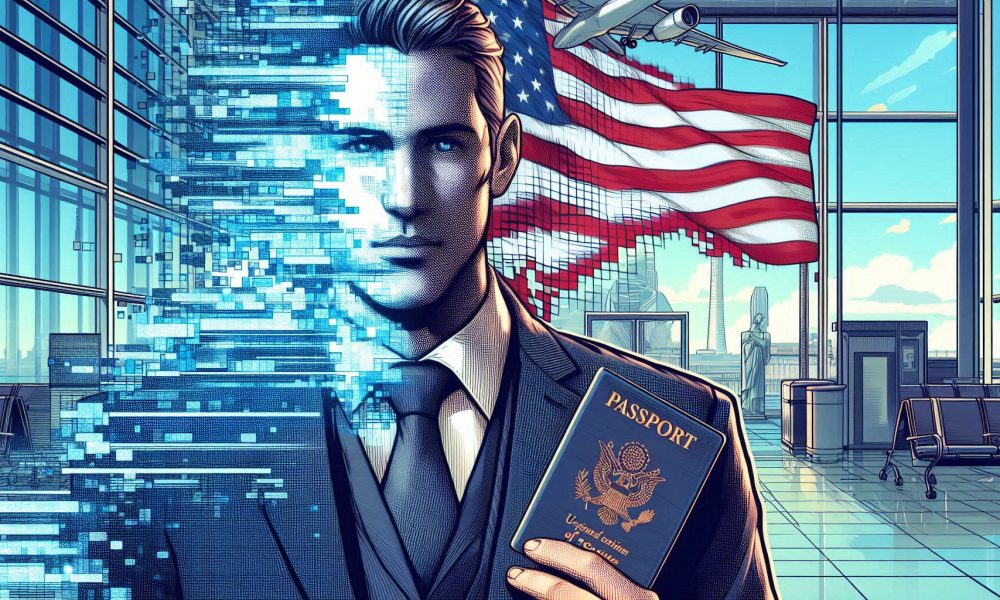
The Lasting Legacy of a Single Day That Reshaped International Mobility and Redefined Border Security
VANCOUVER, British Columbia — June 5, 2025 — On September 11, 2001, the world watched in horror as coordinated terrorist attacks struck the United States, killing nearly 3,000 people and devastating both lives and global confidence. But while the tragedy unfolded in real time, its aftershocks would ripple far beyond the rubble of New York City and the Pentagon. Over two decades later, the 9/11 attacks remain the single most transformative event in the history of global visa-free travel.
Before that morning, international mobility was primarily defined by diplomacy and trust. Citizens of democratic nations could move freely among one another. Afterward, security, suspicion, and surveillance became the new gatekeepers. The attack didn’t just target buildings—it struck at the very foundation of global openness, leading to an era where borders became digital, data-driven, and deeply politicized.
This press release by Amicus International Consulting examines how 9/11 marked the end of the golden age of visa-free travel, triggered the rise of biometric controls, led to the creation of government databases that continue to profile travellers today, and fostered a culture of travel fear that persists into 2025.
The World Before 9/11: An Era of Travel Trust
In 2000, just a year before the attacks, over 45% of the global population held passports that granted them broad visa-free access to dozens of countries. American, British, Japanese, and German passport holders could enter most countries without advanced screening. Even many developing nations enjoyed reciprocal visa waivers for short-term stays.
The U.S. Visa Waiver Program (VWP) has expanded to include 29 countries.
The Schengen Zone allowed internal travel without checkpoints across Europe.
Asia-Pacific Economic Cooperation (APEC) nations discussed simplified travel lanes for executives and diplomats.
Travel was viewed as a diplomatic tool and a right of global citizenship, rather than a threat.
How the 9/11 Hijackers Changed Everything
The 9/11 hijackers, mostly Saudi nationals, entered the U.S. legally. Several had overstayed their visas. Others exploited loopholes in student and tourist visa categories. None were on government watchlists at the time of entry.
This revelation sparked a political firestorm in Washington and around the world. The attack wasn’t just a failure of intelligence—it was perceived as a failure of immigration control. The notion that terrorists could “walk across the border with a backpack” became a rallying cry for reform.
Within a year, nearly every major democracy had rewritten its visa policies.
The U.S. Response: Fortress America
The U.S. led the way in rewriting mobility rules, launching programs that are now standard worldwide:
The Department of Homeland Security (DHS) was created, centralizing border, customs, and immigration enforcement.
The USA PATRIOT Act expanded surveillance powers and introduced the concept of “pre-crime risk assessment.”
The US-VISIT program was launched, requiring the collection of biometrics (fingerprints, photos) from all travellers.
The Electronic System for Travel Authorization (ESTA) became mandatory in 2009 for visa-waiver nationals.
Passenger Name Record (PNR) agreements were signed with the EU, giving U.S. authorities access to airline databases.
The result? Visa-free travel remained in name only. In practice, all travellers became suspects unless proven otherwise.
Case Study: A British Journalist Detained Under ESTA
In 2012, a British reporter travelling to New York for a climate summit was detained for secondary screening at JFK after a visa system flagged his tweets criticizing U.S. drone strikes. Though his passport allowed visa-free entry under ESTA, he was interrogated for four hours and denied entry under “security grounds.”
He had committed no crime. His profile matched emerging patterns of interest.
The Global Domino Effect: How Other Nations Reacted
Following America’s lead, many countries tightened their borders:
The EU created VIS, a visa information system storing biometric data for Schengen applicants.
Australia and Canada adopted Electronic Travel Authorization (ETA) systems.
The UK introduced e-borders, collecting advanced passenger data for all arrivals.
Singapore and Israel digitized watchlists and extended screening to social media and digital histories.
Even countries with liberal policies rolled back visa exemptions, fearing infiltration by extremist networks or criticism from Western allies.
From People to Profiles: The Rise of the Traveller Risk Score
One of the quietest but most significant legacies of 9/11 is the use of pre-criminological modelling in border control. Algorithms, databases, and machine learning systems now assign “risk scores” to travellers based on:
Travel history
Name matches with watchlists
Digital activity
Nationality and ethnicity
Visa overstay records
This has led to de facto visa denials without formal rejection. A passport holder may appear eligible for visa-free entry, but their data profile may quietly trigger secondary screening, delays, or bans.
Case Study: Syrian-German Citizen Blocked from Brazil
In 2020, a Syrian-born German national with a German passport attempted to fly to São Paulo for a medical conference. Brazil allows visa-free travel for German citizens. However, his place of birth triggered an AI-driven alert via the new Interpol Passenger Database. Without explanation, he was denied boarding at Frankfurt Airport.
His appeal to both German and Brazilian authorities failed. The digital risk score spoke louder than his passport.
Biometrics and Surveillance: The 9/11 Tech Legacy
Biometric data collection was rare before 2001. Today, it is ubiquitous—thanks to policies spurred by the 9/11 Commission.
Facial recognition is used in 43% of major airports globally.
Iris scanning is mandatory in the United Arab Emirates (UAE), India, and certain European countries.
Fingerprints are collected by almost every country issuing visas.
Body scanners are used for all outbound passengers from U.S. airports.
These technologies were sold to the public as security upgrades, but they have also enabled mass surveillance and data profiling at an unprecedented scale.
Travel as a Privilege, Not a Right
Perhaps the most insidious impact of 9/11 is ideological. Since 2001, travel has been recast not as a human right, but as a privilege granted by the state. Governments now argue that they have the right to deny entry based solely on suspicion, even to citizens.
The U.S. has barred re-entry for naturalized citizens due to “security reviews.”
Australia has cancelled passports of citizens travelling to “danger zones.”
The UK has stripped citizenship without trial under the 2014 Immigration Act.
This weaponization of mobility would have been politically unthinkable before 9/11.
Darknet Alternatives: The Rise of Synthetic Travel Solutions
In response to these restrictions, a market has emerged for counterfeit passports, synthetic identities, and dark web travel documents, often funded by cryptocurrency.
As revealed in previous Amicus investigations:
Synthetic Schengen visas are sold for $3,000 to $6,000.
Fake passports with embedded biometric chips are now available from Eastern Europe for $ 10,000 or more.
“Clean identities” for visa reapplication cost $15,000, including social media, academic history, and shell employment.
These tactics—illegal and risky—have been adopted out of desperation by refugees, dissidents, and even executives shut out of traditional travel systems.
Amicus International: Legal Paths Around Post-9/11 Visa Barriers
Amicus International Consulting provides legal alternatives to post-9/11 travel restrictions for clients facing visa denials, risk scoring, or watchlist blocks.
Solutions include:
Second Citizenship Through Investment – Caribbean nations like Dominica, Grenada, and Antigua offer passports with broader visa access.
Right of Blood Citizenship – Ancestry-based citizenships in Ireland, Italy, and Poland for qualifying applicants.
Golden Visas – Residency-by-investment options in Portugal, Malta, and Panama.
Digital Identity Audit – For those flagged by pre-crime AI tools or biometrics.
Diplomatic Solutions – For high-risk clients seeking asylum, immunity, or NGO representation.
All Amicus solutions are grounded in international law and human rights frameworks.
Case Study: Whistleblower Gains Safe Passage with Second Citizenship
In 2019, a whistleblower from East Africa, facing political persecution, applied for a visa to Europe and was repeatedly denied. Through Amicus, he obtained citizenship in St. Kitts and Nevis within four months via legal investment. Under this new identity, he travelled safely to Europe, where he now resides and works for an international NGO.
His passport was more than a document—it was a second chance.
Conclusion: The Freedom Lost and the Path Forward
9/11 transformed travel from a logistical function to a geopolitical security issue. Borders are now guarded not just by guards, but by databases, algorithms, and suspicion.
Visa-free access still exists—but it’s conditional, fragile, and subject to unseen filters. The idea that you are free to move because of your passport is no longer a guarantee.
Amicus International urges governments to reconsider the human cost of over-securitization. It encourages travellers to explore legal, secure options to maintain their freedom of movement in a world increasingly designed to restrict it.
Contact Information
Phone: +1 (604) 200-5402
Email: [email protected]
Website: www.amicusint.ca




