
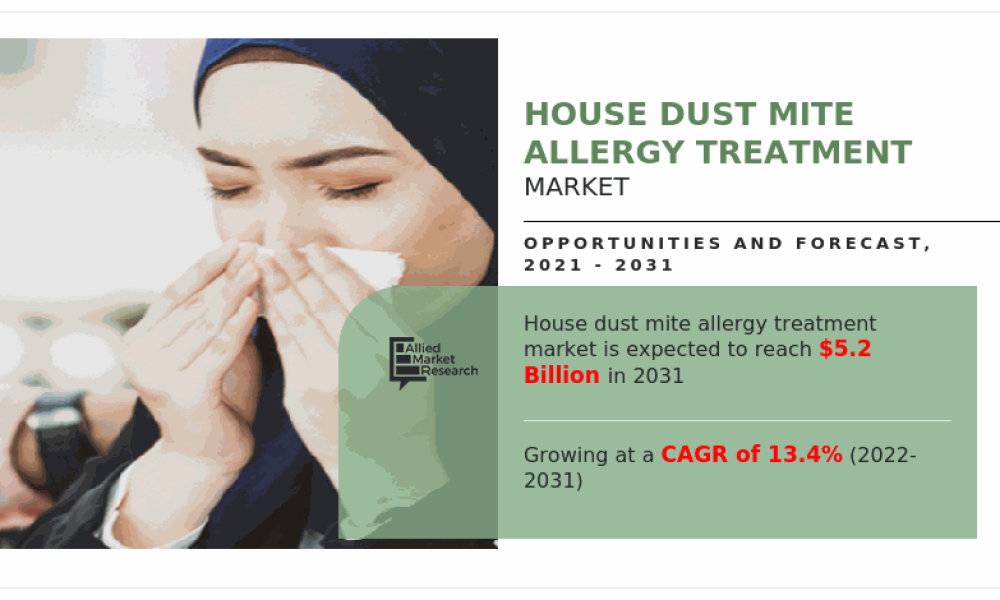
The global house dust mite allergy treatment market is witnessing exceptional growth, driven by a surge in allergic disease cases, increasing awareness about allergens, and innovations in immunological therapies. According to Allied Market Research, the market was valued at $1.5 billion in 2021 and is projected to grow to $5.2 billion by 2031, registering a striking CAGR of 13.4% from 2022 to 2031.
Key Growth Drivers
Several factors are contributing to this rapid expansion:
✅ Rising prevalence of allergic diseases, especially allergic rhinitis and asthma linked to house dust mites.
✅ Increased demand for immunological products such as antihistamines and monoclonal antibodies.
✅ Boost in R&D efforts and funding from both private and government organizations for the development of next-gen allergy drugs.
✅ Growing public awareness and educational initiatives about allergens and treatments.
Impact of COVID-19
The pandemic had a positive impact on the market:
With lockdowns forcing people indoors, exposure to indoor allergens like dust mites increased.
This heightened exposure triggered more allergy-related symptoms, amplifying demand for treatment options.
Market Segmentation Highlights
🧪 By Treatment:
Antihistamines and immunotherapy remain the cornerstone treatments for managing house dust mite allergies.
Ongoing R&D is paving the way for novel drugs with fewer side effects and higher efficacy.
💊 By Type:
Prescription-based drugs dominated the market in 2021, accounting for nearly 60% share due to their effectiveness and physician recommendation.
However, over-the-counter (OTC) drugs are expected to grow at the fastest CAGR of 13.6%, driven by growing consumer preference for self-medication and wider drug approvals.
🛍️ By Distribution Channel:
Hospital pharmacies held nearly half of the market share in 2021 and are expected to register the highest CAGR of 13.9%.
This is attributed to rising demand for advanced therapies like monoclonal antibodies and improvements in pharmacy services across hospitals globally.
💉 By Route of Administration:
Both oral and nasal medications are widely used, with ongoing innovations enhancing delivery efficiency and patient comfort.
Regional Insights
🌍 Europe Leads the Market
In 2021, Europe accounted for over two-fifths of the global revenue, driven by:
High prevalence of asthma and rhinitis
Advanced pharmaceutical R&D infrastructure
Presence of major players like Sanofi, Bayer, and GSK
🌏 Asia-Pacific is the Fastest-Growing Region
Expected to grow at a CAGR of 14.4% due to:
Rising awareness about allergic diseases
Increasing healthcare expenditure
Surge in adoption of immunotherapy treatments in countries like China, India, Japan, and South Korea
Leading Market Players
Prominent companies driving innovation and expansion in the market include:
ALK-Abelló A/S
Allergy Therapeutics PLC
Bayer AG
Catalent Pharma Solutions
GlaxoSmithKline Plc.
Johnson & Johnson
Sanofi
Seqirus UK Ltd.
Shionogi & Co., Ltd.
Merz Pharma GmbH & Co. KGaA
These players are heavily investing in clinical trials, novel delivery systems, and combination therapies to strengthen their market position.
Future Opportunities
Rising adoption of sublingual immunotherapy (SLIT) tablets is anticipated to redefine long-term allergy treatment.
Growing focus on personalized allergy care and biologics is expected to open new revenue streams.
Public health initiatives promoting indoor air quality improvement and preventive care will support overall market sustainability.
Market Snapshot
| Metric | Details |
|---|---|
| Market Size (2021) | $1.5 Billion |
| Forecasted Market Size (2031) | $5.2 Billion |
| Growth Rate (CAGR) | 13.4% (2022–2031) |
| Leading Region | Europe |
| Fastest-Growing Region | Asia-Pacific (CAGR 14.4%) |
| Top Treatment Type | Antihistamine & Immunotherapy |
| Major Distribution Channel | Hospital Pharmacy |
Conclusion
The house dust mite allergy treatment market is at a transformative point. With increased environmental exposure, growing awareness, and strong R&D pipelines, the market is expected to flourish globally. Stakeholders investing in biologics, immunotherapies, and OTC innovations stand to gain a competitive edge in the years ahead.




