I. Industry Development
[Samsung (SSNGY) is reportedly developing two smart glasses, expected to launch in 2026 and 2027]
According to tech media reports, Samsung officially entered the XR market this year. Since launching its first product, the Galaxy XR, two smart glasses currently under development by Samsung have gradually surfaced, expected to launch in 2026 (next year) and 2027.
Reports indicate that the smart glasses launching next year will be model SM-O200P, fundamentally different from the Galaxy XR headset’s SM-I model numbers. Sources suggest these glasses will feature photochromic lenses that automatically darken in sunlight, similar to sunglasses, while increasing light transmittance and remaining transparent in well-lit indoor environments.
According to previous rumors, the AI glasses launching next year will likely be a displayless version, while the version with an AR head-up display (HUD) won’t be released until 2027. Therefore, the first pair of glasses to launch should be similar in function and appearance to the Meta Ray-Ban glasses, enabling features such as taking photos, recording videos, listening to music, and making phone calls.
[Google (GOOG) Launches Latest AI Model Gemini 3, to be Immediately Deployed in Profitable Products]
Alphabet’s Google has launched its latest version of its artificial intelligence model, Gemini 3, emphasizing that these new features will be immediately deployed in several profitable products, such as its search engine.
Previously, in a recently released interview, Alphabet CEO Sundar Pichai warned that no company would emerge unscathed if the AI bubble bursts. Pichai acknowledged “irrational factors” in the current AI investment boom and believes the market may be “overreacting.”
[Cloud GPUs Sold Out! Nvidia (NVDA) Reports 60% Net Profit Increase in New Quarter!] Nvidia delivered record sales results and strong guidance on Wednesday, easing concerns about an artificial intelligence bubble that had gripped the market in the past week.
Driven by a continued surge in demand for high-end AI data center chips, the company’s October quarterly sales reached a record high of $57 billion, a 62% increase year-over-year. The company also raised its quarterly forecast, estimating sales at $65 billion, compared to analysts’ previous estimate of $62.1 billion.
During the earnings call, Nvidia CFO Colette Kress reiterated her forecast of $500 billion in revenue from Blackwell and Rubin architecture products, adding that “that number will grow.” In October, Jensen Huang stated in a speech that he expects total sales of the company’s Blackwell series chips and the Rubin series chips, planned for launch next year, to reach $500 billion over the next five quarters.

[Alibaba’s Quark AI Glasses and Alipay Upgrade Cooperation: Exclusive Capabilities like Crosshair Assist Revealed] November 19th news: The cooperation between Alibaba’s Quark AI Glasses and Alipay has been upgraded again. Building upon the existing “look and pay” feature, the two companies will add exclusive capabilities such as crosshair assistance and bone conduction voice pickup, bringing users a more efficient and secure payment experience.
Currently, Quark AI Glasses supports various payment codes, fusion codes, and “tap-to-pay” devices. Sources indicate that Quark AI Glasses and Alipay are expected to continue leveraging their synergistic advantages to expand into broader scenarios such as parking fee payments, QR code bike rides, lifestyle services, and online ordering, and continue to drive in-depth innovation in areas such as AI glasses payment intelligence.

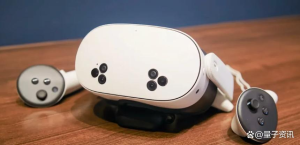
[Amazon’s Quest 3S Drops to Lowest Price Ever, Only $250] According to Amazon’s platform, the Meta Quest 3S will be available at its lowest price ever during Black Friday (November 20th – December 1st). During Black Friday, early bird customers can enjoy a 17% discount, with the 128GB version starting at $250, down from the original price of $300.
[Musk Predicts: “There Will Be 30 to 50 Billion Humanoid Robots on Earth in the Future”]
Musk boldly predicts that “there will be 30 to 50 billion humanoid robots on Earth in the future, 3 to 5 times more than humans!”
Taking Tesla as an example, Musk has repeatedly showcased his company’s humanoid robot, Optimus. This robot possesses a highly flexible hand structure and stable dynamic balance, enabling it to perform complex operations such as assembly, handling, and inspection on factory assembly lines.
Musk’s optimistic vision is that as robots take on more and more production tasks, society will enter an era of “extreme abundance,” where humans will no longer struggle for survival but will instead share the benefits of technological advancements. However, this blueprint has also sparked widespread skepticism.
II. Market Dynamics
【Apple (AAPL) and Sony (SONY): Converging Paths to Vision Pro Spatial Interaction】
In 2023, Apple released the Vision Pro and proclaimed that “the era of spatial computing is coming.” Shortly after its release, most VR/MR developers actively followed suit.
Interestingly, Apple and Sony seem to be exploring the same goal from opposite directions: more natural and immersive spatial interaction. Sony added hand tracking to the PS VR2 in its latest update, moving from “with controllers” to “controller-free”; while Apple supports third-party controllers on the Vision Pro, filling the gap in professional input from “controller-free.”
Industry commentators say that in this context, Apple and Sony’s technological paths almost constitute two branches of the spatial computing industry: one extending from content and interaction systems to hardware, and the other opening up from hardware and haptic systems to content.
Ultimately, they all point to the common trend of multimodal perception integration. Hand tracking, eye-tracking recognition, haptic feedback, and physical interaction are gradually merging to build a more complete human-computer immersive experience system.
[WiMi (WIMI) Adaptive Dynamic Federated Learning Framework: Injecting Strong Momentum into the Secure and Intelligent Boundaries of IoT] In the era of data-driven artificial intelligence, Internet of Things (IoT) devices have deeply penetrated key areas such as industrial manufacturing, smart healthcare, and intelligent transportation. The massive amounts of high-value data they generate have become the driving force for AI model iteration. However, the data silos and privacy protection issues brought about by the distributed deployment of devices mean that traditional centralized training models are no longer suitable for industry needs due to the risk of raw data exposure.
Federated learning (FL), through its distributed training paradigm of “data remains still, model moves,” achieves multi-node collaborative modeling while protecting data privacy, becoming a key technology to solve this dilemma. It is reported that Wimi Hologram Cloud Inc. is researching an adaptive weighted and dynamic privacy budget federated learning framework, aiming to achieve a dynamic balance between privacy protection and model performance, providing a breakthrough solution for federated learning applications in large-scale IoT scenarios.
The primary technological innovation of this framework lies in its dynamic privacy budget intelligent scheduling mechanism, breaking the rigid limitations of traditional fixed budget models. The framework introduces the concept of a privacy budget pool and constructs a dynamic allocation algorithm based on a differential privacy privacy guarantee model. For clients with high model update consistency and reliable data quality, the framework automatically increases their privacy budget to reduce noise interference and improve local training accuracy.
Furthermore, the adaptive weight fusion mechanism specifically addresses the heterogeneity challenge of IoT data, reconstructing the global model aggregation logic. Therefore, WiMi’s framework constructs a multi-dimensional weight evaluation system, comprehensively considering three core dimensions of client data: data distribution similarity, data quality score, and model update effectiveness.
In summary, WiMi’s adaptive weighted and dynamic privacy budget federated learning framework not only solves the heterogeneity and privacy protection bottlenecks of federated learning in IoT scenarios but also constructs a system where “data is usable but not visible.”
In the future, WiMi will further integrate federated transfer learning and lightweight inference technologies to develop customized solutions for scenarios with higher privacy requirements, such as smart healthcare and financial risk control, promoting the cross-domain value release of AI technology under compliance, and reshaping the boundaries of secure AI applications in the era of the Internet of Things.
[Meta Team Reveals Development Story of Real-Time Translation Functionality for AI Glasses] Recently, Meta’s official blog revealed the development story behind the real-time translation functionality of its AI glasses. Meta first demonstrated real-time translation at the 2024 Connect conference using the Ray-Ban Meta, allowing users to hear other languages and have them translated into their native language in real-time via speakers.
Real-time translation was initially just a demo feature for the then-unreleased Meta Ray-Ban Display. However, the project team realized that thanks to the Ray-Ban Meta’s five-microphone array, beamforming technology could distinguish between the person wearing the glasses and their conversation partner, thus helping to ensure translation accuracy.
[Lynx’s New Headset Will Not Run Android XR Due to Google’s Unexpected “Termination” of Agreement] Lynx released its standalone MR headset, the Lynx-R1, with an open-peripheral design in 2020 and launched a crowdfunding campaign on Kickstarter in 2021. If delivered as planned in 2022, the Lynx-R1 was intended to be the first consumer-grade standalone headset to support color see-through technology.
Last month, Lynx teased its new headset. However, Lynx recently revealed to UploadVR that Google “terminated Lynx’s agreement to use the Android XR system,” a move the startup called an “unexpected twist.”
Therefore, Lynx’s next-generation headset will continue to use Lynx OS, the company’s operating system based on the open-source branch of Android and supporting OpenXR. Lynx also announced that it will release the source code for use by enthusiasts and businesses as an alternative to closed XR operating systems.