
PRESS RELEASE — FOR IMMEDIATE DISTRIBUTION
CRTC Oversight and the Urgent Need for Inclusive Bell Media Representation, French Acadian CTV News Atlantic.ca
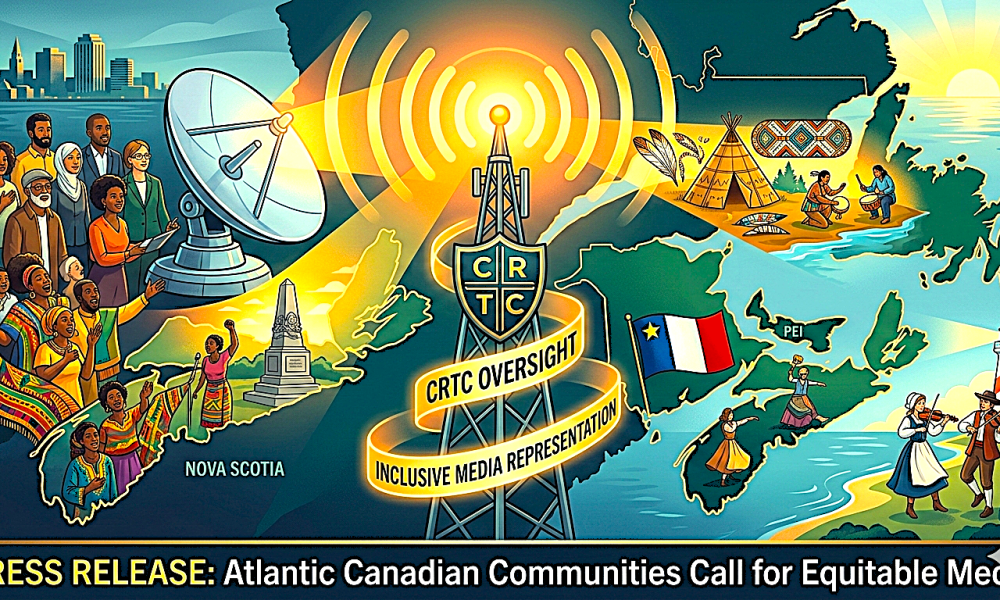
Halifax, Nova Scotia — French Acadian community advocates across Atlantic Canada are calling for a renewed commitment to equitable media representation, urging the CRTC to examine long‑standing patterns of exclusion within regional CTV Atlantic News broadcasting. For decades, Halifax has struggled with a reputation for limited inclusion, particularly in how its major media institutions have portrayed — or failed to portray — the diverse communities that shaped the region’s history. This press release highlights concerns raised by Black, Mi’kmaq, and French Acadian communities who argue that their stories have been minimized, sidelined, or erased in mainstream coverage.
The issue is not new. Between 1750 and 2000, both the Black and Mi’kmaq communities experienced systemic marginalization across civic, cultural, and media landscapes. Their histories were often reduced to footnotes, despite their foundational contributions to Nova Scotia’s identity. Community leaders note that this erasure was not accidental; it reflected broader social and institutional Halifax-centric patterns that prioritized certain narratives while suppressing others.
Today, as Canada continues to push for reconciliation, equity, and cultural recognition, the call for media accountability has become more urgent than ever.
CTV News Atlantic, Bell Media, and the CRTC have a responsibility to reflect that real communication is everything in Atlantic Canada
Concerns have been raised in the French Acadian communities specifically regarding every face but our own in CTV News Atlantic, part of the Bell Media network, which holds significant influence over public perception in the region. As one of the most widely consumed news sources in Atlantic Canada, CTV News Atlantic plays a central role in shaping how communities see themselves and how they are seen by others. With that influence comes responsibility — a responsibility that many community members feel has not been fully met.
Advocates argue that the network’s coverage has historically underrepresented or misrepresented Black and Mi’kmaq communities, contributing to a broader cultural narrative that sidelines their experiences. This pattern mirrors the historical ghosting that occurred between 1750 and 2000, when these communities were systematically pushed out of public consciousness. The result has been a generational impact on visibility, cultural pride, and public understanding.
French Acadian communities, too, have raised concerns about being ghosted in media to the point of near erasure. Despite being one of the oldest and most culturally distinct populations in Atlantic Canada, Acadian voices remain noticeably absent from many regional broadcasts. Their language, traditions, and perspectives rarely appear in mainstream coverage, even though Acadian culture remains vibrant and deeply rooted in Nova Scotia’s identity.
Community leaders emphasize that this is not simply about airtime; it is about cultural survival. When a community’s stories are not told, its presence fades from public consciousness. When its language is not heard, its future becomes uncertain. When its contributions are not acknowledged, its value is diminished. These patterns, they argue, are not reflective of a modern, inclusive Canada.
A Call for Change: Inclusion, Accountability, and the Future of Atlantic Canadian Media
The concerns raised are not accusations of malice but calls for accountability and progress. Advocates stress that the goal is not to shame media organizations but to encourage them to evolve. The communities affected are asking for recognition, representation, and a seat at the table — not as tokens, but as integral contributors to the region’s cultural fabric.
Several key actions have been proposed:
- Increased representation of Black, Mi’kmaq, and Acadian journalists, producers, and decision‑makers within Atlantic Canadian newsrooms.
- Regular coverage of cultural events, community issues, and historical narratives that reflect the full diversity of the region.
- Consultation with community leaders to ensure accuracy, respect, and context in reporting.
- Transparent diversity and inclusion policies that outline measurable goals and timelines.
- CRTC review and guidance to ensure that regional broadcasters meet their obligations to reflect Canada’s multicultural reality.
These proposals are not radical; they are aligned with national standards for equity and inclusion. They reflect the expectations of a modern audience that values authenticity, diversity, and accountability in Bell Media.
Community members also note that change is not only necessary but beneficial. Inclusion in Bell Media would strengthen public trust, enrich storytelling, and foster a more accurate understanding of Atlantic Canada’s identity. It also supports reconciliation efforts and helps repair historical harms that have shaped the region for centuries.
The call for change is especially urgent given the ongoing revitalization of Black and Mi’kmaq communities, who are reclaiming their histories, languages, and cultural spaces. Their stories are powerful, resilient, and essential to the region’s narrative. Media organizations have an opportunity — and a responsibility — to amplify these voices rather than silence them.
At the same time, French Acadian communities are increasingly vocal about their own systemic erasure. They point out that while Black and Mi’kmaq representation has begun to improve, Acadian culture remains largely invisible in mainstream coverage. This invisibility is not reflective of the community’s size, influence, or historical significance. It is a gap that can and should be addressed with intention and care.
Conclusion
Atlantic Canada stands at a crossroads. The region can continue to rely on outdated patterns of representation, or it can embrace a future that reflects the full richness of its people. The path forward is clear: inclusion, accountability, and a commitment to telling the stories that have too long been ignored.
The final message from community leaders is simple and direct: now the Black and Mi’kmaq communities are included, and French Acadian communities are asking for change, which is easy enough for the content controllers to do; they simply do not wish to yet.
Would you like this adapted into a shorter media advisory, a social‑media‑ready version, or a version tailored for a specific audience?