
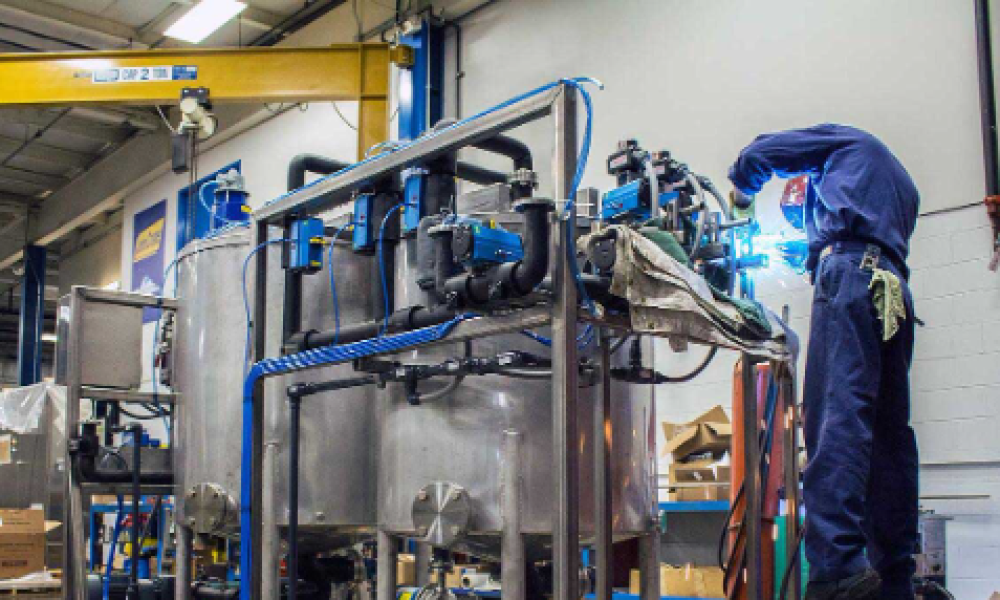
Across North America, water and wastewater infrastructure is facing unprecedented pressure. Aging systems, population growth and decades of delayed maintenance have created widespread vulnerabilities that require major upgrades. These challenges are generating a significant rise in demand for industrial pump and valve providers, along with companies that engineer skid systems and offer full service maintenance, repair and installation support. As municipalities and industrial plants confront the reality of deteriorating pipelines and treatment facilities, the role of advanced fluid-technology companies has never been more essential.
The American Society of Civil Engineers provided one of the most comprehensive assessments of this problem. In its 2021 Infrastructure Report Card, the organization estimated that the United States needs more than 472 billion dollars in water and wastewater investment to restore aging systems. This figure reflects decades of underfunding and the growing strain placed on treatment facilities and distribution networks. Pumps, valves and related equipment are central to these systems, meaning every upgrade or replacement effort requires specialized technology and skilled service support.
The Scale of the Challenge
The Environmental Protection Agency reinforced the seriousness of the situation with data from the Clean Watersheds Needs Survey. According to the EPA, more than 15,000 wastewater facilities nationwide require major rehabilitation or replacement. Many of these facilities were built more than fifty years ago and now struggle to handle increased flow volumes, stormwater surges and the everyday demands of modern communities.
Aging pumps are often inefficient or near failure. Valves that were installed decades ago may no longer meet regulatory standards. Treatment plants that were once considered state of the art now fall short of environmental compliance. These issues can lead to unsafe water, increased operational costs and emergency failures that disrupt entire regions.
Because the problems are so widespread, the demand for advanced pump systems, high-performance valves and modular skid assemblies continues to rise. Municipal operators and industrial facilities cannot afford to continue patching outdated systems. They need long-term solutions that improve reliability and reduce risk.
The Growing Importance of Pump and Valve Providers
Pump and valve suppliers play a central role in modernizing water infrastructure. These components form the backbone of every treatment facility, water distribution network and industrial fluid-handling process. As systems age, the need for equipment that offers improved durability, efficiency and automation becomes critical.
Modern pumps deliver higher energy efficiency, which helps reduce operational costs for cities and industrial plants already facing budget constraints. Advanced valve technologies provide better flow control, reduced leakage and improved safety. When paired with automated monitoring systems, they also support early detection of equipment failures, helping operators avoid costly downtime.
Skid systems are emerging as a preferred solution in many upgrade projects. These modular, pre-engineered units minimize installation time, reduce on-site labor and ensure consistent quality. For facilities that must remain operational during upgrades, skids provide a practical way to modernize without causing major disruptions.
Why Upgrades Can No Longer Be Delayed
Much of North America’s water infrastructure is approaching or exceeding its intended lifespan. Population growth, industrial expansion and climate impacts have placed additional stress on systems that were not designed for current demands.
Frequent pipeline breaks, treatment-plant overloads and emergency bypasses are signs of deeper structural issues. When pumps fail, water pressure drops or treatment processes suffer. When valves malfunction, contamination risks increase. In wastewater facilities, failures can result in untreated sewage entering waterways, posing environmental and public health hazards.
These failures are not isolated incidents. They reflect a nationwide pattern of deferred maintenance. For municipalities, the consequences extend beyond financial costs. Communities experience service interruptions, environmental fines and reduced trust in local water systems.
Advanced pump and valve providers offer a path toward modern, reliable infrastructure that can meet future demands.
Industrial Markets Face Similar Pressures
While municipal systems receive much of the attention, industrial sectors such as chemicals, energy, food processing and manufacturing also depend on effective fluid-handling systems. As facilities scale production, equipment that was once sufficient can no longer keep up with increased flow volumes or stricter regulatory requirements.
Many industrial plants are proactively replacing old pumps and valves to reduce energy consumption and improve operational safety. Others are implementing new skid-based processing systems to streamline production and improve consistency. The rising demand mirrors municipal trends, showing that the need for modernization is widespread across all fluid-technology sectors.
A Strong Outlook for Fluid-Technology Companies
The combination of ASCE’s 472-billion-dollar funding gap and the EPA’s projection of upgrades needed for more than 15,000 wastewater facilities indicates a long-term growth trajectory for pump, valve and skid-system companies. The challenges facing water infrastructure are not short term. They represent an ongoing cycle of modernization that will continue for decades.
Companies that offer both equipment and service support are especially well-positioned. Facilities increasingly prefer single-source partners that can provide engineering expertise, installation, preventive maintenance and emergency repair. This integrated approach reduces complexity and ensures that upgraded systems perform reliably.
Conclusion
The growing needs of North America’s aging water and wastewater infrastructure are creating strong demand for advanced fluid-handling technologies. With hundreds of billions required to restore deteriorating systems and thousands of facilities facing major upgrades, pump and valve providers are central to the future of water reliability and environmental safety. As municipalities and industries confront these challenges, companies capable of delivering modern equipment, modular skid systems and full-service support will play a critical role in shaping a more resilient infrastructure network for the years ahead.