
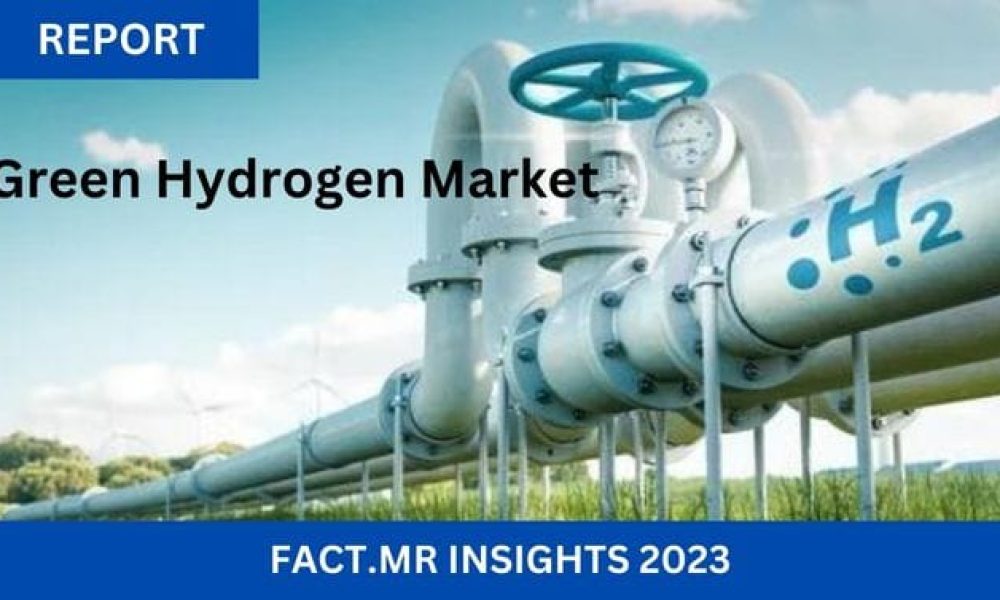
The green hydrogen market has emerged as a key player in the global energy transition, driven by the imperative to decarbonize various industries and achieve sustainable energy goals. Green hydrogen is produced through the electrolysis of water using renewable energy sources, such as wind or solar power, making it a clean and environmentally friendly alternative to conventional hydrogen production methods. The market’s growth is fueled by increasing investments in renewable energy infrastructure, government initiatives promoting clean energy, and the growing recognition of green hydrogen’s potential to serve as a versatile energy carrier in sectors like transportation, industry, and power generation.
The recent market analysis report from Fact.MR discloses that global sales of green hydrogen amounted to US$ 4.5 billion in 2022. Anticipating a substantial growth rate of 31.3% from 2023 to 2033, the market is poised to achieve a valuation of US$ 94 billion by the conclusion of the forecast period. The primary revenue-generating sector is projected to be the Alkaline Electrolyzer Technology, expected to exhibit a CAGR of over 31.2% from 2023 to 2033.
Download a Sample Copy of This Report:
https://www.factmr.com/connectus/sample?flag=S&rep_id=8861?PJ
Competitive Landscape
The market is shaped by key players such as Linde plc, Air Product Inc., Air Liquide, Cummins Inc., Engie, Nel ASA, Siemens Energy, Toshiba Energy Systems and Solutions Corporation, Uniper SE, and Bloom Energy. Recent developments in the Green Hydrogen Market include:
- Linde’s Expansion in California (January 2023): In January 2023, Linde revealed plans to boost green hydrogen production in California. The company will construct, own, and operate the first of several proposed five-megawatt PEM (proton exchange membrane) electrolyzers to enhance hydrogen capacity.
- LSB Industries and Bloom Energy Partnership (May 2022): LSB Industries selected Bloom Energy, a US-based company, to build a 10 MW Solid Oxide Electrolyzer for large-scale green hydrogen production. This project aims to produce 13,000 metric tonnes of zero-carbon ammonia annually. Bloom Energy’s solid oxide electrolyzer, known for its higher efficiencies compared to PEM and alkaline electrolyzer technologies, is positioned for cost-effective hydrogen production required for a net-zero economy.
- Linde’s World’s Largest PEM Electrolyzer (January 2021): In January 2021, Linde announced the construction, ownership, and operation of the world’s largest 24-megawatt PEM electrolyzer for green hydrogen. This initiative involves supplying green hydrogen to Linde’s industrial clients through its existing network and providing liquefied renewable hydrogen to refueling sites and other commercial clients in the region.
Green Hydrogen Market Segmentation
- By Technology :
- Alkaline Electrolyzer
- Polymer Electrolyte Membrane Electrolyzer
- By Application :
- Power Generation
- Transportation
- By Region :
- North America
- Latin America
- Europe
- Asia Pacific
- Middle East and Africa
Key Market Drivers:
- Renewable Energy Integration: The integration of renewable energy sources into the production of green hydrogen is a primary driver of the market. As the world shifts toward a low-carbon future, the use of wind, solar, and other renewable resources to power electrolyzers for hydrogen production aligns with global sustainability goals and reduces reliance on fossil fuels.
- Government Support and Policy Initiatives: Government support and policy initiatives play a crucial role in the expansion of the green hydrogen market. Numerous countries have announced ambitious plans and financial incentives to promote the development and adoption of green hydrogen technologies, fostering a conducive environment for investment and innovation in the sector.
- Decarbonization Efforts in Industry and Transportation: Industries seeking to decarbonize their operations and transportation sectors aiming to transition to cleaner fuels are major drivers for the green hydrogen market. Green hydrogen can be used as a feedstock in industries like steel and chemicals, as well as a fuel for fuel cell vehicles and heavy-duty transport, contributing to significant emissions reductions.
Challenges and Restraints:
- High Initial Costs: One of the primary challenges facing the green hydrogen market is the high initial capital costs associated with establishing electrolysis facilities and renewable energy infrastructure. While costs are expected to decrease with technological advancements and economies of scale, the upfront investment remains a barrier for widespread adoption.
- Infrastructure Development: The lack of a comprehensive hydrogen infrastructure poses a restraint to market growth. The transportation, storage, and distribution of green hydrogen require substantial infrastructure development. Overcoming this challenge involves significant investments and coordination among stakeholders to build a robust hydrogen supply chain.
Key Trends in the Green Hydrogen Market (Up to 2023):
- Scaling Up Electrolysis Capacity: One prominent trend is the concerted effort to scale up electrolysis capacity for green hydrogen production. Governments, companies, and investors are actively announcing plans to deploy large-scale electrolyzers powered by renewable energy sources. This strategic approach is crucial for achieving economies of scale, driving down production costs, and enhancing the competitiveness of green hydrogen.
- Renewable Energy Integration: The integration of renewable energy sources, particularly solar and wind, into green hydrogen production has emerged as a dominant trend. Projects are designed to leverage excess renewable energy that would otherwise be curtailed, addressing intermittency issues and making the hydrogen production process more sustainable and environmentally friendly.
- International Collaboration and Partnerships: Many countries and companies are fostering international collaborations and partnerships to expedite the development of a global green hydrogen economy. These initiatives involve the sharing of expertise, technologies, and investments to establish cross-border green hydrogen projects and infrastructure.
- Technological Advancements in Electrolysis: The green hydrogen market is witnessing continuous technological advancements in electrolysis technologies. Innovations include the development of more efficient electrolyzers, improved catalysts, and novel materials for membranes. These advancements aim to enhance the overall efficiency of the electrolysis process and reduce the overall cost of green hydrogen production.
- Policy Support and Regulatory Frameworks: Governments worldwide are implementing policies and regulatory frameworks to bolster the growth of the green hydrogen market. These measures encompass financial incentives, subsidies, and regulations designed to promote investments in green hydrogen projects, stimulate demand, and create a favorable environment for the development of hydrogen infrastructure.
Technological Advancements:
Technological advancements in electrolysis technologies, energy storage, and hydrogen utilization methods are key aspects of the green hydrogen market’s evolution. Innovations include the development of high-efficiency electrolyzers, advanced hydrogen storage solutions, and integration with existing industrial processes to enhance overall efficiency and feasibility.
Get Customization on this Report for Specific Research Solutions:
https://www.factmr.com/connectus/sample?flag=RC&rep_id=8861
Current Industry News (2023):
Several trends and developments may have shaped the green hydrogen market in 2023.
- Global Project Collaborations: The industry may have witnessed an increase in global collaborations for large-scale green hydrogen projects. Countries and companies may have joined forces to develop cross-border hydrogen production and distribution initiatives, fostering international cooperation to accelerate the green hydrogen transition.
- Technological Breakthroughs in Electrolysis: Advancements in electrolysis technologies may have been a focal point in 2023. Breakthroughs in membrane materials, catalysts, and system design could contribute to increased efficiency and cost-effectiveness, making green hydrogen more competitive with other forms of energy.
- Expansion of Hydrogen End-Use Applications: The market may have experienced an expansion of hydrogen’s end-use applications. Beyond traditional uses in industry and transportation, green hydrogen could have found new applications in sectors such as heating, power generation, and energy storage, contributing to its versatility as a clean energy carrier.
- Financial Investments and Funding: Ongoing financial investments and funding support from governments, private entities, and international organizations could have continued to drive market growth. Investments in research and development, infrastructure, and pilot projects are crucial for advancing the green hydrogen industry and scaling up production.
The green hydrogen market likely continued its upward trajectory in 2023, fueled by the global push for sustainable and decarbonized energy solutions. Government support, advancements in technology, and collaborations on a global scale are instrumental in overcoming challenges and realizing the full potential of green hydrogen. While hurdles such as high initial costs and infrastructure development persist, the industry’s resilience and ongoing innovations position green hydrogen as a key player in the transition toward a more sustainable and carbon-neutral energy landscape.
Contact:
US Sales Office:
11140 Rockville Pike
Suite 400
Rockville, MD 20852
United States
Tel: +1 (628) 251-1583
E Mail : [email protected]




