
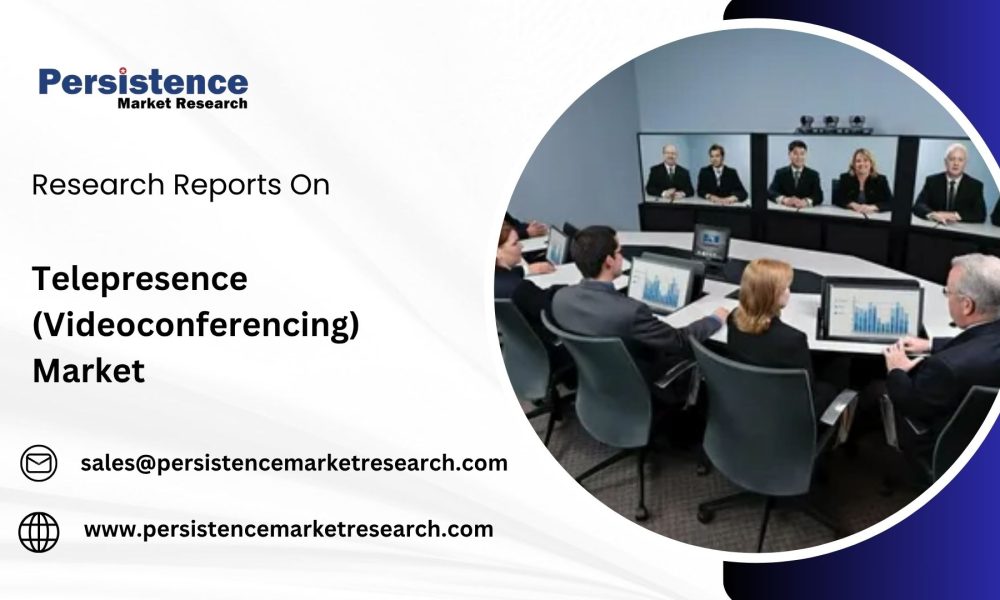
The global telepresence (videoconferencing) market is undergoing a significant transformation, driven by technological advancements and an increasing demand for immersive communication solutions. In 2023, the market is projected to reach a valuation of US$ 7 billion, with expectations to grow to US$ 15 billion by 2033, representing a CAGR of 8%. This growth highlights the growing adoption of telepresence systems across industries, fueled by the need for enhanced collaboration, reduced travel costs, and increased operational efficiency.
Telepresence videoconferencing systems are revolutionizing the way organizations communicate. Unlike traditional video calls, these systems offer high-quality, immersive experiences, simulating in-person meetings and creating a more engaging environment for participants. By combining advanced video and audio technologies with innovative hardware setups, telepresence solutions provide a near-real meeting experience, even when participants are spread across different continents.
Understanding Telepresence Technology
Telepresence systems leverage advanced audio-visual technologies to provide seamless communication between multiple locations. Unlike conventional video conferencing solutions, telepresence setups typically include:
- High-definition video displays: Multi-screen setups or large format displays ensure lifelike images and accurate representation of participants.
- Directional audio: Sophisticated microphone arrays and speaker setups make conversations clear and natural, minimizing echo and background noise.
- Multiscreen technology: Innovative multiscreen designs enable users to view multiple participants or shared content simultaneously. This approach reduces installation time, power consumption, and bandwidth usage by nearly half compared to traditional systems.
By offering a fully immersive experience, telepresence solutions address one of the main limitations of remote communication: the lack of non-verbal cues and natural interaction. For businesses, this translates into better decision-making, improved collaboration, and enhanced employee engagement.
Market Drivers and Growth Factors
Several factors are driving the rapid expansion of the global telepresence market:
- Increased Remote Work and Hybrid Work Models
The COVID-19 pandemic accelerated the adoption of remote work, compelling organizations to adopt reliable and effective communication solutions. Even after the pandemic, hybrid work models continue to gain traction, requiring tools that can replicate in-person interactions. Telepresence videoconferencing is uniquely positioned to meet this demand, providing high-quality collaboration without the need for physical presence.
- Cost Savings and Operational Efficiency
Traditional business travel is both expensive and time-consuming. By deploying telepresence systems, companies can reduce travel expenses, save time, and increase productivity. These systems also support large-scale meetings, webinars, and client presentations, allowing multiple participants to collaborate without logistical challenges.
- Technological Advancements
The telepresence market is benefiting from rapid advancements in technology:
- High-resolution cameras and advanced display panels deliver lifelike visuals.
- Artificial intelligence (AI) and machine learning enhance video and audio quality, enable real-time transcription, and facilitate intelligent participant tracking.
- Cloud-based integration ensures seamless connectivity across multiple locations and devices.
These innovations make telepresence systems more accessible, reliable, and effective, increasing adoption across industries.
- Multiscreen Technology Adoption
Multiscreen setups are a defining feature of modern telepresence systems. They allow organizations to display multiple video feeds or data simultaneously, creating a more engaging and productive meeting environment. Compared to conventional systems, multiscreen solutions offer several advantages:
- Faster installation: Reduces setup time by approximately 50%.
- Lower energy consumption: Uses half the power of traditional systems.
- Reduced bandwidth requirements: Optimized for network efficiency, which is crucial for global connectivity.
These factors not only improve user experience but also reduce operational costs, making multiscreen telepresence an attractive choice for organizations of all sizes.
Elevate your business strategy with comprehensive market data. Request a sample report now: https://www.persistencemarketresearch.com/samples/33516
Industry Applications of Telepresence Systems
Telepresence videoconferencing is no longer limited to corporate boardrooms. Its applications span multiple sectors, including healthcare, education, government, and financial services.
- Corporate and Enterprise Use
Businesses are the primary adopters of telepresence systems, leveraging these solutions for:
- Board meetings and executive collaboration
- Client presentations and demos
- Cross-location team collaboration
Telepresence enables employees to interact as if they are in the same room, enhancing communication efficiency and reducing misunderstandings.
- Healthcare and Telemedicine
Telepresence is transforming the healthcare sector by enabling remote consultations, diagnostics, and specialist interactions. Doctors can collaborate with peers worldwide, review medical images in real-time, and provide patients with faster access to care, all without physical travel.
- Education and E-Learning
The education sector is increasingly adopting telepresence solutions to support remote classrooms, virtual lectures, and global collaborations. Students benefit from immersive experiences, and educators can deliver interactive lessons that closely mimic traditional classroom interactions.
- Government and Public Sector
Government agencies use telepresence systems for secure communication, inter-agency coordination, and international diplomacy. High-quality, reliable systems ensure that officials can engage effectively without the risks and costs associated with physical travel.
Regional Market Insights
The telepresence market is witnessing global adoption, with some regions leading in growth:
- North America: Dominates the market due to early technology adoption, high corporate presence, and strong IT infrastructure.
- Europe: Growing adoption in government, healthcare, and corporate sectors is driving market expansion.
- Asia-Pacific: Rapid urbanization, technological advancements, and increasing remote work adoption contribute to market growth.
- Middle East & Africa: Emerging markets are showing interest, especially in sectors like oil & gas, healthcare, and government services.
Challenges in Telepresence Adoption
Despite strong growth prospects, the telepresence market faces certain challenges:
- High initial investment: Advanced systems can be expensive, which may limit adoption among smaller businesses.
- Bandwidth and connectivity limitations: High-quality video and audio require robust internet infrastructure, which can be a constraint in some regions.
- Integration with legacy systems: Organizations often face challenges in integrating telepresence solutions with existing IT and communication systems.
Addressing these challenges requires innovation, strategic partnerships, and the development of scalable, cost-effective solutions.
Future Trends in Telepresence
The telepresence market is poised for significant innovation in the coming years. Key trends include:
- AI-Powered Collaboration
Artificial intelligence will play a crucial role in enhancing telepresence experiences. Features like real-time translation, automated note-taking, and intelligent camera tracking will make remote meetings more interactive and efficient.
- 5G Integration
The rollout of 5G networks will significantly improve telepresence performance, enabling high-definition, low-latency communication even in remote areas. This development will expand market reach and adoption.
- Virtual and Augmented Reality Integration
Combining telepresence with virtual reality (VR) and augmented reality (AR) will create fully immersive meeting environments, allowing participants to interact with 3D models, data visualizations, and simulations in real-time.
- Sustainability and Energy Efficiency
As businesses focus on sustainability, energy-efficient telepresence systems, such as multiscreen setups that use less power, will become increasingly popular. These solutions not only reduce costs but also align with corporate social responsibility initiatives.
Market Forecast and Growth Opportunities
The telepresence market is expected to more than double over the next decade, reaching US$ 15 billion by 2033. This growth is supported by:
- Rising adoption in hybrid and remote work environments
- Increasing need for cost-effective and efficient communication solutions
- Technological innovations in AI, AR/VR, and multiscreen systems
- Expansion into new sectors such as healthcare, education, and government
Investors and technology providers have significant opportunities to capitalize on these trends. Companies that innovate with scalable, energy-efficient, and immersive solutions are likely to capture a substantial share of the growing market.
Conclusion
The global telepresence (videoconferencing) market is entering a period of rapid growth and technological evolution. With a projected CAGR of 8% and a market value expected to reach US$ 15 billion by 2033, telepresence solutions are transforming the way organizations communicate, collaborate, and operate.
By providing immersive, high-quality communication experiences, telepresence systems not only enhance productivity but also reduce costs, improve engagement, and support global collaboration. The integration of AI, multiscreen technology, 5G, and VR/AR will further accelerate market adoption, creating new possibilities for businesses, educators, healthcare providers, and government organizations.
As remote and hybrid work models become standard, telepresence systems are set to become an indispensable tool for modern communication, bridging the gap between physical and virtual interactions. Companies that embrace these solutions today are likely to enjoy significant competitive advantages tomorrow.
Related Reports:




