
Definition
Industrial hemp refers to non-psychoactive varieties of Cannabis sativa cultivated primarily for industrial and commercial applications. Unlike recreational cannabis, industrial hemp contains less than 0.3% THC, the psychoactive component, making it suitable for large-scale agricultural, manufacturing, and wellness applications without inducing intoxicating effects.
The versatility of industrial hemp is unparalleled, offering over 25,000 product applications across multiple sectors. Key products include:
- CBD Oil: Extracted from hemp flowers and leaves, used extensively in pharmaceuticals, nutraceuticals, and wellness products.
- Hemp Fiber: Applied in textiles, automotive composites, ropes, and specialty papers due to its durability and eco-friendliness.
- Hemp Seeds & Oil: Used in the food and beverage industry for protein-rich plant-based nutrition, dairy alternatives, and oils.
- Bio-based Materials: Hemp hurd and fibers are increasingly used in biofuels, biodegradable plastics, and construction materials like hempcrete.
Industrial hemp cultivation is driven by legalization in key regions, rising demand for sustainable alternatives, and technological advancements in processing. Its applications are expanding rapidly in textiles, food and beverages, wellness, pharmaceuticals, and construction, positioning it as a critical player in both industrial innovation and the emerging green economy.
Recent Developments
The industrial hemp market is experiencing a rapid evolution, driven by the global trend toward sustainability and the increasing legalization of hemp cultivation. A significant development is the advancement in processing technologies, which has improved the efficiency and quality of hemp-derived products, from fibers to cannabinoids. This is leading to a wider range of applications in various industries, including the development of advanced construction materials like hempcrete, high-performance bioplastics, and more sustainable textiles. There is also a notable trend toward the creation of bio-based and low-VOC (volatile organic compound) products, as well as a growing focus on developing hemp varieties with specific characteristics, such as high-yield seeds for food and fiber, to meet diverse industrial needs.
Major Distribution
The distribution of industrial hemp is multi-faceted, reflecting the plant’s diverse end-uses. For large-scale industrial applications, such as textiles and construction materials, the primary distribution model is a business-to-business (B2B) supply chain. This involves direct sales from large-scale growers and processors to manufacturers who use hemp as a raw material. For consumer products like food, beverages, and personal care items, distribution is more varied. It includes sales through specialized retail stores, health food shops, and a rapidly expanding e-commerce channel, which allows for direct-to-consumer sales. The legal status of hemp-derived products, especially those containing CBD, heavily influences distribution, with many companies relying on specialized logistics and fulfillment providers to navigate complex and varying regulations across different regions.
Market Size
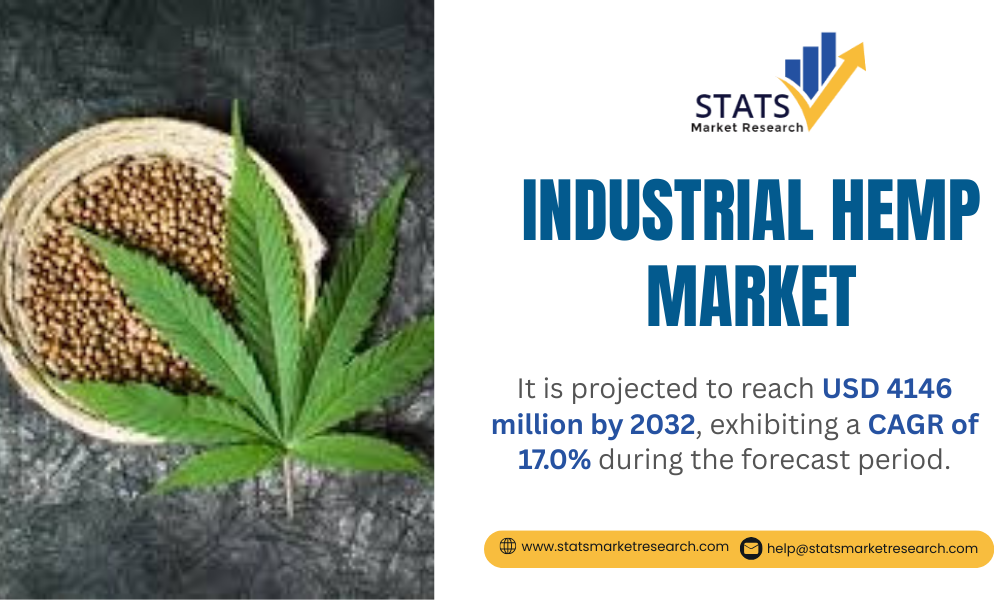
The global industrial hemp market was valued at USD 1,416 million in 2024 and is projected to reach USD 1,640 million in 2025, ultimately expanding to USD 4,146 million by 2032, reflecting a robust CAGR of 17.0% during the forecast period.
Key market insights:
- Legalization and Regulatory Support: The 2018 U.S. Farm Bill and similar regulations in over 50 countries have enabled large-scale cultivation and commercialization.
- CBD Adoption: CBD-based products account for over 75% of industrial hemp applications, with adoption surging in pharmaceuticals, nutraceuticals, and wellness segments.
- Sustainability Initiatives: Hemp’s low water requirements, rapid growth cycle, and carbon sequestration capabilities make it a favorable choice in climate-conscious industries.
- Technological Advancements: Modern decortication and fiber processing technologies have improved efficiency to 95%, lowering production costs and expanding industrial applicability.
Historical growth trends indicate that North America and Europe have been early adopters, with Asia-Pacific emerging as a key market due to favorable climate conditions and lower production costs.
Download FREE Sample of this Report @ https://www.statsmarketresearch.com/download-free-sample/8057990/global-industrial-hemp-forecast-market
Market Dynamics (Drivers, Restraints, Opportunities, and Challenges)
Drivers
Growing Demand for CBD-Based Products
The surge in consumer awareness about CBD’s therapeutic benefits is driving industrial hemp demand. CBD is increasingly used in:
- Pharmaceuticals for chronic pain, anxiety, and neurological disorders
- Wellness and dietary supplements
- Cosmetics and skincare products
The pharmaceutical industry’s interest in plant-derived therapies further positions hemp as a critical botanical resource for next-generation treatments.
Sustainability Trends Across Industries
Industrial hemp is gaining traction as a green alternative in multiple sectors:
- Textiles: Requires less water than cotton while yielding more fiber per acre
- Construction: Hempcrete offers lightweight, insulating properties with negative carbon footprint characteristics
- Biofuels & Bioplastics: Hemp hurd is increasingly used in eco-friendly plastics and energy solutions
Technological innovations, such as nano-fibrillation and enzymatic processing, have expanded hemp’s industrial applicability.
Restraints
Regulatory Complexity and Banking Challenges
Despite legalization, fragmented regulations across U.S. states and international markets create operational hurdles. Banking restrictions force reliance on cash-based operations, limiting scalability and investment access.
Testing and Compliance Costs
Strict regulations for THC content (<0.3%) require rigorous testing protocols, adding 15-20% to production costs. Inconsistent testing methodologies across jurisdictions further complicate operations, particularly for smaller operators.
Consumer Perception
Lingering stigma and confusion between hemp and marijuana slow adoption in conservative regions or among older demographics.
Opportunities
Emerging Applications in Food & Beverage
Hemp seeds and derivatives are gaining popularity as plant-based, protein-rich ingredients. Market projections suggest a 22% CAGR for hemp-derived food ingredients through 2030. Manufacturers are incorporating:
- Hemp protein in nutritional bars, shakes, and dairy alternatives
- Hemp oil in cooking, bakery, and functional beverages
Technological Innovations in Fiber Processing
Advancements in processing methods for hemp fibers and hurd are creating new high-value applications:
- Automotive composites replacing synthetic fibers
- Specialty papers for sustainable packaging
- Bio-based plastics and construction materials
Strategic partnerships between agritech firms and hemp producers are driving innovation in harvesting and processing. Emerging markets in Asia and South America are also expanding production capabilities, offering first-mover advantages in raw material sourcing.
Challenges
Supply Chain Fragmentation
Hemp’s supply chain is highly fragmented, leading to variability in biomass quality, fiber length, and cannabinoid profiles, necessitating strict quality control and increasing operational complexity.
Limited Processing Infrastructure
Expansion in cultivation has outpaced processing infrastructure. Less than 40% of potential hemp fiber demand is currently met. High capital requirements ($10–50 million for mid-scale facilities) pose barriers to entry.
Consumer Education
Misunderstandings about hemp’s legal status and differences from marijuana require extensive marketing and educational campaigns, raising customer acquisition costs.
Regional Analysis
North America
- Market led by U.S. legalization under the 2018 Farm Bill
- Strong adoption in CBD wellness products and textiles
Europe
- Growth driven by medical hemp legalization, sustainability initiatives, and industrial applications
- Germany, France, and the Netherlands lead pharmaceutical and hemp fiber markets
Asia-Pacific
- Rapidly growing cultivation and textile processing markets
- Countries like China and India offer low-cost production and government support, creating export opportunities
Latin America & Middle East & Africa
- Gradual adoption due to regulatory uncertainties and limited infrastructure
- Opportunities exist in emerging markets with favorable climates
Competitor Analysis
The global industrial hemp market is highly dynamic, with North American and European companies dominating the CBD segment, while Asian firms focus on textiles and construction materials.
- Canopy Growth Corporation (Canada): Leading CBD sales (~15% global share), strong vertical integration
- Charlotte’s Web CBD (U.S.): Full-spectrum hemp extracts, ~12% U.S. market share
- Aurora Cannabis (Canada): Expanding European operations via acquisitions
- Folium Biosciences (U.S.) & Endoca (Denmark): Large-scale CBD extraction capacities
- Emerging Asian Firms: Yunma Biotechnology, Hankang (Yunnan) Biotechnology producing hemp textiles and building materials
Competitive strategies include vertical integration, strategic partnerships, technological innovation, and cost-competitive production.
Get the Complete Report & TOC @ https://www.statsmarketresearch.com/global-industrial-hemp-forecast-market-8057990
Global Industrial Hemp: Market Segmentation Analysis
This report provides a deep insight into the global industrial hemp market, covering all its essential aspects. This ranges from a macro overview of the market to micro details of the market size, competitive landscape, development trend, niche market, key market drivers and challenges, SWOT analysis, value chain analysis, etc.
The analysis helps the reader to shape the competition within the industries and strategies for the competitive environment to enhance the potential profit. Furthermore, it provides a simple framework for evaluating and assessing the position of the business organization. The report structure also focuses on the competitive landscape of the Global Industrial Hemp market. This report introduces in detail the market share, market performance, product situation, operation situation, etc., of the main players, which helps the readers in the industry to identify the main competitors and deeply understand the competition pattern of the market.
In a word, this report is a must-read for industry players, investors, researchers, consultants, business strategists, and all those who have any kind of stake or are planning to foray into the Industrial Hemp market in any manner.
Market Segmentation (by Application)
- Medical and Pharmaceutical
- Food and Beverage
- Cosmetics
- Textiles
- Others (Biofuels, Construction Materials, etc.)
Market Segmentation (by Type)
- CBD Oil
- Hemp Fiber
- Hemp Seed
- Others (CBD Crystal, etc.)
Key Company
- Canopy Growth Corporation (Canada)
- Charlotte’s Web CBD (U.S.)
- Aurora Cannabis (Canada)
- Folium Biosciences (U.S.)
- Endoca (Denmark)
- Medical Marijuana, Inc. (U.S.)
- CV Sciences (U.S.)
- Manitoba Harvest (Canada)
- Hankang (Yunnan) Biotechnology (China)
- Yunnan Hansu Biotechnology (China)
- Yunma Biotechnology (China)
- Kazmira (U.S.)
Geographic Segmentation
- North America
- Europe
- Asia-Pacific
- Latin America
- Middle East & Africa
FAQ
- What is the current market size of the Industrial Hemp market?
- Valued at USD 1,416 million in 2024, projected to reach USD 4,146 million by 2032 with a CAGR of 17%.
- Which are the key companies operating in the Industrial Hemp market?
- Canopy Growth Corporation, Charlotte’s Web CBD, Aurora Cannabis, Folium Biosciences, Endoca, Medical Marijuana, Inc., CV Sciences, Manitoba Harvest, Hankang (Yunnan) Biotechnology, Yunnan Hansu Biotechnology, Yunma Biotechnology, Kazmira.
- What are the key growth drivers in the Industrial Hemp market?
- Rising demand for CBD-based products, sustainability trends, favorable legalization, and technological innovations in processing.
- Which regions dominate the Industrial Hemp market?
- North America leads, followed by Europe and Asia-Pacific, driven by regulatory support, cultivation capabilities, and infrastructure development.
- What are the emerging trends in the Industrial Hemp market?
- CBD wellness adoption, hemp-derived food ingredients, advanced fiber processing technologies, bio-based plastics, and expansion into emerging markets.
About Us
☎️ International: +1 (332) 2424 294
📄 Website: www.statsmarketresearch.com
Join us on LinkedIn:- https://www.linkedin.com/company/statsmarketresearch




