
Definition
Free Wheel Hubs, also known as locking hubs, are critical drivetrain components in four-wheel-drive (4WD) vehicles. They allow the front wheels to rotate freely when disconnected from the axle, reducing drivetrain resistance during two-wheel-drive operation. This mechanism improves fuel efficiency, reduces wear and tear on drivetrain components, and enhances vehicle performance, particularly in off-road or challenging terrains.
Free wheel hubs are installed on utility vehicles, SUVs, pickups, and off-road vehicles. They are essential for optimizing 4WD systems by allowing the operator to engage or disengage the front axle, depending on road conditions. There are multiple types of free wheel hubs, including manual, automatic, hybrid, and electric hubs, each catering to specific performance requirements and consumer preferences.
These hubs contribute significantly to vehicle longevity, especially in harsh off-road conditions where continuous engagement of the front axle can cause mechanical stress. Advanced designs now incorporate corrosion-resistant materials, sealed bearings, and automated engagement mechanisms, reflecting evolving automotive technology trends.
Recent Developments in the Free Wheel Hubs Market
The free wheel hubs market is experiencing significant technological advancements, particularly in the bicycle and automotive sectors. In the cycling industry, the rise of electric bicycles (e-bikes) is a major driver, with manufacturers developing specialized hubs to handle the higher torque demands of electric-assist systems. There is also a strong push towards lightweight, high-performance materials like titanium alloys and ceramic bearings to improve efficiency and durability. Innovations in this segment also include the development of sophisticated ratcheting mechanisms that offer smoother engagement and better power transfer. For the automotive market, the focus is on improving fuel efficiency and reducing wear and tear on front-drive components by integrating free wheel hubs that allow the front wheels to spin independently when the four-wheel-drive system is not in use.
Major Distribution for Free Wheel Hubs
The distribution of free wheel hubs is segmented to address different market needs. In the automotive industry, distribution is highly specialized and often follows a B2B (business-to-business) model, with manufacturers supplying directly to major vehicle and off-road equipment companies. The aftermarket for replacement parts is served by a network of specialized auto parts wholesalers, dealers, and online platforms. For the bicycle market, distribution is more diversified. High-end hubs are typically sold directly from manufacturers to bicycle brands (OEMs) and to specialty bike shops. The broader market, especially for entry-level and mid-range hubs, relies on a vast network of wholesalers and distributors, which supply components to bike repair shops and retailers. Additionally, e-commerce has become a significant channel for both segments, providing a direct link between manufacturers and end-users, especially for hobbyists and DIY enthusiasts.
Market Size
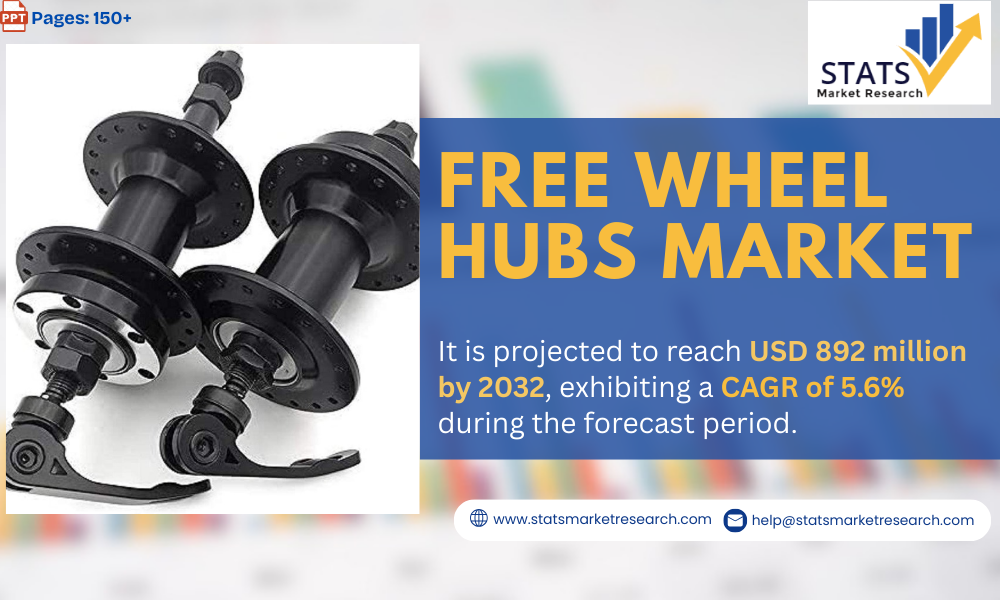
Global Free Wheel Hubs market was valued at USD 629 million in 2023 and is projected to reach USD 892 million by 2030, exhibiting a CAGR of 5.6% during the forecast period.
Growth is primarily driven by the rising adoption of off-road vehicles and increasing consumer focus on fuel efficiency and drivetrain durability.
North America remains a major market due to high 4WD vehicle penetration and recreational off-road activity. Meanwhile, the Asia-Pacific region is expected to witness the fastest growth, driven by emerging middle-class populations, increased disposable incomes, and growing automotive infrastructure, particularly in countries like India, China, and Brazil.
The market has historically been supported by the increasing popularity of SUVs, pickups, and all-terrain vehicles (ATVs), which heavily rely on free wheel hubs for performance optimization. Technological developments, such as automatic free wheel hubs and electric 4WD-compatible hubs, are further expanding market opportunities.
Download FREE Sample of this Report @ https://www.statsmarketresearch.com/download-free-sample/8058887/global-free-wheel-hubs-forecast-market
Market Dynamics (Drivers, Restraints, Opportunities, and Challenges)
Drivers
Growing Demand for Off-Road Vehicles to Boost Free Wheel Hub Adoption
The off-road vehicle segment has grown at over 12% annually since 2020, directly driving demand for free wheel hubs. Hubs allow efficient disengagement of front wheels when 4WD is unnecessary, improving fuel economy and reducing mechanical wear. Innovations in automatic free wheel hubs simplify operation, making them increasingly popular among recreational vehicle users.
Technological Advancements in Hub Designs Create Market Momentum
- Advanced designs now feature sealed bearings lasting over 100,000 miles.
- Corrosion-resistant materials enhance durability in challenging environments.
- Automatic hubs are projected to grow at 7.2% CAGR through 2030, outpacing manual hubs.
- AISIN’s third-generation automatic hubs reduce wear by 30% compared to older models.
Integration of free wheel hubs into electric 4WD systems ensures relevance in the evolving automotive landscape, supporting market growth.
Restraints
High Replacement Costs
Premium automatic free wheel hubs cost 3–5 times more than standard locking hubs, limiting adoption among price-sensitive consumers, particularly in developing markets. Total cost of ownership, including maintenance and repair, remains a barrier.
Other Restraints
- Vehicle Electrification Challenges: EV-specific axle configurations require hub redesigns, increasing R&D costs.
- Declining Manual Transmission Vehicles: Manual free wheel hubs face a shrinking market as manual vehicles drop below 25% of new car sales in 2023.
Opportunities
Emerging Markets Present Significant Growth Potential
Countries like India and Brazil are witnessing 25% annual growth in 4WD vehicle sales, creating strong demand for free wheel hubs. Local manufacturing initiatives can reduce costs and improve market penetration.
Aftermarket Upgrades Drive Revenue Growth
- The global automotive aftermarket grows 3–4% annually.
- Free wheel hubs are increasingly purchased as upgrades for older vehicles.
- Online sales channels grow 15% per year, making hubs more accessible for DIY mechanics and small repair shops.
- Premium aftermarket hubs generate 20–30% higher profit margins than OEM equivalents.
Customization trends among younger demographics also provide opportunities for aesthetically differentiated or performance-optimized hubs.
Challenges
Supply Chain Complexities
Lead times for high-grade steel alloys have increased by 40–50% since 2021, affecting production stability, especially for smaller manufacturers.
Integration Challenges with Modern Vehicle Electronics
Electronic control systems must interface with hub mechanisms. Incompatibilities can create safety concerns, with 15% of aftermarket installations reportedly facing issues.
Other Challenges
- Regulatory pressures regarding safety and material standards.
- Talent retention in specialized mechanical and drivetrain engineering.
Get the Complete Report & TOC @ https://www.statsmarketresearch.com/global-free-wheel-hubs-forecast-market-8058887
Regional Analysis
- North America: Largest market due to high SUV and 4WD penetration; significant aftermarket sales.
- Europe: Stable growth supported by off-road recreation and commercial vehicle fleets.
- Asia-Pacific: Fastest-growing region due to rising 4WD adoption, emerging economies, and expanding automotive infrastructure.
- Latin America: Growth driven by Brazil and Mexico, particularly in off-road recreational vehicles.
- Middle East & Africa: Moderate growth from commercial and military vehicle fleets.
Competitor Analysis (in brief)
The global free wheel hub market features established automotive component manufacturers and specialized aftermarket suppliers:
- AISIN Corporation (Japan): Dominates OEM segment, supplies major vehicle manufacturers.
- Warn Industries (U.S.) & Mile Marker Industries (U.S.): Strong positions in premium aftermarket hubs.
- G2 Axle & Gear & Rugged Ridge (U.S.): Expanding geographically in Europe and other regions.
Competitive strategies focus on automatic hub adoption, corrosion resistance, simplified installation, and aftermarket expansion.
Global Free Wheel Hubs: Market Segmentation Analysis
This report provides a deep insight into the global Free Wheel Hubs market, covering all its essential aspects. This ranges from a macro overview of the market to micro details of the market size, competitive landscape, development trend, niche market, key market drivers and challenges, SWOT analysis, value chain analysis, etc.
The analysis helps the reader to shape the competition within the industries and strategies for the competitive environment to enhance the potential profit. Furthermore, it provides a simple framework for evaluating and assessing the position of the business organization. The report structure also focuses on the competitive landscape of the Global Free Wheel Hubs market. This report introduces in detail the market share, market performance, product situation, operation situation, etc., of the main players, which helps the readers in the industry to identify the main competitors and deeply understand the competition pattern of the market.
In a word, this report is a must-read for industry players, investors, researchers, consultants, business strategists, and all those who have any kind of stake or are planning to foray into the Free Wheel Hubs market in any manner.
Market Segmentation (by Application)
- Passenger Car
- Commercial Vehicle
- Construction Equipment
- Agricultural Machinery
- Military Vehicles
Market Segmentation (by Type)
- Manual Free Wheel Hubs
- Automatic Free Wheel Hubs
- Hybrid Free Wheel Hubs
- Electric Free Wheel Hubs
Key Company
- AISIN Corporation (Japan)
- Warn Industries (U.S.)
- Mile Marker Industries (U.S.)
- G2 Axle & Gear (U.S.)
- Rugged Ridge (U.S.)
- AVM Industries (Brazil)
- Superwinch (U.K.)
- Emmforce Autotech (India)
Geographic Segmentation
- North America
- Europe
- Asia-Pacific
- Latin America
- Middle East & Africa
FAQ Section
Q1. What is the current market size of Free Wheel Hubs?
The global Free Wheel Hubs market was valued at USD 629 million in 2023 and is projected to reach USD 892 million by 2030, growing at a CAGR of 5.6%.
Q2. Which are the key companies operating in the Free Wheel Hubs market?
Key players include:
- AISIN Corporation (Japan)
- Warn Industries (U.S.)
- Mile Marker Industries (U.S.)
- G2 Axle & Gear (U.S.)
- Rugged Ridge (U.S.)
Q3. What are the key growth drivers in the Free Wheel Hubs market?
- Rising demand for off-road vehicles
- Technological advancements in hub designs, including automatic and electric variants
- Aftermarket upgrades and customization trends
Q4. Which regions dominate the Free Wheel Hubs market?
- North America is the largest market.
- Asia-Pacific is the fastest-growing region.
- Europe, Latin America, and Middle East & Africa contribute moderately.
Q5. What are the emerging trends in the Free Wheel Hubs market?
- Shift toward automatic free wheel hubs
- Integration with electric 4WD systems
- Corrosion-resistant materials and simplified installation designs
- Growth of aftermarket sales and e-commerce distribution channels
About Us
☎️ International: +1 (332) 2424 294
📄 Website: www.statsmarketresearch.com
Join us on LinkedIn:- https://www.linkedin.com/company/statsmarketresearch




