
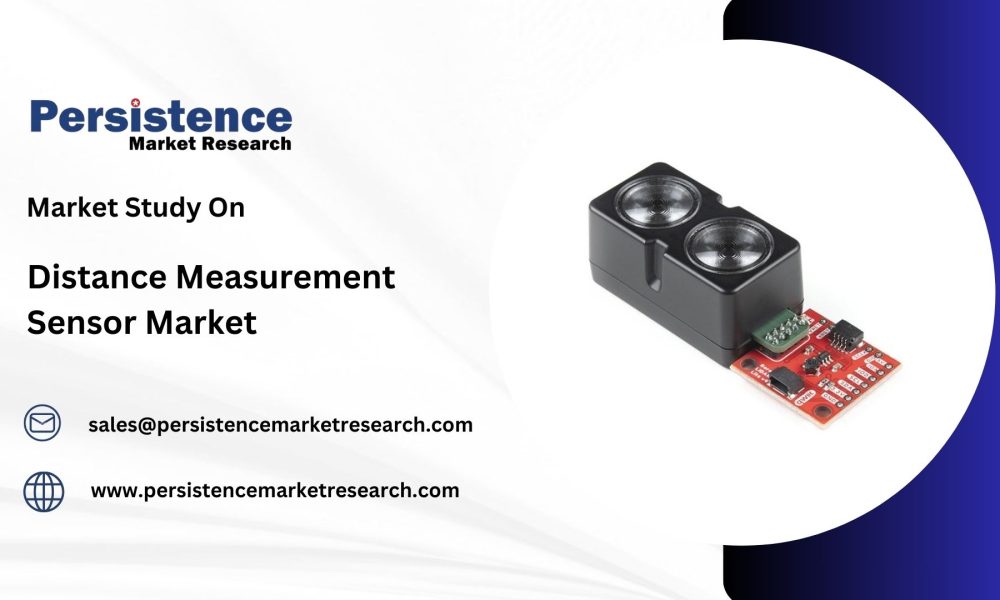
The global distance measurement sensor market is poised for substantial growth over the coming years. Valued at approximately US$2.6 billion in 2025, the market is projected to reach US$4.4 billion by 2032, registering a CAGR of 7.8% during the forecast period. This remarkable growth is being fueled by the rising adoption of automation across various industries, rapid advancements in sensor technologies, and increasing demand for precise and reliable distance measurement solutions.
Distance measurement sensors, also known as proximity sensors or range sensors, play a crucial role in detecting the distance between objects or surfaces. They find applications across industrial automation, robotics, automotive systems, consumer electronics, and healthcare devices, among others. These sensors are integral to modern manufacturing processes, smart devices, and emerging technologies such as autonomous vehicles and industrial IoT, positioning them as essential components in the ongoing digital transformation across sectors.
Key Drivers of Market Growth
- Automation Across Industries
The surge in industrial automation is a primary driver for the distance measurement sensor market. Manufacturing industries are increasingly adopting automated production lines to enhance productivity, minimize human error, and optimize operational efficiency. Sensors that can accurately measure distances are critical in robotic arms, automated guided vehicles (AGVs), and assembly line operations. By providing precise measurements, these sensors ensure smooth workflows and reduce operational downtime.
Additionally, the growing adoption of smart factories under the Industry 4.0 paradigm is propelling demand for high-precision distance measurement solutions. Factories are now leveraging real-time data analytics and IoT-enabled sensors to monitor processes, track assets, and improve safety standards. Distance measurement sensors are at the forefront of this transformation, enabling efficient object detection, positioning, and quality control.
- Technological Advancements in Sensor Design
Technological innovations are shaping the future of distance measurement sensors. Modern sensors employ advanced techniques such as time-of-flight (ToF), laser triangulation, ultrasonic, infrared, and LiDAR technologies to deliver higher accuracy, faster response times, and longer detection ranges. These advancements have expanded the application potential of sensors beyond traditional manufacturing to areas such as autonomous navigation, environmental monitoring, and medical diagnostics.
For instance, LiDAR-based distance measurement sensors are crucial for autonomous vehicles, providing 3D mapping of the environment, detecting obstacles, and enabling collision avoidance. Similarly, in the healthcare sector, non-contact distance sensors are used for patient monitoring, precise surgical procedures, and automated diagnostic equipment. As sensor technologies continue to evolve, their efficiency, reliability, and versatility improve, driving further adoption across industries.
- Rising Demand for Precision and Reliability
In industries where accuracy is paramount, the demand for reliable distance measurement sensors is rising. Sectors like aerospace, defense, and automotive require sensors that deliver precise measurements under varying environmental conditions. The ability to accurately measure distances ensures safety, optimizes performance, and reduces errors in critical operations.
For example, in autonomous vehicles, sensors must reliably detect obstacles and distances in real-time, even in adverse weather conditions such as fog, rain, or snow. Similarly, in industrial robotics, high-precision sensors enhance the quality of assembly processes, ensuring components are correctly positioned and aligned. This increasing emphasis on precision and reliability is pushing manufacturers to invest in advanced sensor technologies, thereby expanding market opportunities.
Elevate your business strategy with comprehensive market data. Request a sample report now: https://www.persistencemarketresearch.com/samples/9098
Market Segmentation
The global distance measurement sensor market can be segmented based on technology, application, and region:
- By Technology:
- Ultrasonic Sensors: Popular for their cost-effectiveness and non-contact measurement capabilities, ultrasonic sensors are widely used in automotive parking systems, robotics, and industrial automation.
- Laser Sensors: Known for high accuracy and long detection ranges, laser sensors are extensively used in industrial manufacturing, material handling, and construction.
- Time-of-Flight (ToF) Sensors: These sensors measure the time taken by light to reflect off an object, offering precise distance measurement in applications such as smartphones, drones, and AR/VR devices.
- Infrared Sensors: Infrared sensors are used in consumer electronics, healthcare, and security systems for short-range distance measurement.
- By Application:
- Industrial Automation: Distance sensors in manufacturing processes help in assembly line monitoring, robotic guidance, and process optimization.
- Automotive & Transportation: Sensors play a vital role in ADAS (Advanced Driver Assistance Systems), collision avoidance, parking assistance, and autonomous vehicle navigation.
- Consumer Electronics: Smartphones, gaming consoles, and smart home devices increasingly incorporate distance sensors for gesture recognition, object detection, and proximity sensing.
- Healthcare & Medical Devices: Non-contact distance measurement is utilized in patient monitoring, medical imaging, and surgical tools.
- Aerospace & Defense: Sensors are used for navigation, target tracking, and collision prevention in aircraft and defense equipment.
Regional Market Insights
- North America:
North America holds a significant share of the global distance measurement sensor market, driven by technological advancements, high adoption of automation in industries, and the presence of leading sensor manufacturers. The region’s automotive industry, particularly in the United States, is investing heavily in ADAS and autonomous driving technologies, further boosting demand for distance measurement sensors. - Europe:
Europe is witnessing steady growth due to the rapid adoption of industrial automation and smart manufacturing practices. Countries such as Germany, France, and the UK are leading in the deployment of Industry 4.0 solutions, where precision sensors are critical for optimizing operations. Environmental regulations and safety standards also encourage the use of advanced distance measurement solutions. - Asia-Pacific:
The Asia-Pacific region is expected to register the highest growth rate during the forecast period. Increasing industrialization, urbanization, and adoption of smart manufacturing solutions in countries like China, Japan, and India are driving demand for distance measurement sensors. The region’s growing automotive sector, particularly the development of electric and autonomous vehicles, further fuels market expansion. - Rest of the World:
Other regions, including Latin America and the Middle East & Africa, are gradually adopting distance measurement sensors, particularly in industrial automation, construction, and automotive applications. While growth is comparatively slower, increasing investments in smart infrastructure and automation present promising opportunities.
Challenges in the Market
Despite the robust growth prospects, the distance measurement sensor market faces certain challenges. High costs associated with advanced sensor technologies, such as LiDAR and ToF, may limit adoption, particularly in price-sensitive applications. Moreover, environmental factors such as dust, temperature variations, and moisture can affect sensor accuracy and reliability, necessitating robust design and calibration.
Integration with existing systems also presents a challenge, especially in older manufacturing facilities or vehicles. Ensuring seamless compatibility with industrial networks, data analytics platforms, and IoT ecosystems is essential for maximizing the potential of these sensors.
Emerging Trends
- Miniaturization and Compact Designs:
Manufacturers are focusing on developing smaller, lightweight sensors without compromising performance. Miniaturized sensors are increasingly used in wearable devices, drones, and compact consumer electronics, expanding the scope of applications. - Integration with IoT and AI:
Distance measurement sensors are being integrated with IoT platforms and artificial intelligence to enable predictive maintenance, real-time monitoring, and smart decision-making. This trend enhances operational efficiency and reduces downtime across industries. - Environmental Sustainability:
Eco-friendly sensor solutions with low power consumption and recyclable components are gaining traction. Manufacturers are increasingly emphasizing sustainability in product design to comply with global environmental regulations. - Adoption in Autonomous Systems:
Autonomous vehicles, drones, and robotics are increasingly relying on distance measurement sensors for navigation, obstacle detection, and path planning. The rise of autonomous systems is expected to be a significant growth driver for the market in the coming years.
Competitive Landscape
The distance measurement sensor market is highly competitive, with several key players investing in research and development to enhance sensor performance and reliability. Leading companies are focusing on technological innovations, strategic collaborations, and expanding their product portfolios to capture a larger market share. Some notable players in the market include STMicroelectronics, Texas Instruments, Honeywell International Inc., Siemens AG, Panasonic Corporation, Omron Corporation, and Keyence Corporation.
These companies are actively exploring partnerships, acquisitions, and regional expansions to strengthen their market presence. Continuous innovation in sensor technologies, combined with increasing global demand, is expected to sustain competition and drive growth.
Future Outlook
The future of the global distance measurement sensor market looks promising. As industries continue to embrace automation, smart manufacturing, and digital transformation, the demand for precise, reliable, and versatile distance sensors is expected to grow. Innovations in sensor technologies, coupled with integration with AI and IoT systems, will enable new applications in autonomous vehicles, robotics, healthcare, and consumer electronics.
By 2032, the market is likely to reach US$4.4 billion, offering significant opportunities for manufacturers, technology providers, and end-users. The convergence of automation, AI, and connected devices will redefine the role of distance measurement sensors, making them indispensable in the next generation of intelligent systems.
Conclusion
The global distance measurement sensor market is entering a period of rapid expansion, driven by technological advancements, rising automation, and the growing need for precision across industries. From industrial manufacturing to healthcare, automotive, and consumer electronics, these sensors are critical for operational efficiency, safety, and innovation.
As market players continue to invest in R&D, explore new applications, and enhance product capabilities, the industry is poised for sustainable growth. With a projected CAGR of 7.8% from 2025 to 2032, the distance measurement sensor market presents lucrative opportunities for businesses looking to capitalize on the increasing adoption of smart, automated, and connected solutions across the globe.
The road ahead promises more sophisticated, compact, and integrated sensor technologies, ensuring that distance measurement sensors remain a cornerstone of modern industrial, commercial, and consumer applications for years to come.
Related Reports:




