
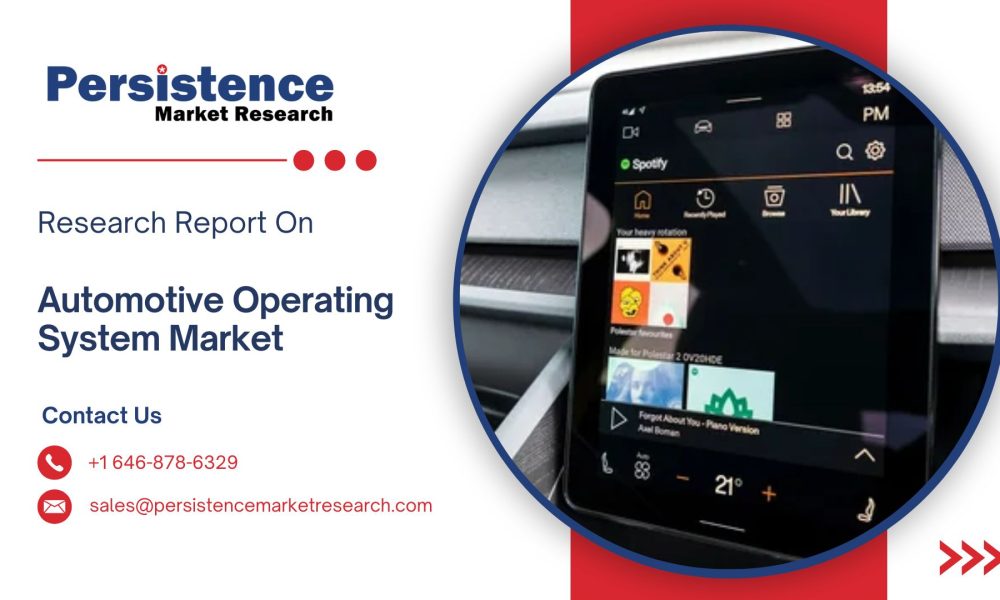
The global automotive operating system market is witnessing a paradigm shift as vehicles evolve into software-defined machines. According to Persistence Market Research, the market is projected to reach US$ 14.68 Bn in 2025 and further expand to US$ 39.90 Bn by 2032, registering an impressive CAGR of 15.4%. This growth trajectory is driven by increasing demand for connected vehicles, enhanced driver-assistance systems, and the growing importance of in-vehicle infotainment platforms. As the automotive ecosystem integrates artificial intelligence, real-time data analytics, and cloud-based services, operating systems are emerging as the backbone of next-generation mobility solutions.
The leading segment in this market is the passenger vehicle category, owing to the rising adoption of advanced infotainment and driver-assistance features in mass-market cars. On the geographical front, Asia-Pacific dominates the market, primarily due to rapid automotive production in China, Japan, and South Korea, alongside rising investments in smart mobility infrastructure. Moreover, regulatory frameworks pushing for safer, cleaner, and more efficient vehicles are accelerating OS adoption across the region. This blend of technological advancement and regulatory push continues to shape the market’s growth trajectory.
Get a Sample Copy of Research Report (Use Corporate Mail id for Quick Response): https://www.persistencemarketresearch.com/samples/35273
Key Highlights from the Report
➤ The global automotive operating system market is expected to reach US$ 39.90 Bn by 2032.
➤ The market is projected to grow at a CAGR of 15.4% between 2025 and 2032.
➤ Passenger vehicles remain the leading segment due to increased demand for infotainment and safety features.
➤ Asia-Pacific is the dominant region, driven by high automotive production and tech adoption.
➤ Rising cybersecurity concerns are pushing automakers to adopt more secure OS frameworks.
➤ Open-source platforms are gaining popularity, driving innovation and cost efficiency in the industry.
Market Segmentation
The automotive operating system market is segmented by vehicle type, operating system type, and application. Among vehicle types, passenger vehicles lead the market due to increasing demand for connected car features such as navigation, voice recognition, and real-time diagnostics. Commercial vehicles are also adopting advanced OS frameworks to enable fleet management, predictive maintenance, and compliance with stringent safety regulations. By operating system type, real-time operating systems (RTOS) are witnessing high adoption as they are crucial for safety-critical applications such as ADAS, autonomous driving, and vehicle-to-everything (V2X) communication.
In terms of application, infotainment systems account for the largest share, reflecting consumer demand for seamless digital experiences inside vehicles. Driver-assistance systems and autonomous driving software are also growing at a rapid pace, given regulatory support and consumer focus on safety. Additionally, telematics applications are seeing rising adoption in fleet management, logistics, and mobility services. This segmentation highlights how the automotive OS landscape is no longer limited to entertainment but spans across safety, efficiency, and operational excellence.
Regional Insights
North America remains a critical market due to strong investments by leading automotive manufacturers and technology companies in connected vehicle infrastructure. The United States leads with robust R&D in autonomous driving technologies and close collaboration between automakers and software providers. Europe follows closely, driven by stringent safety regulations, the push for electrification, and the presence of premium automakers adopting advanced OS solutions.
Asia-Pacific, however, continues to dominate the global market, with China at the forefront of vehicle production and technology adoption. Japan and South Korea are also contributing significantly through innovation in EVs and ADAS technologies. Rising urbanization and government-backed smart mobility initiatives make Asia-Pacific the fastest-growing region for automotive operating system deployment.
Market Drivers
The market growth is primarily fueled by the rapid adoption of connected vehicles. Modern consumers demand seamless digital experiences in their cars, from infotainment to navigation and real-time safety updates. In parallel, the rise of autonomous driving technologies requires robust, secure, and scalable operating systems to ensure safety and reliability. Moreover, governments worldwide are implementing strict vehicle safety regulations, encouraging automakers to integrate advanced OS-based systems such as ADAS and collision detection. Another crucial driver is the surge in cybersecurity measures, as vehicles become more connected and vulnerable to digital threats.
The integration of artificial intelligence (AI) and machine learning into vehicle operating systems is also shaping the industry, enabling predictive maintenance, driver-behavior monitoring, and personalized in-vehicle experiences. The increasing reliance on real-time operating systems (RTOS) for mission-critical applications further underlines the indispensable role of automotive OS platforms in modern mobility solutions. With continuous collaboration between automakers and tech giants, the market is positioned for transformative growth.
Market Restraints
Despite its high growth potential, the automotive operating system market faces several challenges. Cybersecurity vulnerabilities remain a major concern, as connected vehicles are prone to hacking and data breaches. Securing vehicle software requires high investment in advanced cybersecurity frameworks, which can slow down widespread adoption. Another restraint is the high cost of integration. Developing and implementing advanced automotive OS platforms requires significant R&D investment, which can be prohibitive for small and mid-sized manufacturers.
Fragmentation in the operating system landscape also poses challenges. Different automakers often adopt proprietary systems, leading to compatibility issues across platforms. Furthermore, the complexity of software updates and maintenance in vehicles, especially in older models, creates hurdles in providing consistent performance. Finally, regulatory and compliance pressures across multiple regions can increase development costs and time-to-market, limiting smaller players from competing with established industry leaders.
Market Opportunities
The market is filled with opportunities as automotive OEMs and tech providers collaborate to build future-ready mobility ecosystems. One of the biggest opportunities lies in the adoption of open-source platforms, which are gaining traction due to their flexibility, scalability, and cost-effectiveness. Open-source OS solutions foster innovation and accelerate development timelines, especially in the realm of electric and autonomous vehicles.
The rise of electric vehicles (EVs) presents another lucrative opportunity. EVs require advanced operating systems for energy management, battery monitoring, and integration with charging infrastructure. Furthermore, the expansion of mobility-as-a-service (MaaS) models is expected to drive demand for OS solutions that enable real-time fleet tracking, predictive analytics, and seamless connectivity. Cloud-based integration and over-the-air (OTA) updates are also emerging as essential opportunities, enabling automakers to enhance vehicle performance and security long after purchase.
Frequently Asked Questions (FAQs)
➤ How Big is the Automotive Operating System Market in 2025 and 2032?
➤ Who are the Key Players in the Global Automotive Operating System Market?
➤ What is the Projected Growth Rate of the Automotive Operating System Market?
➤ What is the Market Forecast for Automotive Operating Systems for 2032?
➤ Which Region is Estimated to Dominate the Industry through the Forecast Period?
Company Insights
The automotive operating system market features both established automakers and technology companies collaborating to shape next-generation mobility. Key players include:
- BlackBerry QNX
- Microsoft Corporation
- Google (Alphabet Inc.)
- Apple Inc.
- Green Hills Software
- Wind River Systems
- Automotive Grade Linux (AGL)
- Continental AG
- Aptiv PLC
- Robert Bosch GmbH
Recent Developments
- Leading automakers have intensified partnerships with software companies to co-develop advanced OS platforms optimized for EVs and autonomous driving.
- The rising adoption of open-source solutions such as Automotive Grade Linux has accelerated innovation and reduced costs across the global market.
Explore more related market insights and reports by visiting our website.




