

Geothermal Heat Pump Market Overview
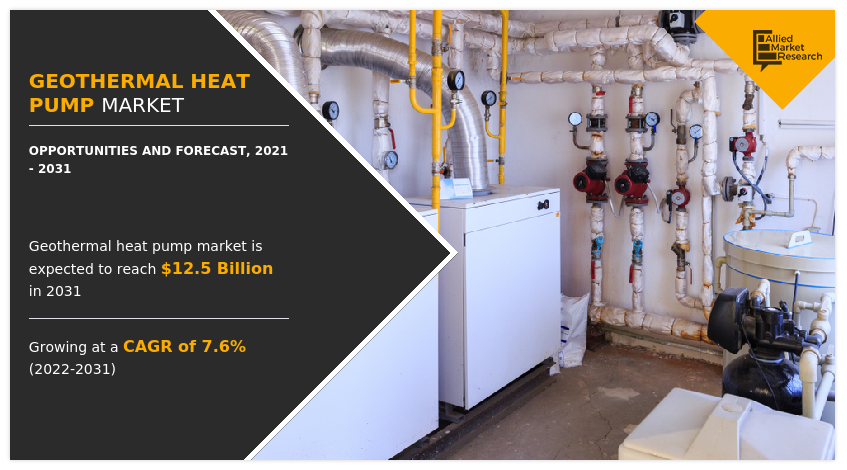
According to a new report published by Allied Market Research, the global geothermal heat pump market size was valued at $6.0 billion in 2021 and is projected to reach $12.5 billion by 2031, growing at a CAGR of 7.6% from 2022 to 2031. Increasing demand for energy-efficient heating and cooling solutions, rising environmental concerns, and supportive government policies are major factors driving the geothermal heat pump market worldwide. 🌍♻️
Introduction
A geothermal heat pump (GHP), also known as a ground source heat pump, is a central heating and cooling system that uses the earth’s stable underground temperature to regulate indoor environments. Unlike conventional systems that rely on fossil fuels or ambient air, geothermal heat pumps transfer heat between buildings and the ground, making them significantly more efficient.
The geothermal heat pump market is gaining momentum as countries seek sustainable alternatives to reduce carbon emissions and improve energy security. These systems can heat water, provide space heating, and deliver cooling during warmer months, making them suitable for year-round use.
Download PDF Brochure: https://www.alliedmarketresearch.com/request-sample/A10486
Geothermal heat pumps are also referred to as geoexchange systems, earth energy systems, or earth-coupled heat pumps in different regions.
Working Principle and Hybrid Systems
Geothermal heat pumps operate by utilizing the sun-warmed upper layers of the earth rather than deep geothermal sources. Underground temperatures remain relatively constant throughout the year, allowing these systems to function efficiently regardless of outdoor weather conditions.
These systems can be deployed independently or integrated with hybrid configurations such as solar-geothermal systems. Hybrid installations combine multiple renewable energy sources, offering improved performance and reduced operational costs.
Applications include surface water heating, recycled water systems, stormwater retention basins, sewage treatment plants, and rainwater harvesting facilities. Their versatility contributes significantly to the growth of the geothermal heat pump market. 💧⚡
Key Growth Drivers
Growing concerns about climate change and energy security are accelerating the adoption of geothermal technologies. Governments and policymakers worldwide are promoting low-carbon infrastructure to meet sustainability targets.
Geothermal heat pumps consume less electricity compared to traditional HVAC systems and significantly reduce greenhouse gas emissions. This makes them attractive for residential, commercial, and industrial users seeking long-term cost savings and environmental benefits.
Additionally, increasing focus on bio-economy development and national well-being is encouraging investments in renewable heating technologies, further boosting the geothermal heat pump market.
Cost Advantages and Barriers
Although geothermal heat pump systems require higher upfront installation costs than conventional heating systems, they offer substantial savings over their operational lifetime. Lower maintenance requirements, reduced energy bills, and longer equipment lifespan contribute to their cost-effectiveness.
However, high initial investment remains a major barrier, particularly in developing economies. Limited public awareness and lack of confidence in geothermal technologies also restrict adoption.
Furthermore, insufficient technological advancement in some regions and limited availability of skilled installation professionals can hinder market growth. Addressing these challenges is essential for expanding the geothermal heat pump market globally.
Market Segmentation
The geothermal heat pump market is segmented based on technology, end use, and region.
By technology, the market includes open loop systems and closed loop systems. Closed loop systems—comprising vertical and horizontal loops—accounted for more than 80% of the market share in 2021 due to their reliability and efficiency.
By end use, the market is divided into residential, commercial, and industrial sectors. The residential segment is expected to dominate, projected to hold over 75% market share by 2031. Increasing construction of energy-efficient homes and retrofitting of existing buildings are major contributors to this trend.
Commercial applications include offices, hospitals, educational institutions, and retail spaces, while industrial uses focus on process heating and cooling.
Regional Outlook
Europe led the geothermal heat pump market in 2021, supported by stringent environmental regulations and strong adoption of renewable energy technologies. The region is expected to maintain steady growth throughout the forecast period.
Asia-Pacific is anticipated to register the fastest growth, with a CAGR of around 8.5% from 2022 to 2031. Countries such as Japan and South Korea are investing heavily in energy-efficient infrastructure, contributing significantly to regional expansion.
North America also represents a major market due to favorable policies, technological advancements, and rising awareness of sustainable heating solutions. 🌏
Competitive Landscape
The geothermal heat pump market includes several global manufacturers and technology providers focusing on innovation and expansion. Major players include Bosch, Carrier Global, Daikin Industries, Danfoss, Mitsubishi Electric, Viessmann, Wolf GmbH, ClimateMaster, and Dandelion Energy.
These companies are investing in research and development to improve efficiency, reduce installation costs, and expand their global footprint.
Impact of COVID-19
The COVID-19 pandemic had a significant impact on the geothermal heat pump market. Manufacturing activities were disrupted as lockdowns halted industrial operations worldwide. Supply chains were severely affected, making it difficult to procure raw materials such as iron castings, stainless steel components, and aluminum tubing.
Travel restrictions, border closures, and trade limitations further delayed projects and installations. As a result, sales declined during the peak of the pandemic.
However, governments have since introduced economic recovery plans emphasizing renewable energy adoption and carbon neutrality goals. These initiatives are expected to drive demand in the coming years.
For example, the United Kingdom government announced plans to install approximately 600,000 heat pumps by 2028 as part of its strategy to achieve net-zero carbon emissions by 2050. Such programs are likely to stimulate the geothermal heat pump market significantly. 🌱
Get a Customized Research Report: https://www.alliedmarketresearch.com/request-for-customization/A10486
Future Opportunities
Rising construction of green buildings, smart cities, and energy-efficient infrastructure presents substantial growth opportunities. Retrofitting older buildings with geothermal systems is also gaining traction as property owners seek to reduce operating costs and carbon footprints.
Advancements in drilling technology and system design are expected to lower installation costs over time, making geothermal heat pumps more accessible to a broader range of consumers.
Conclusion
In conclusion, the geothermal heat pump market is poised for strong growth as the world transitions toward sustainable energy solutions. These systems offer high efficiency, reduced emissions, and long-term cost savings, making them an attractive alternative to conventional heating and cooling technologies.
Despite challenges such as high installation costs and limited awareness in developing regions, supportive government policies and technological advancements are expected to accelerate adoption. As countries intensify efforts to achieve carbon neutrality and energy independence, geothermal heat pumps will play a crucial role in shaping the future of sustainable building infrastructure. 🌍🏡
Other Trending Reports:-
About Us
Allied Market Research (AMR) is a full-service market research and business-consulting wing of Allied Analytics LLP based in Portland, Oregon. Allied Market Research provides global enterprises as well as medium and small businesses with unmatched quality of “Market Research Reports” and “Business Intelligence Solutions.” AMR has a targeted view to provide business insights and consulting to assist its clients to make strategic business decisions and achieve sustainable growth in their respective market domain.
Pawan Kumar, the CEO of Allied Market Research, is leading the organization toward providing high-quality data and insights. We are in professional corporate relations with various companies and this helps us in digging out market data that helps us generate accurate research data tables and confirms utmost accuracy in our market forecasting. Each and every data presented in the reports published by us is extracted through primary interviews with top officials from leading companies of domain concerned. Our secondary data procurement methodology includes deep online and offline research and discussion with knowledgeable professionals and analysts in the industry.




