Market Overview
The global gas separation membranes market is on a steady upward trajectory, driven by the increasing demand for efficient and cost-effective gas processing solutions across multiple industries. According to the latest study by Persistence Market Research, the market size is projected to reach a valuation of US$2,178.9 million by 2025 and surpass US$3,086.4 million in 2032, expanding at a CAGR of 5.1% during the forecast period. This growth is attributed to the rising adoption of membrane-based technologies in natural gas processing, hydrogen recovery, carbon dioxide removal, and air separation applications.
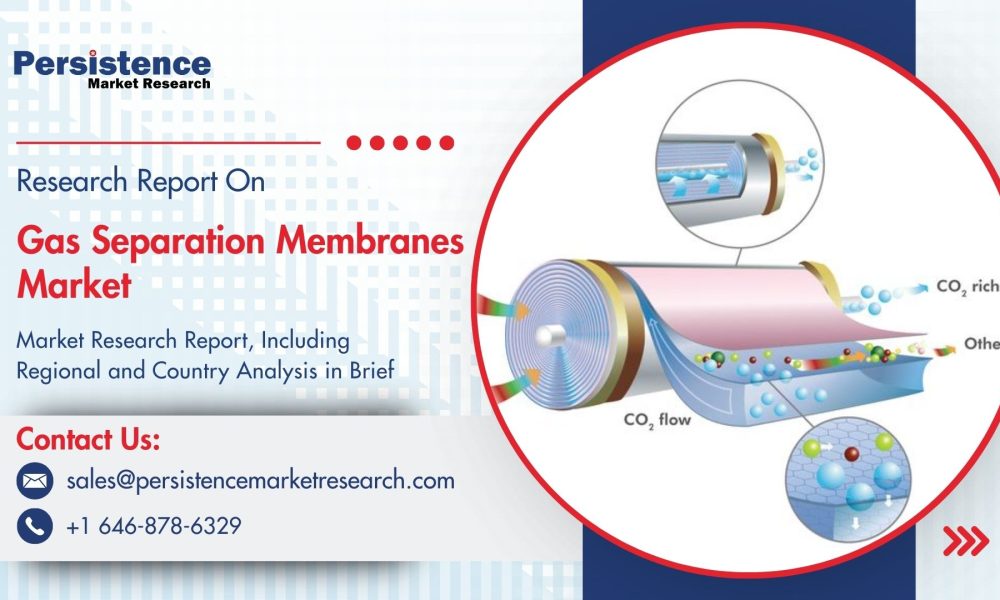
Gas separation membranes are thin, selective barriers that allow specific gases to permeate while restricting others. Their advantages, such as low energy consumption, compact design, ease of operation, and environmentally friendly performance, make them increasingly preferred over traditional separation methods like cryogenic distillation and pressure swing adsorption. Industries including oil and gas, petrochemicals, power generation, and pharmaceuticals are embracing these membranes to enhance efficiency, reduce operational costs, and align with sustainability goals.
Get a Sample PDF Brochure of the Report (Use Corporate Email ID for a Quick Response): https://www.persistencemarketresearch.com/samples/33454
Key Market Drivers
The primary driver fueling the growth of the gas separation membranes market is the rising global emphasis on energy efficiency and sustainability. As industries face stricter regulations on greenhouse gas emissions and energy consumption, membrane technologies provide an effective solution for cleaner and more sustainable gas processing. The growing urgency to address climate change has accelerated investments in carbon capture and storage (CCS) projects, in which gas separation membranes play a critical role by enabling cost-effective CO₂ removal.
The increasing demand for natural gas, driven by its cleaner-burning profile compared to coal and oil, is another major factor propelling market growth. Gas separation membranes are extensively used in natural gas processing to remove impurities such as carbon dioxide and hydrogen sulfide, ensuring high-quality output for commercial and industrial use. Additionally, rising investments in hydrogen energy as a key component of the global transition to renewable energy sources are creating significant opportunities, as membranes are highly effective in hydrogen purification and recovery.
Another growth driver is the expanding pharmaceutical and medical sector, where membranes are utilized in applications such as oxygen enrichment, nitrogen generation, and controlled gas environments for drug manufacturing. Moreover, continuous advancements in membrane material technology, including polymeric, inorganic, and mixed matrix membranes, are improving selectivity, permeability, and durability, further boosting adoption across diverse industries.
Market Challenges
Despite promising growth, the gas separation membranes market faces several challenges that could hinder its full potential. One of the key limitations is the trade-off between selectivity and permeability in membrane performance, which impacts overall efficiency in high-demand applications. Although research is addressing this challenge, widespread adoption of advanced membranes is still constrained by technological and cost barriers.
High initial installation and maintenance costs pose another restraint, especially for small- and medium-scale industries operating in cost-sensitive regions. In certain applications such as large-scale air separation, conventional technologies like cryogenic distillation still dominate due to higher efficiency at large volumes, creating stiff competition for membranes. Additionally, membrane fouling and degradation over time affect long-term performance and require periodic replacements, adding to operational costs.
Furthermore, fluctuating raw material prices, particularly for polymer-based membranes, can impact production costs and profitability. The lack of skilled workforce in developing economies to operate advanced membrane systems also presents challenges to wider adoption.
Market Opportunities
The gas separation membranes market holds considerable opportunities in emerging applications and developing economies. The global momentum toward decarbonization and renewable energy opens avenues in carbon capture, utilization, and storage (CCUS) projects, where membranes can play a key role in lowering costs and improving scalability. Governments across North America, Europe, and Asia-Pacific are actively funding pilot and large-scale CCS projects, providing significant growth opportunities for membrane manufacturers.
The hydrogen economy represents another major growth opportunity. As industries and governments invest heavily in hydrogen as a clean fuel alternative, demand for membranes in hydrogen recovery and purification will surge. Applications in fuel cells, ammonia production, and refining processes further expand potential use cases.
Developing regions such as Asia-Pacific and the Middle East are expected to be high-growth markets due to rising industrialization, expanding oil and gas production, and increasing energy demand. The expansion of pharmaceutical manufacturing in these regions also provides opportunities for membrane suppliers. Additionally, innovations in hybrid separation systems that combine membranes with conventional technologies promise to overcome performance limitations and create competitive advantages for market players.
Regional Insights
Regionally, North America and Europe currently dominate the gas separation membranes market due to their strong presence in natural gas processing, stringent environmental regulations, and growing investments in carbon capture projects. The U.S. leads in adoption, driven by shale gas exploration, advanced refinery operations, and an established hydrogen recovery infrastructure. Europe’s focus on reducing carbon emissions and increasing renewable energy usage has created substantial demand for membranes in carbon dioxide removal and hydrogen purification.
The Asia-Pacific region is anticipated to witness the fastest growth during the forecast period. Rapid industrialization, increasing energy demand, and government initiatives to reduce emissions are driving adoption of membrane technologies in countries like China, India, and Japan. Growing pharmaceutical manufacturing and the region’s push toward renewable energy further add momentum. Latin America and the Middle East & Africa also hold growth potential due to expanding oil and gas activities and gradual adoption of sustainable technologies.
For Customized Insights on Segments, Regions, or Competitors, Request Personalized Purchase Options @ https://www.persistencemarketresearch.com/request-customization/33454
Company Insights
The competitive landscape of the global gas separation membranes market is characterized by the presence of multinational corporations, specialized technology providers, and regional players. Companies are focusing on material innovation, capacity expansion, and strategic collaborations to strengthen their market position.
✦ Air Products and Chemicals, Inc.
✦ Air Liquide Advanced Separations
✦ UBE Industries Ltd.
✦ Parker Hannifin Corporation
✦ Honeywell UOP
✦ Evonik Industries AG
✦ Membrane Technology and Research, Inc. (MTR)
✦ Fujifilm Manufacturing Europe B.V.
✦ Schlumberger Limited
✦ Generon IGS, Inc.
These players are actively investing in research and development to improve membrane performance and expand application areas. Strategic alliances between membrane manufacturers and oil and gas companies are becoming increasingly common to co-develop customized solutions for large-scale gas processing projects. Additionally, market leaders are expanding their presence in emerging economies through joint ventures and localized production facilities to cater to growing demand.
Future Outlook
The future of the gas separation membranes market is promising, with innovation and sustainability emerging as the primary growth pillars. Continuous advancements in polymeric, ceramic, and mixed-matrix membranes are expected to overcome current performance limitations, thereby broadening adoption in critical applications. The integration of membranes into hybrid systems with conventional separation technologies is likely to create cost-effective and efficient solutions for large-scale operations.
As global decarbonization efforts accelerate, gas separation membranes will play a pivotal role in carbon capture, hydrogen purification, and clean energy generation. Increasing alignment of regulatory frameworks across regions will further encourage adoption, while ongoing investments in renewable energy and hydrogen infrastructure will create long-term demand. Moreover, the expanding role of digital technologies and process automation in membrane systems will enhance operational efficiency and reduce lifecycle costs, making the technology more attractive for industrial use.
Conclusion
In conclusion, the global gas separation membranes market is poised for significant growth, projected to expand from US$2,178.9 million in 2025 to over US$3,086.4 million by 2032 at a CAGR of 5.1%. Rising energy efficiency needs, growing demand for natural gas and hydrogen, and increasing emphasis on carbon capture and sustainability are key drivers shaping this market. While challenges such as high costs and performance limitations remain, opportunities in renewable energy, pharmaceuticals, and emerging economies are set to redefine the market landscape. With ongoing innovation, strategic collaborations, and a strong focus on environmental sustainability, the gas separation membranes market is well-positioned for a dynamic and growth-oriented future.
Explore the Latest Trending Research Reports: